
Tooltip Tags: Bovids
-
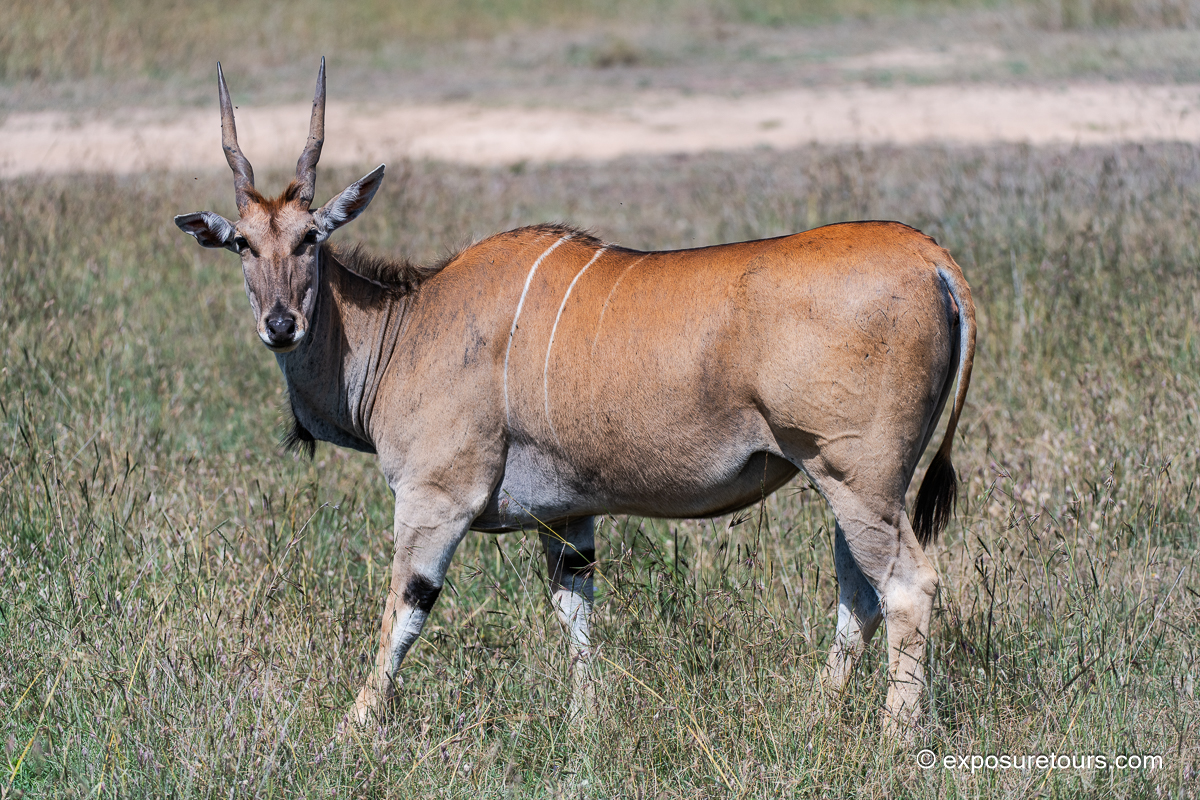
Eland
On
The Eland (Taurotragus oryx), the largest of all antelope species, is a powerful yet surprisingly graceful inhabitant of Africa’s savannas, woodlands, and open plains. Adult males can stand up to 180 cm (71 in) at the shoulder. They may weigh between 400–1,000 kg (880–2,200 lbs). Females are slightly smaller and lighter in build. Both sexes
-

Gerenuk
On
he gerenuk, also known as the giraffe gazelle (Litocranius walleri), is a distinctive antelope found in the dry bushlands and semi-arid regions of East Africa. It is immediately recognizable by its elongated neck and slender body. A small head further enhances its unique, almost giraffe-like appearance. Adults typically stand about 85–105 cm (33–41 in) at
-

Wildebeest
On
The wildebeest, also known as the gnu (Connochaetes taurinus), is one of Africa’s most iconic antelopes. It is a defining species of the open savannahs and grasslands of East and Southern Africa. Robust yet agile, adult wildebeest typically stand about 115–145 cm (45–57 in) at the shoulder. Body length ranges from roughly 1.7–2.4 m (5.6–7.9
-

Topi
On
The topi (Damaliscus lunatus) is a striking and fast antelope of Africa’s open grasslands and floodplains. It is easily recognized by its rich reddish-brown coat. In addition, darker patches are visible on the upper legs and face. Overall, the species has a sleek, athletic build. Adults typically stand about 100–120 cm (39–47 in) at the
-
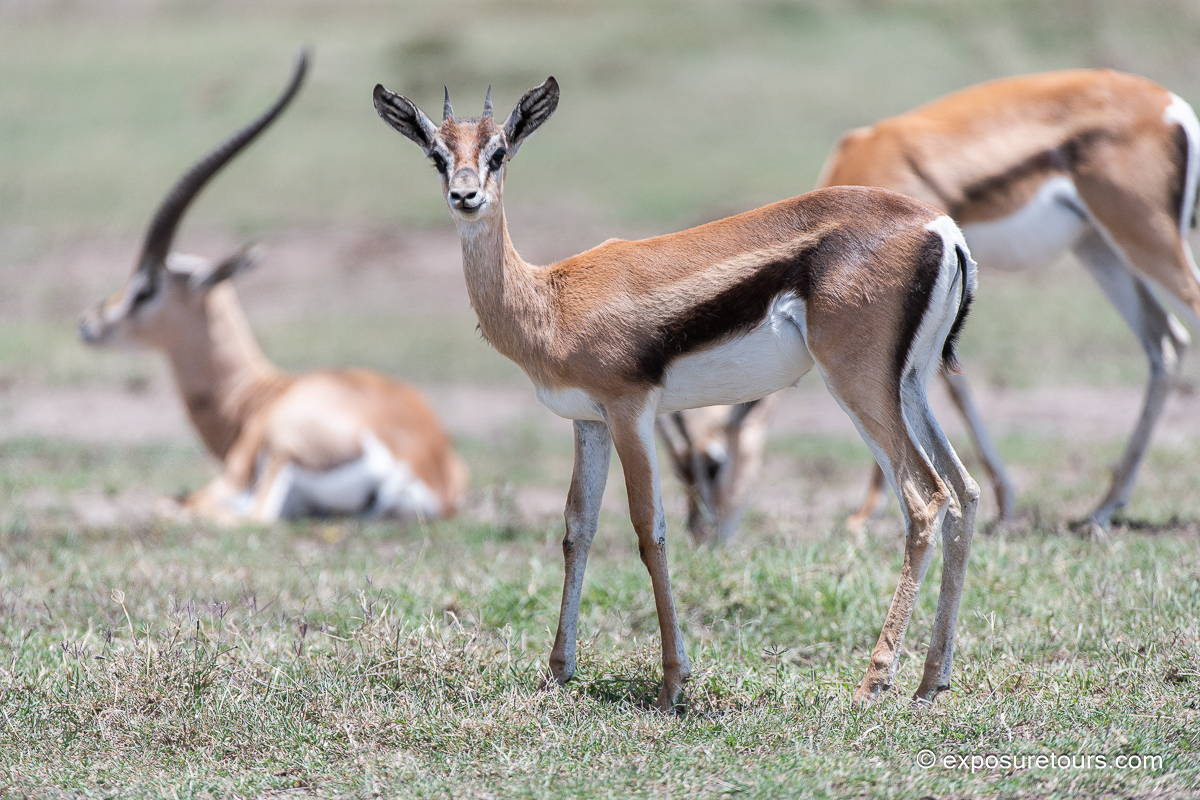
Thompson’s Gazelle
On
Thompson’s Gazelle (Eudorcas thomsonii) is one of the most iconic antelopes of the African savannah. Admired for its grace, speed, and striking markings, it captures the attention of photographers and wildlife enthusiasts alike. Adult males typically stand about 60–80 cm at the shoulder and weigh between 20–35 kg. Females are slightly smaller and lighter. Recognizable
-

Hartebeest
On
The hartebeest (Alcelaphus buselaphus) is a tall, long-legged antelope found across Africa’s open savannahs, grasslands, and lightly wooded plains. It is instantly recognizable by its sloping back and elongated face. Its sharply angled horns further add to its distinctive appearance. The hartebeest is built for endurance rather than short bursts of speed. Adults typically stand
-

Waterbuck
On
The Waterbuck (Kobus ellipsiprymnus) is a large and robust antelope. Notably, it is closely associated with rivers, lakes, and wetlands across sub-Saharan Africa. In terms of size, adults typically stand about 120–136 cm at the shoulder. On average, they weigh between 160–300 kg, with males noticeably larger and heavier than females. Visually, Waterbuck are easily
-

Impala
On
The Impala (Aepyceros melampus) is one of Africa’s most iconic and abundant antelope species, commonly found across savannahs, woodlands, and grassy plains of East and Southern Africa. Adults stand approximately 75–95 cm at the shoulder and typically weigh between 40–75 kg, with males being larger and more muscular than females. Impalas are instantly recognizable by
-

Grant’s Gazelle
On
Grant’s Gazelle (Nanger granti) is one of East Africa’s most elegant and striking antelopes. It is easily recognizable by its long, slender legs and impressive curved horns. Adult males typically stand around 90–100 cm at the shoulder, while females are slightly smaller at 75–90 cm. They weigh between 35–50 kg for females and 50–80 kg
-

Klipspringer
On
The klipspringer (Oreotragus oreotragus) is a small, agile antelope. It is uniquely adapted to life among rocky outcrops and steep escarpments across eastern and southern Africa. Despite its size, it stands about 43–60 centimeters (17–24 inches) at the shoulder. In addition, it weighs between 8 and 18 kilograms (18–40 pounds). The klipspringer is easily recognized