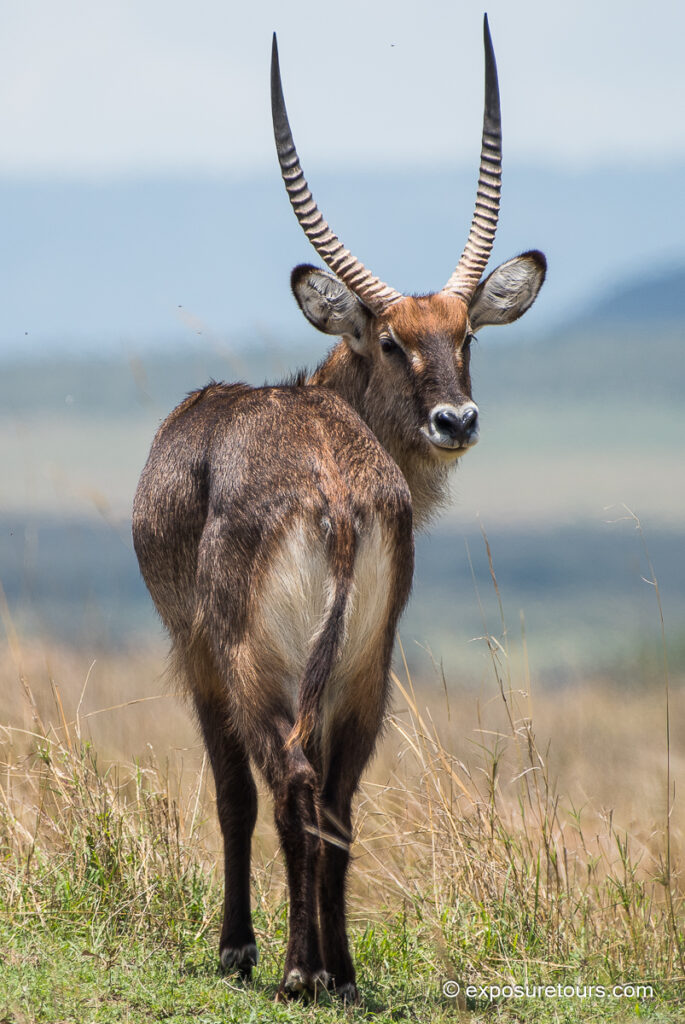
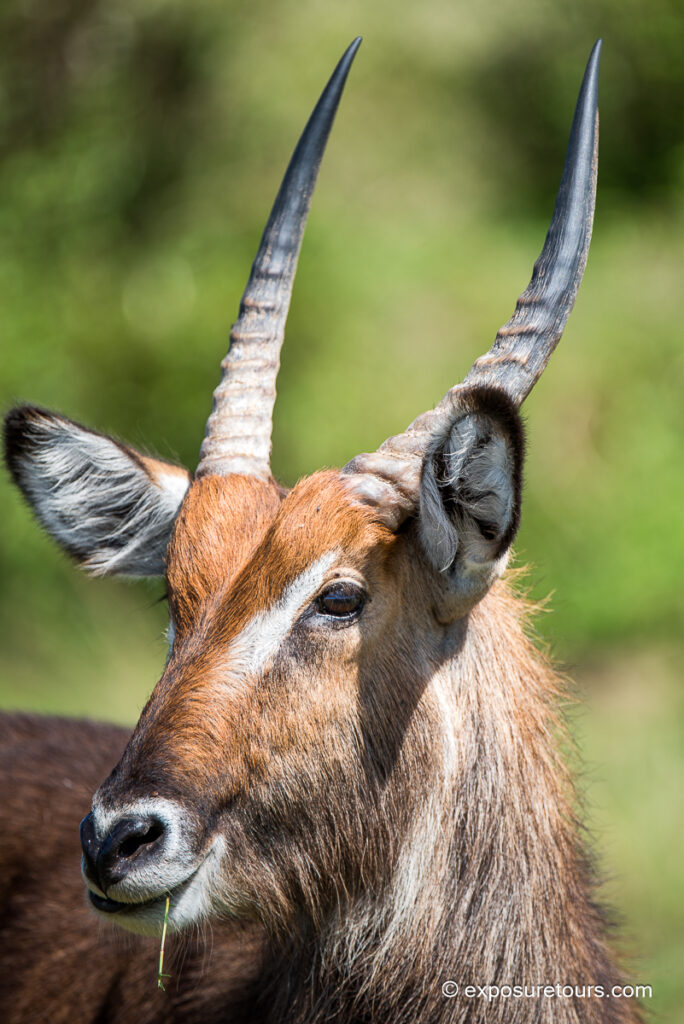
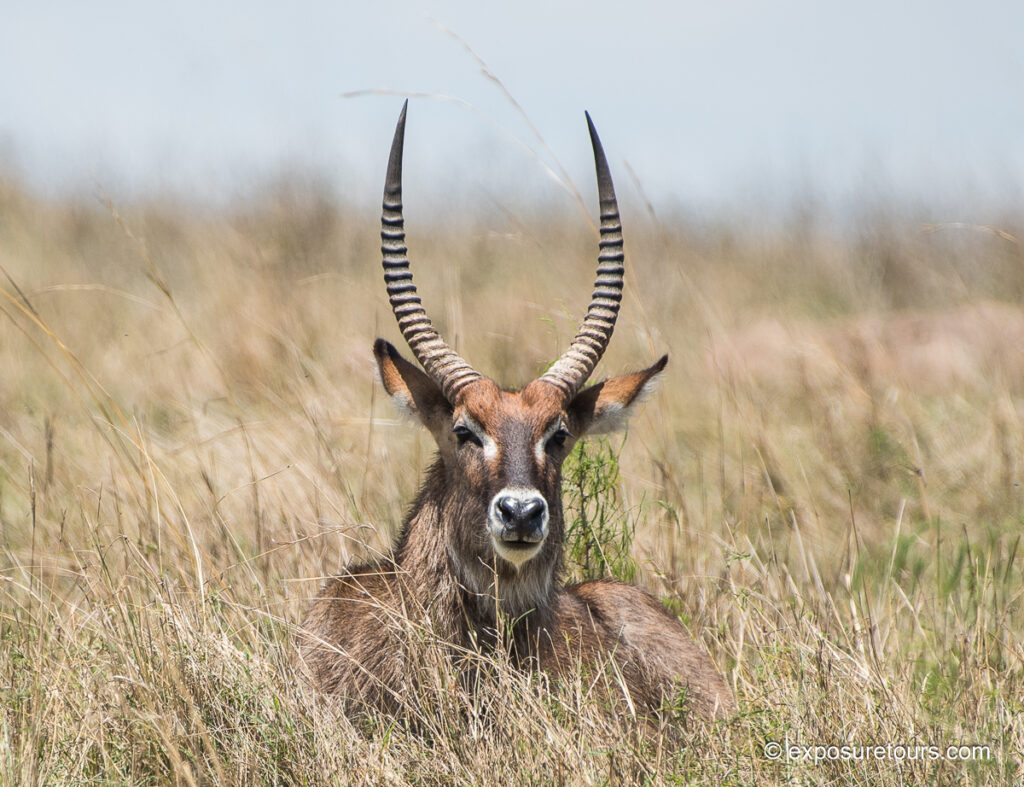
The Waterbuck (Kobus ellipsiprymnus) is a large and robust antelope. Notably, it is closely associated with rivers, lakes, and wetlands across sub-Saharan Africa.
In terms of size, adults typically stand about 120–136 cm at the shoulder. On average, they weigh between 160–300 kg, with males noticeably larger and heavier than females. Visually, Waterbuck are easily recognized by their shaggy gray-brown coats. In addition, they have a distinctive white ring encircling the rump.
As for habitat, they inhabit grasslands and savannahs near permanent water sources. Here, they feed primarily on grasses. Because of this preference, water-rich environments provide excellent opportunities for dramatic photographic scenes. This is especially true when herds gather along riverbanks.
The gestation period of the Waterbuck is approximately eight months. After this period, a single calf is born. Initially, newborn calves remain hidden in dense vegetation for the first few weeks of life. During this time, they rely on camouflage and their mother’s protection.
Socially, Waterbuck are generally found in loose herds. Often, these herds are segregated by sex. Meanwhile, dominant males defend territories near water. Interestingly, lions and other big cats often find the taste of their fur unpleasant due to natural oils that help make it waterproof.
Photo Tips:
Overall, their calm demeanor and striking markings make Waterbuck a rewarding subject on a photo safari. As a result, they offer photographers the chance to capture both intimate portraits and dynamic interactions within Africa’s diverse wetland ecosystems.