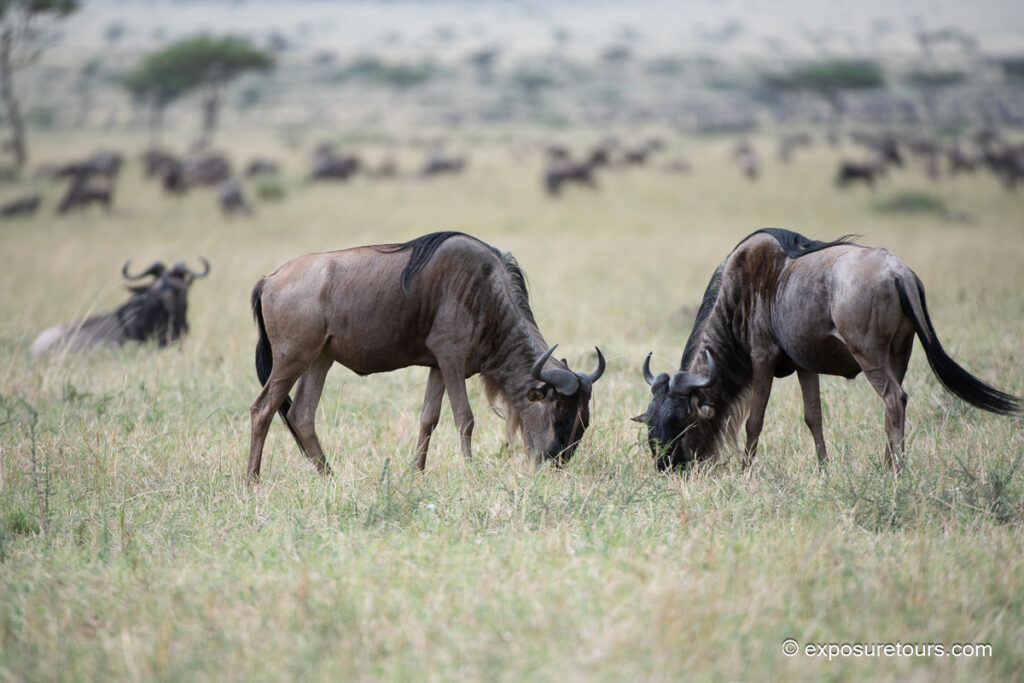
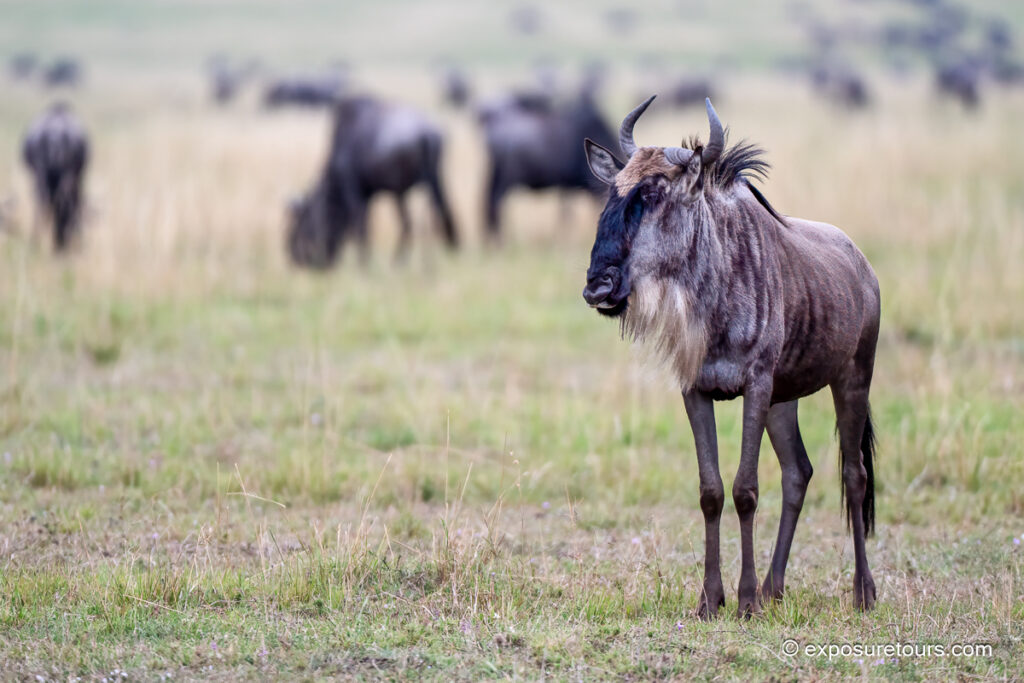
The wildebeest, also known as the gnu (Connochaetes taurinus), is one of Africa’s most iconic antelopes. It is a defining species of the open savannahs and grasslands of East and Southern Africa. Robust yet agile, adult wildebeest typically stand about 115–145 cm (45–57 in) at the shoulder. Body length ranges from roughly 1.7–2.4 m (5.6–7.9 ft). They generally weigh between 180–250 kg (400–550 lb), with males noticeably larger and heavier than females. Distinctive features include a broad muzzle, curved horns present in both sexes, and a dark mane and tail. These contrast strongly with their gray-brown to bluish coats.
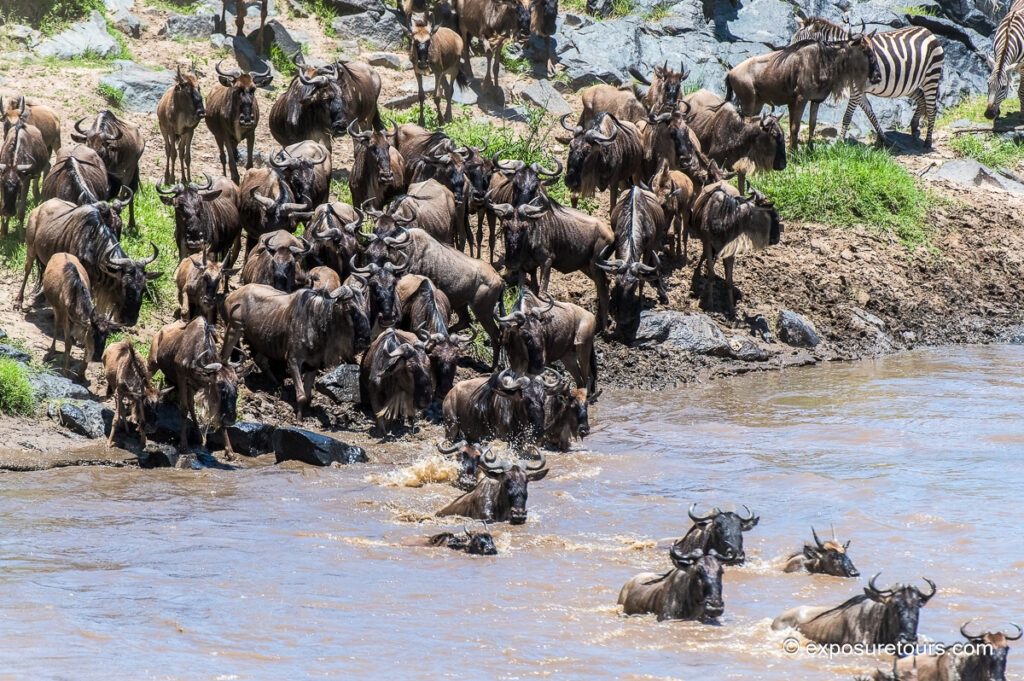
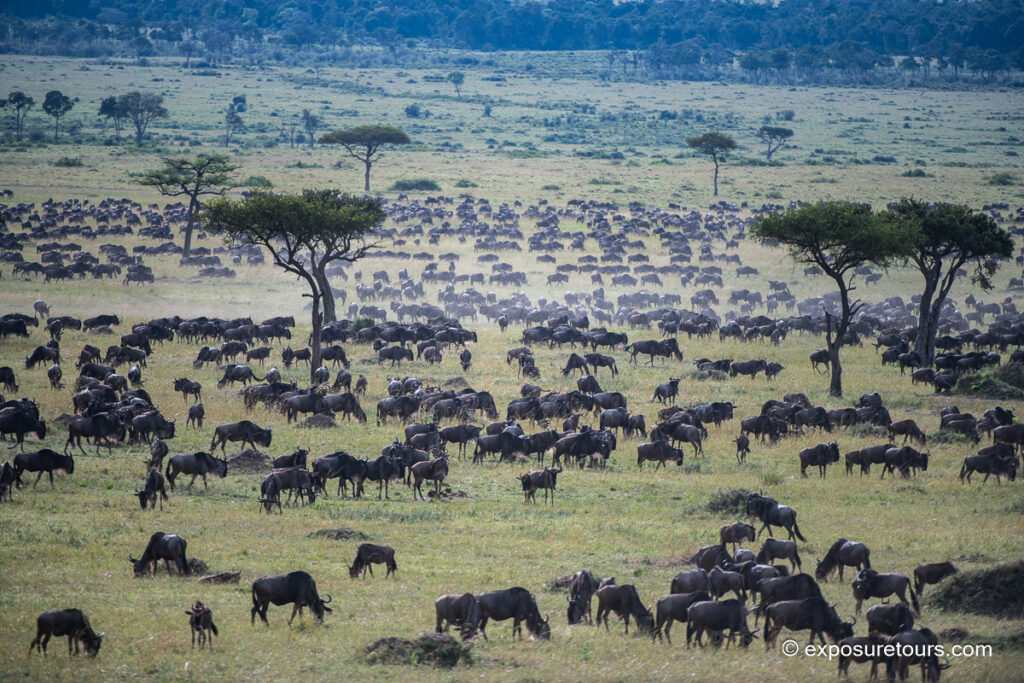
In addition to their imposing appearance, wildebeest are best known for their role in one of the world’s greatest wildlife spectacles—the annual Great Migration. Females have a gestation period of about 8.5 months, or approximately 250–260 days. Typically, a single calf is born. Remarkably, the newborn can stand and run within minutes, an essential survival trait on predator-rich plains. Wildebeest are highly social animals. They form large herds that can number in the thousands. Through constant grazing and movement, they play a crucial role in shaping the grassland ecosystems they inhabit.
Photo Tips:
For photographers on safari, wildebeest offer endless visual drama. Large herds create powerful compositions that convey scale and movement. Dust, backlight, and weather often add atmosphere to images. River crossings, in particular, provide opportunities to capture intense behavior, interaction, and the raw energy of Africa’s wild rhythms.