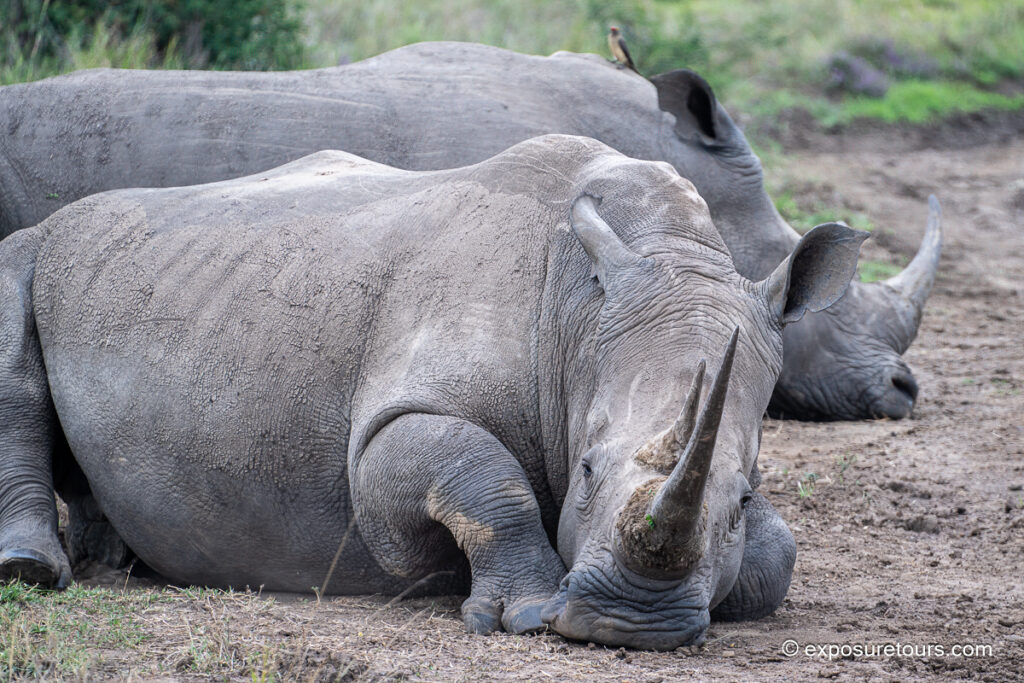
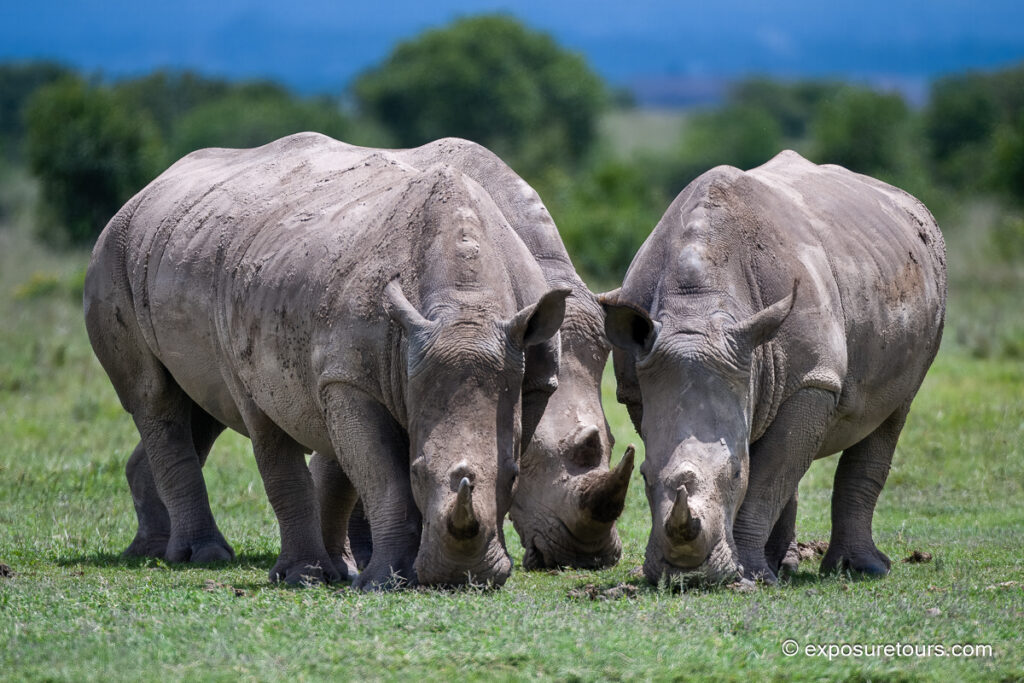
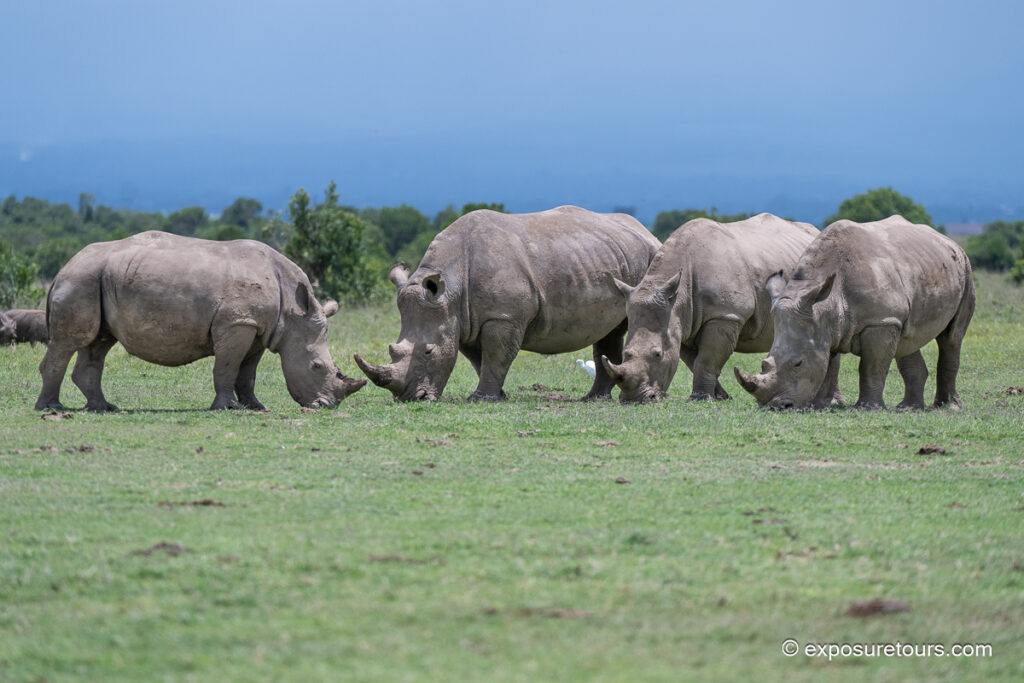
The white rhinoceros (Ceratotherium simum) is the largest of all rhino species. As a result, it is also one of Africa’s most iconic megafauna. White rhinos primarily inhabit open savannahs and grasslands. These environments, in turn, suit their massive size and grazing lifestyle. Adults typically stand 1.7–1.9 m (5.6–6.2 ft) at the shoulder. In addition, they can weigh between 1,800–2,500 kg (4,000–5,500 lb). Males, in particular, are significantly heavier than females. White rhinos are dedicated grazers. Consequently, they feed mainly on short grasses. Their broad, square-shaped lips are perfectly adapted for this purpose. Breeding occurs throughout the year. Following a long gestation period of approximately 15–16 months, or around 480 days, a single calf is born. Calves then remain closely bonded to their mothers for several years.
Visually, the white rhino differs clearly from the black rhino (Diceros bicornis), despite their misleading names. Most notably, white rhinos are larger and more heavily built. They also have a pronounced shoulder hump. Furthermore, their long, flat heads are usually carried low to the ground. The wide, square lips of the white rhino contrast strongly with the pointed, hooked upper lip of the black rhino. Black rhinos use this specialized lip to browse shrubs and trees. In addition, they are more compact in build. As a result, black rhinos tend to hold their heads higher.
The northern white rhino (Ceratotherium simum cottoni) is a subspecies of the white rhino. Visually, it is very similar to the southern white rhino. However, it is often described as slightly hairier. It also has a broader skull and a flatter back. Tragically, the northern white rhino is now functionally extinct. Consequently, this adds powerful conservation significance to any white rhino sighting.