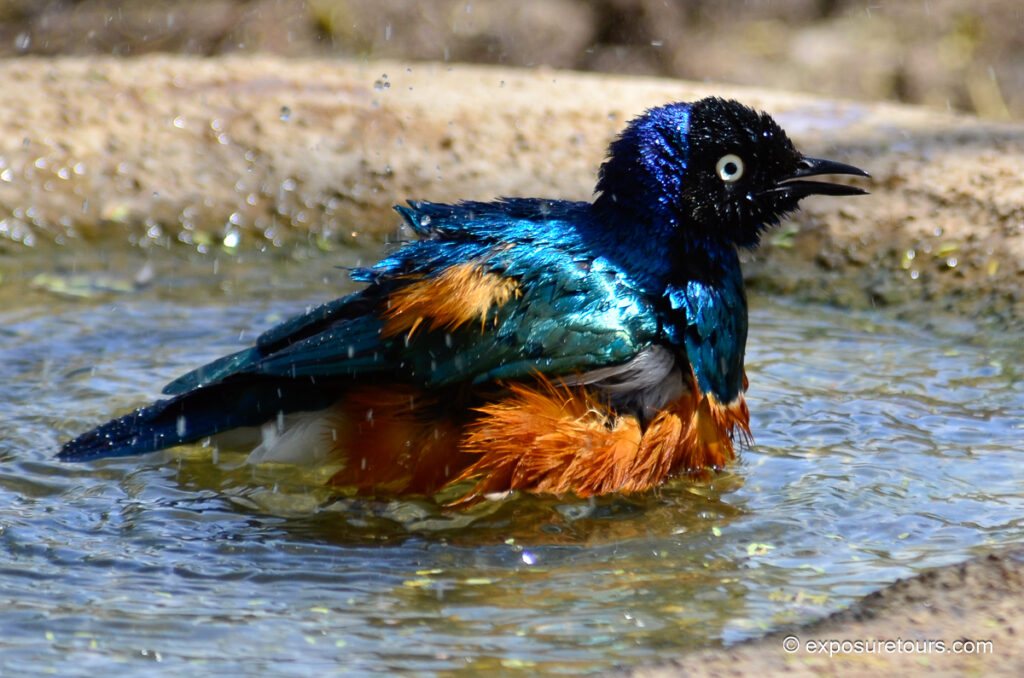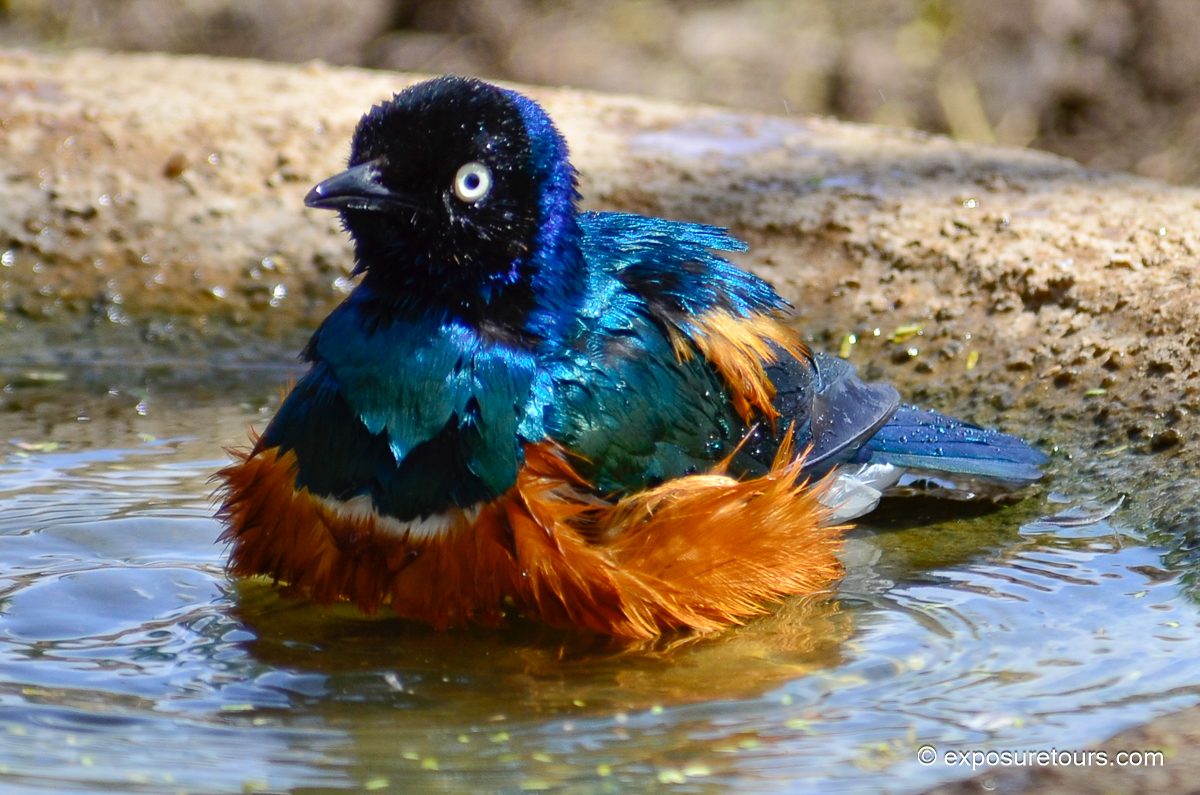
The Superb Starling (Lamprotornis superbus) is one of East Africa’s most colorful and eye-catching birds. It is commonly found in open savannas, acacia woodland, and around lodges and settlements. As a result, it is often one of the most frequently seen species on safari.
The bird is instantly recognizable by its iridescent blue-green back and glossy black head. In addition, it has a bright white breast and a rich chestnut belly. Adults typically measure about 18–20 cm (7–8 in) in length. Body weight generally ranges from 45–60 g (1.6–2.1 oz).
The species is highly social. It is often seen in small, noisy groups moving together through open areas. Breeding usually occurs during or shortly after the rainy season. During this time, the female lays a clutch of 2–4 eggs. Incubation lasts approximately 12–14 days. After hatching, chick care is often shared by multiple group members.
Photography Tips:
The Superb Starling is an excellent subject. This is largely due to its vivid coloration and frequent activity in open, well-lit habitats. Early morning and late afternoon light are especially effective. Softer light enhances the metallic sheen of the plumage while avoiding harsh highlights.
A low shooting angle helps isolate the bird and emphasizes its bold colors. Clean backgrounds further enhance the visual impact. A medium telephoto lens in the 200–300 mm range is usually sufficient. This works well because the species is generally tolerant of human presence. Capturing social interactions, such as calling, feeding, or group movement, adds storytelling depth. In turn, this highlights the starling’s lively behavior and makes it a rewarding subject for any photo safari portfolio.