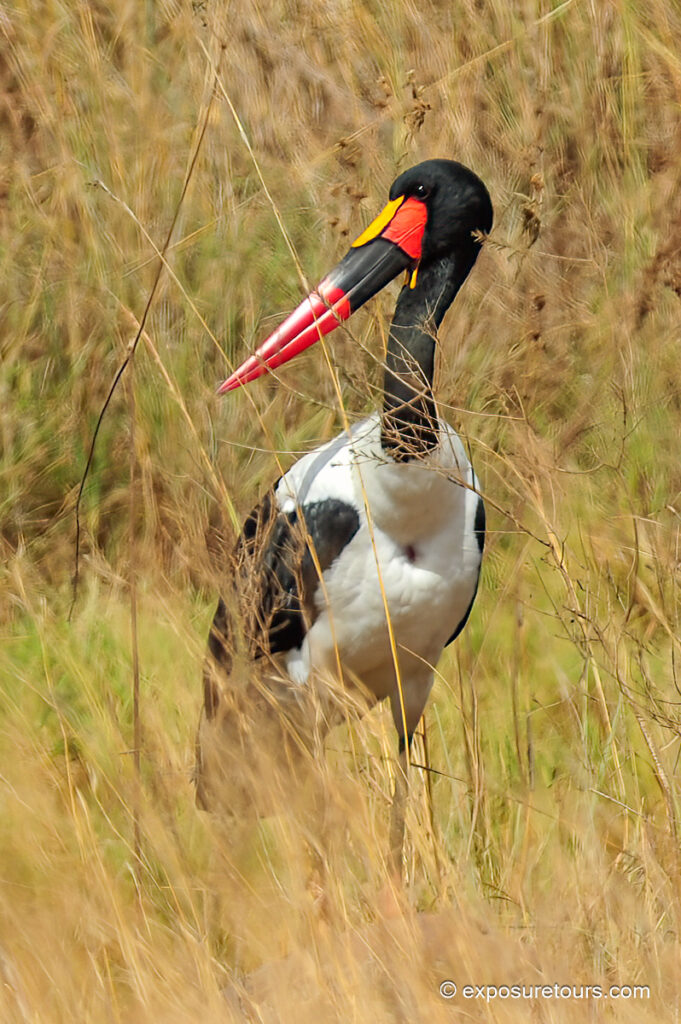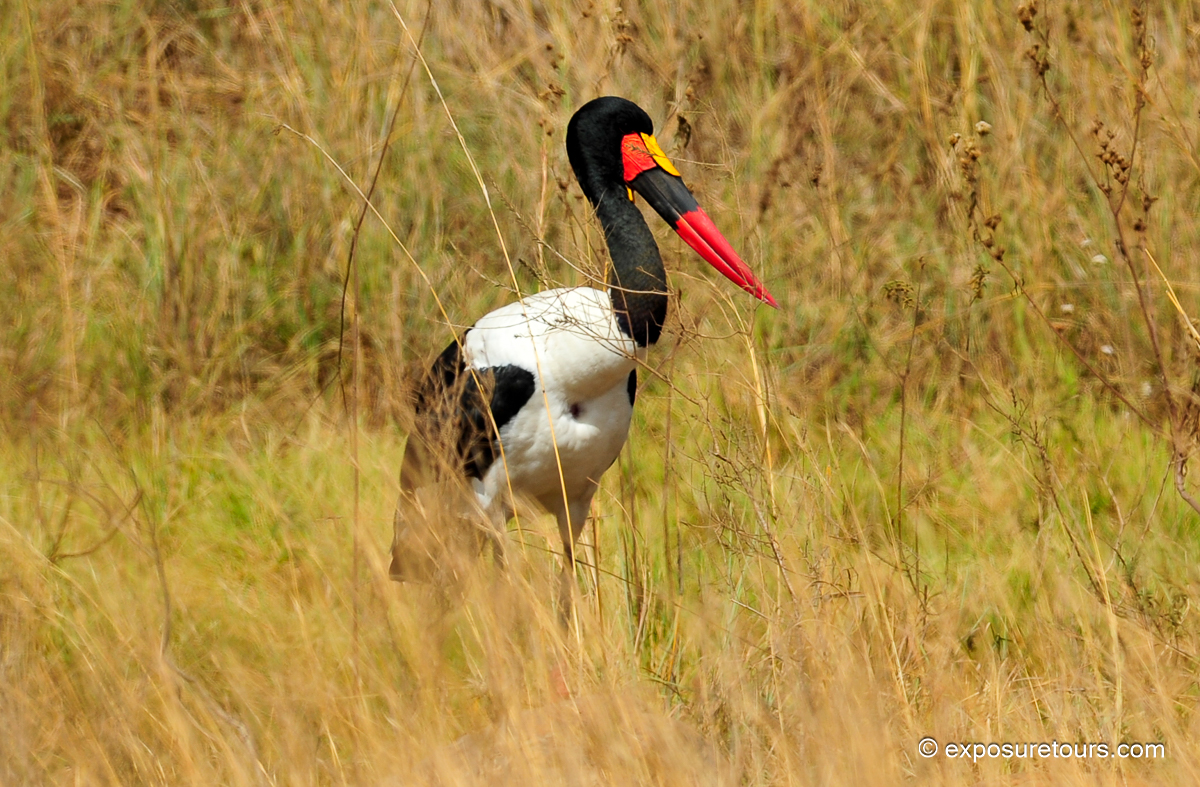
The Saddle-billed Stork (Ephippiorhynchus senegalensis) is one of Africa’s most striking and elegant wetland birds. It is easily recognized by its towering height and vividly colored bill. Naturally, the species is found along rivers, lakes, marshes, and floodplains across sub-Saharan Africa.
In addition, it is notable for its bold black-and-white plumage and the distinctive red and yellow “saddle” on the bill. Adults typically stand about 145–150 cm (57–59 in) tall. Meanwhile, their wingspan can reach up to 2.7 m (8.9 ft). They usually weigh between 5–7 kg (11–15 lbs). Females can be identified by their golden-yellow eyes, while males have dark brown eyes. Furthermore, Saddle-billed Storks feed mainly on fish, frogs, crustaceans, and small reptiles. During the breeding season, pairs build large stick nests in tall trees. After an incubation period of approximately 30–35 days, one to three chicks hatch and are cared for by both parents.
Photography Tips:
Saddle-billed Storks are exceptional photographic subjects due to their bold coloration and graceful movements. They also favor open wetland habitats, which in turn allow for clean and uncluttered compositions. They are often most active during early morning and late afternoon. At these times, soft light enhances the contrast between their black-and-white plumage and colorful bill.
A medium to long telephoto lens is ideal for isolating individuals against water or sky backgrounds. Additionally, positioning yourself low and parallel to the bird can help emphasize its height and elegance. With patience, photographers may capture feeding behavior, wing stretches, or dramatic flight takeoffs.