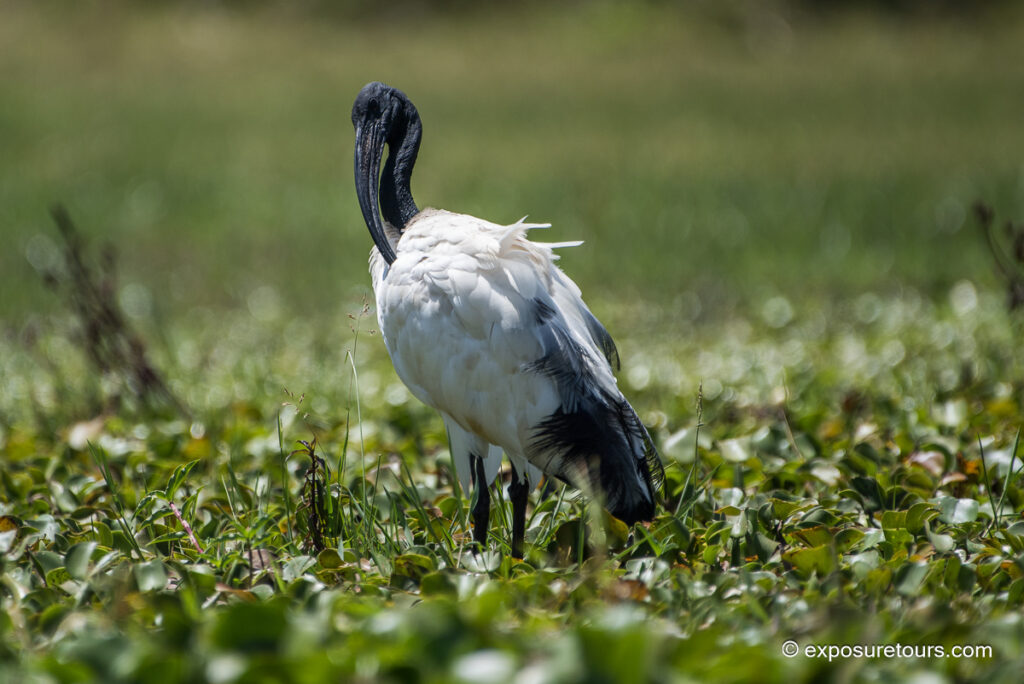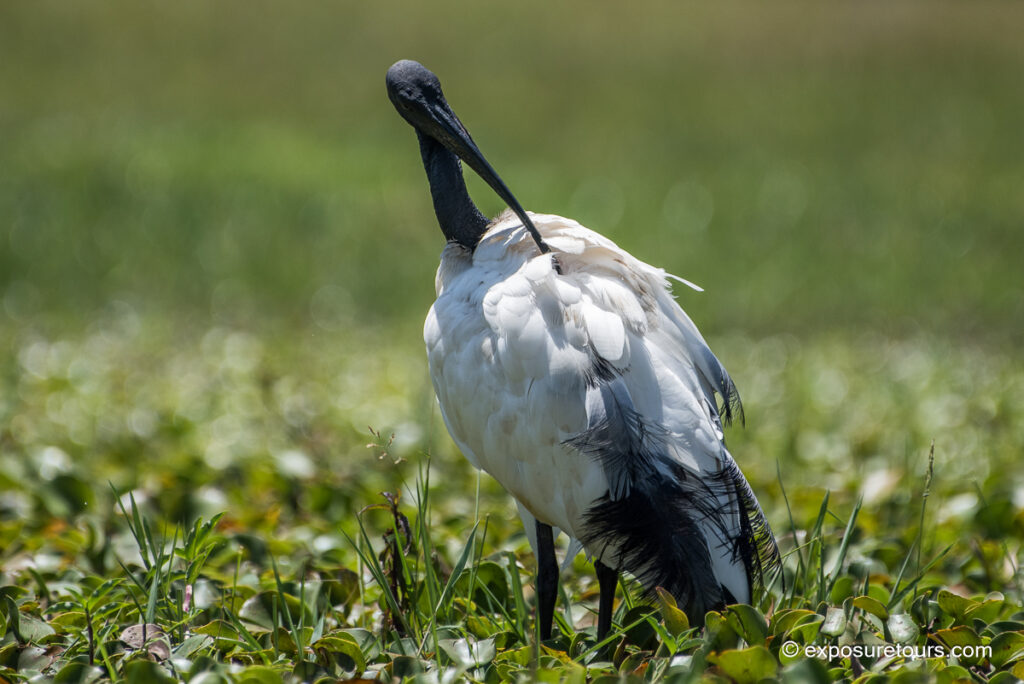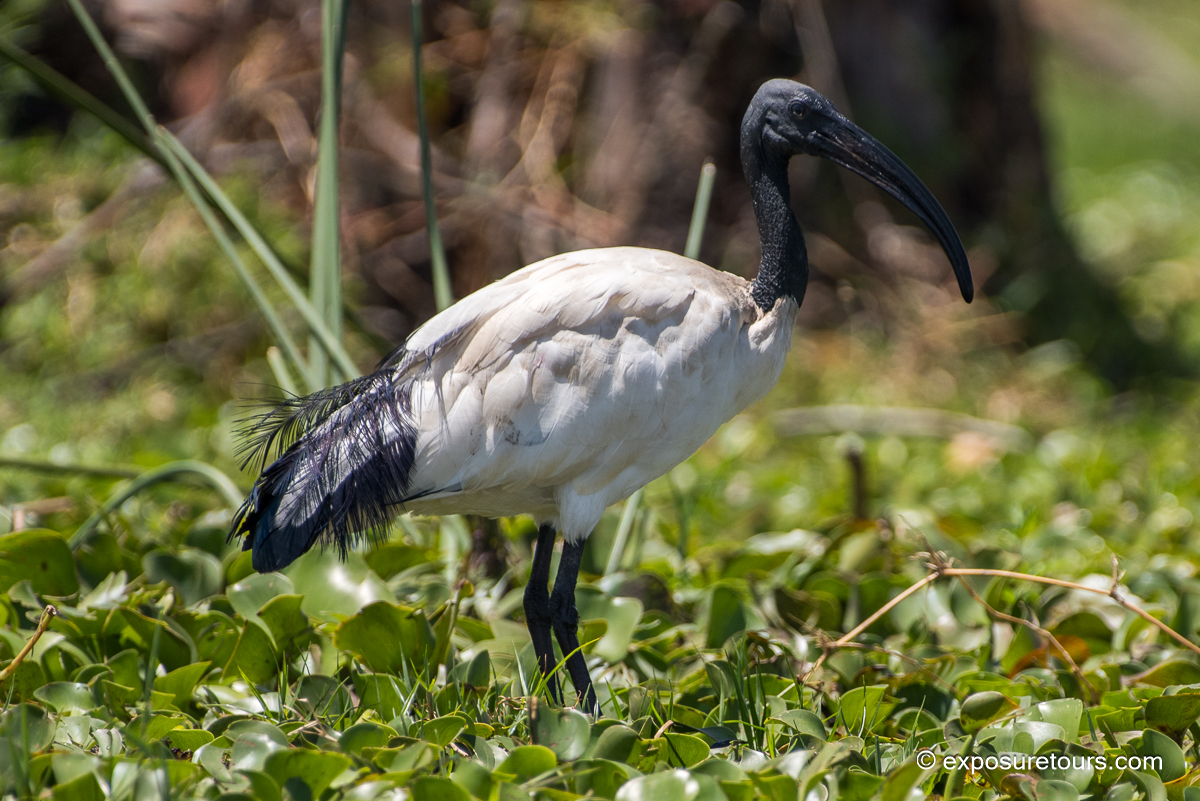
The African sacred ibis (Threskiornis aethiopicus) is a large and distinctive waterbird. It is widely distributed across sub-Saharan Africa, as well as parts of Madagascar and the Middle East. In particular, it is closely associated with wetlands, floodplains, lakeshores, marshes, and irrigated farmland. In these habitats, it forages methodically in shallow water and soft mud. Adults typically measure about 65–75 cm (26–30 in) in length. In terms of weight, they usually range between 1–1.5 kg (2.2–3.3 lb).
The species is instantly recognizable by its white body plumage. This contrasts strongly with the black flight feathers. In addition, it has a bare black head and neck and a long, down-curved bill. African sacred ibises are highly social birds. As a result, they are often seen in flocks or large breeding colonies. Breeding usually coincides with the rainy season, when food is more abundant. Nests are built in trees, reeds, or on islands. The incubation period lasts approximately 28–29 days. During this time, both parents share incubation duties and chick care.
Photography Tips:
African sacred ibises are rewarding subjects. This is due to their size, bold contrast, and predictable behavior. They are often approachable, especially in protected areas. Over time, many individuals become accustomed to vehicles and people. Foraging behavior offers excellent opportunities for action-oriented images. This includes capturing dynamic poses and bill movement in water or mud.
Early morning and late afternoon light helps emphasize feather texture. It also reduces harsh contrast on the white plumage. Careful exposure control is essential to avoid blown highlights. This is particularly important in bright conditions. Slight underexposure can help retain detail in the whites. Side lighting and backlighting are also effective. These techniques highlight feather edges and wing detail, especially during flight or takeoff shots.