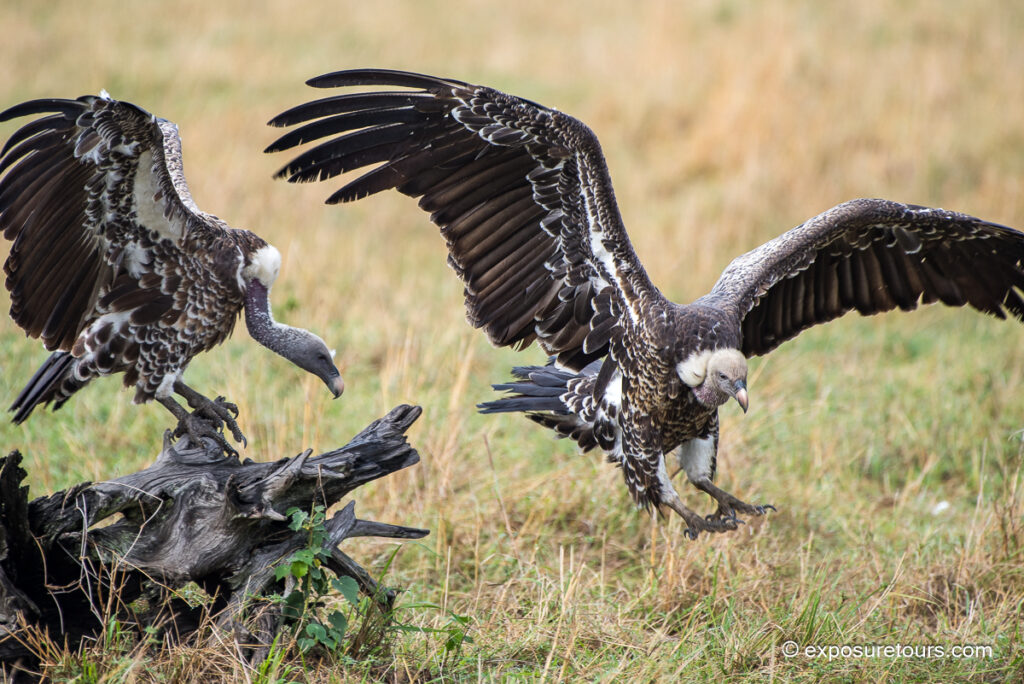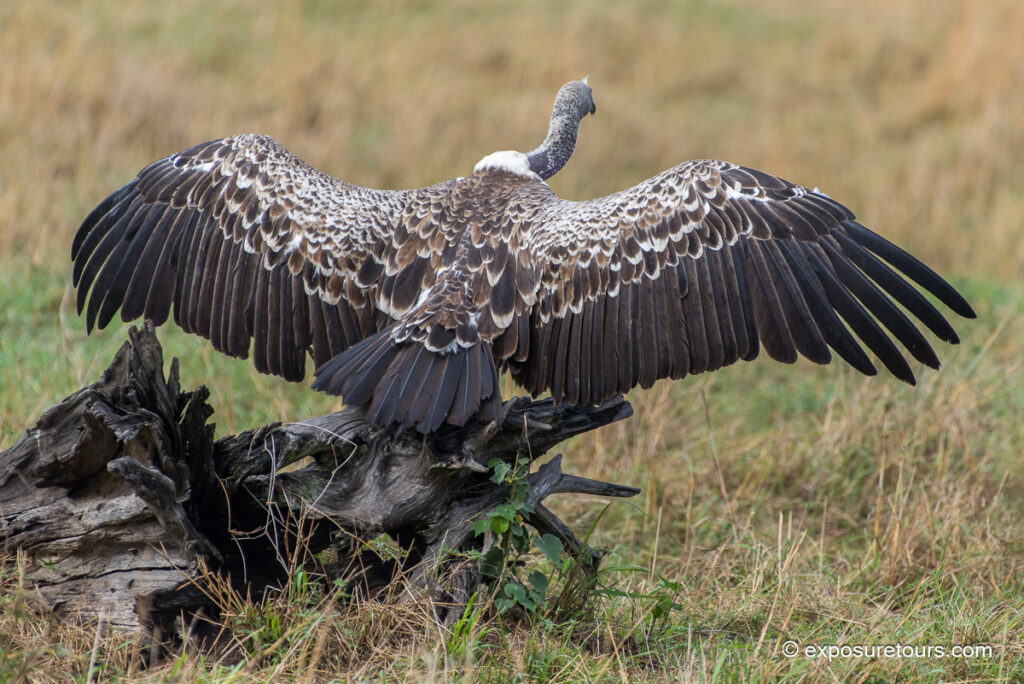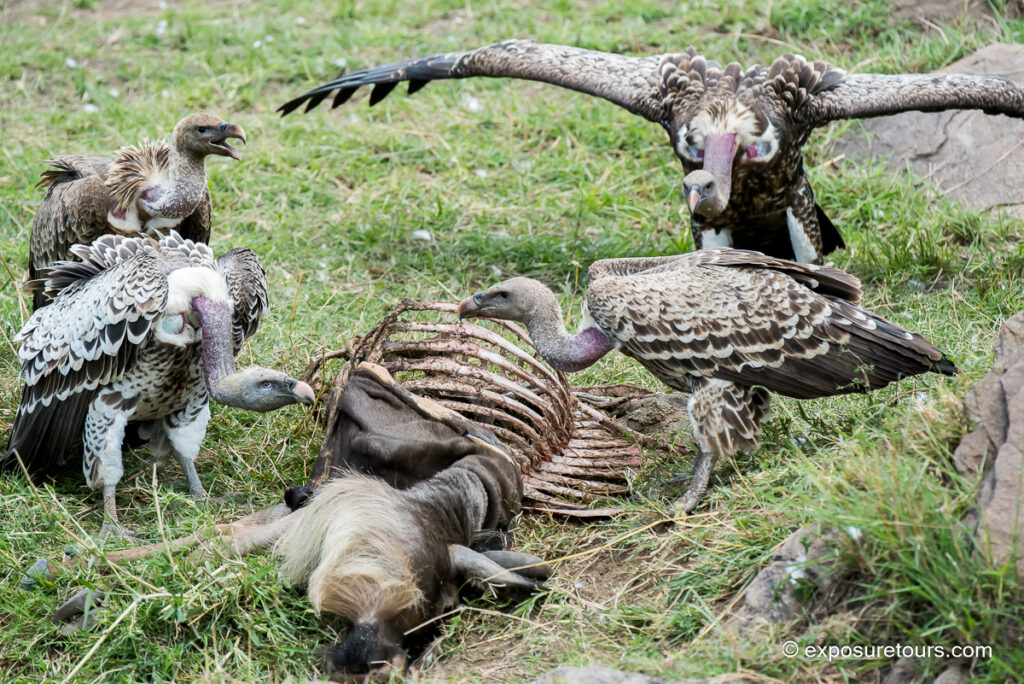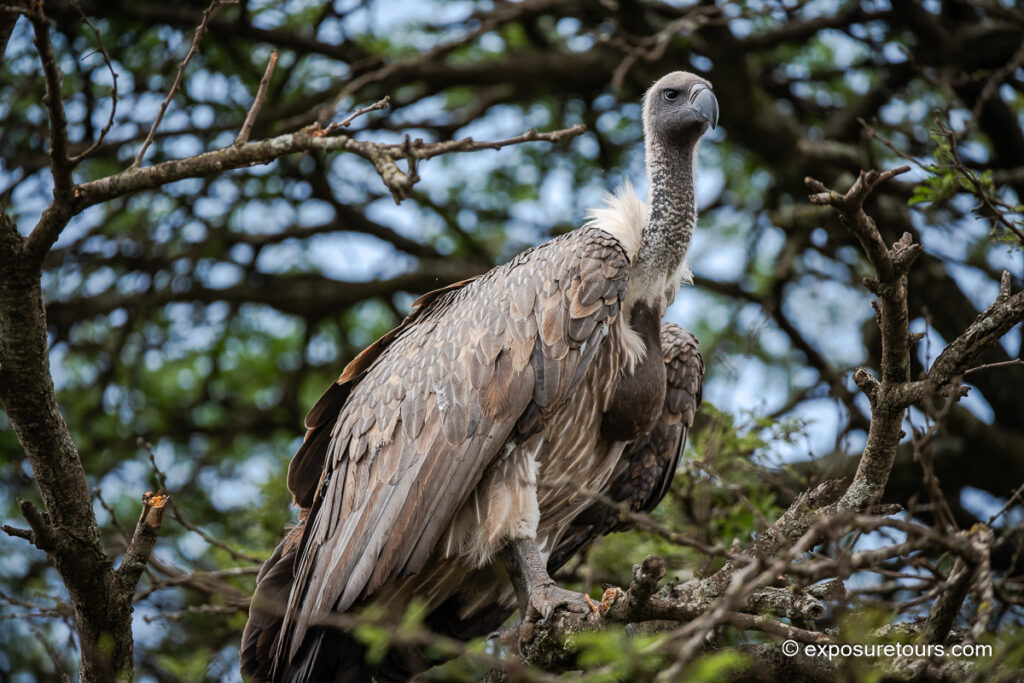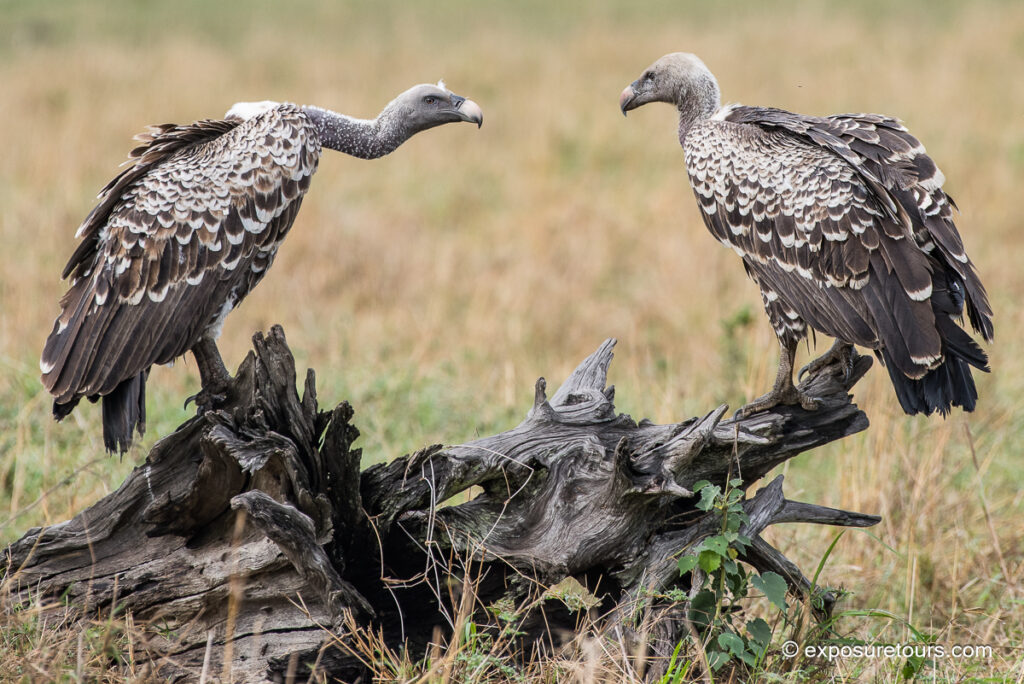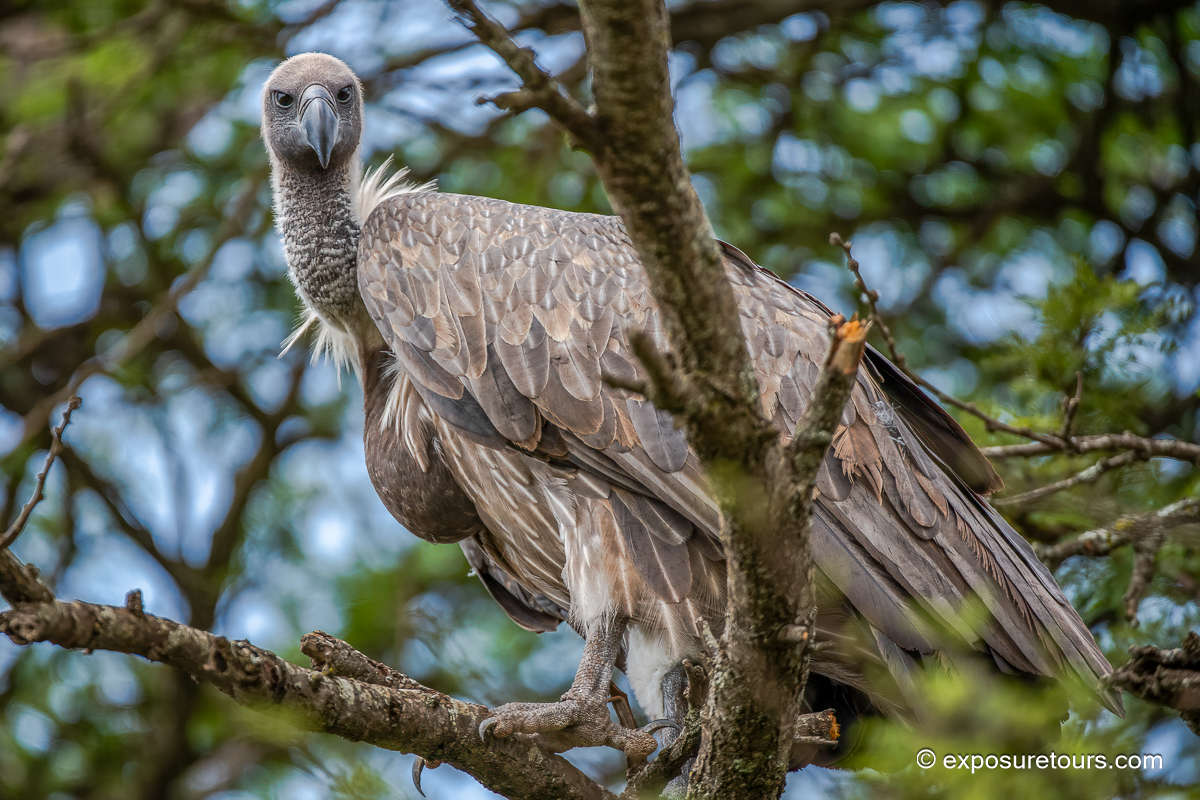
The Rüppell’s Vulture (Gyps rueppelli) is one of Africa’s most remarkable scavenging birds. It is famed for flying at higher altitudes than any other bird species. Furthermore, it is widely distributed across the savannas and semi-arid regions of East and Central Africa.
The species is easily identified by its pale brown plumage, heavily scalloped with dark edges. It also has a relatively pale head and neck. Adults typically measure about 85–103 cm (33–41 in) in length. Their wingspan can reach an impressive 2.3–2.6 m (7.5–8.5 ft). They usually weigh between 6–9 kg (13–20 lbs). Like other vultures, Rüppell’s Vultures play a vital ecological role by consuming carrion and reducing the spread of disease. Breeding pairs nest on cliffs or rocky outcrops. After an incubation period of approximately 55 days, a single chick hatches and is cared for by both parents.
Photography Tips:
Rüppell’s Vultures provide compelling photographic opportunities due to their size, patterns, and dramatic flight behavior. They are often seen soaring in large groups. This allows for striking images against open skies.
Consequently, fast shutter speeds are useful for capturing sharp flight shots, especially when birds circle or descend toward a carcass. Early morning and late afternoon light helps add depth and contrast to their textured feathers. In addition, a telephoto lens is ideal for isolating individuals at feeding sites, while wider focal lengths can be effective for showing group interactions. With patience and careful positioning, photographers may capture powerful takeoff sequences or expressive portraits that highlight the species’ commanding presence.