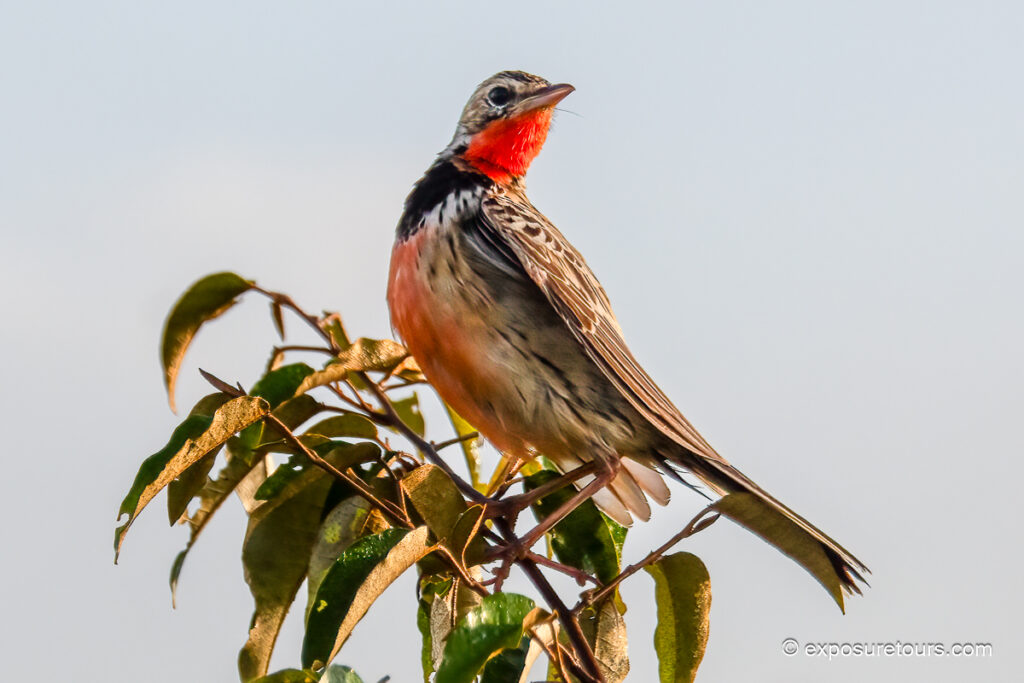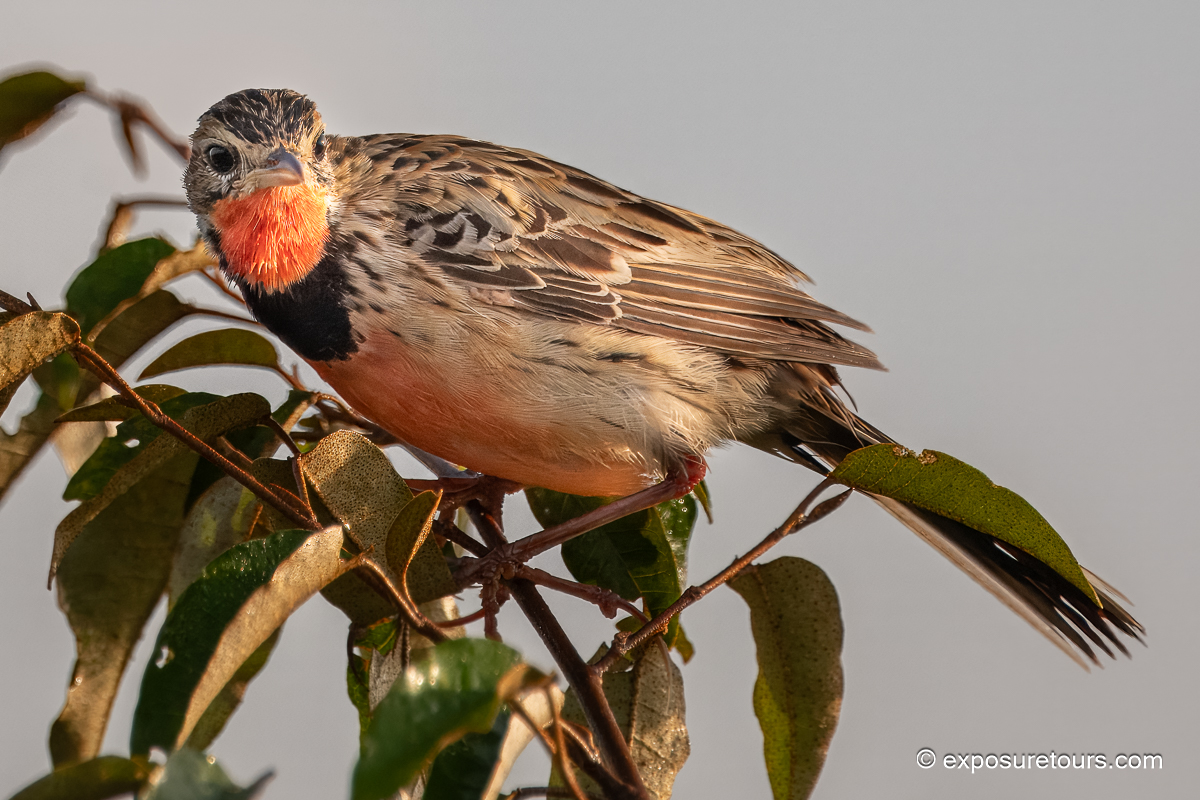
The Rosy-throated Longclaw (Macronyx ameliae) is a striking grassland bird found primarily in moist savannas and highland grasslands of East Africa. Also know as the Rosy-breasted Longclaw. It is best known for its vivid pink throat and upper breast. These features contrast strongly with the bold black facial markings and streaked brown upperparts.
Adults typically measure about 18–20 cm (7–8 in) in length. They usually weigh between 45–55 g (1.6–1.9 oz). Like other longclaws, this species is largely terrestrial. It spends much of its time walking or running through grass in search of insects and other small invertebrates. Breeding generally coincides with the rainy season. This timing ensures food is abundant for growing chicks. The female lays a clutch of 2–3 eggs in a well-hidden ground nest. Incubation lasts approximately 14–16 days. This is followed by active parental care of the chicks.
Photography Tips:
The Rosy-throated Longclaw is a rewarding subject thanks to its bold coloration and open-habitat lifestyle. Early morning light is especially effective. It adds warmth to the pink throat and creates soft shadows in surrounding grasses.
A low shooting angle helps isolate the bird against clean, blurred backgrounds. It also emphasizes the species’ upright stance. A medium telephoto lens around 300 mm is usually sufficient. The bird often allows a relatively close approach. Patience is important. Individuals frequently return to favored perches or display sites.
Capturing singing males perched on grass stems or fence posts adds strong visual interest and makes the Rosy-throated Longclaw a standout subject in any photo safari portfolio.