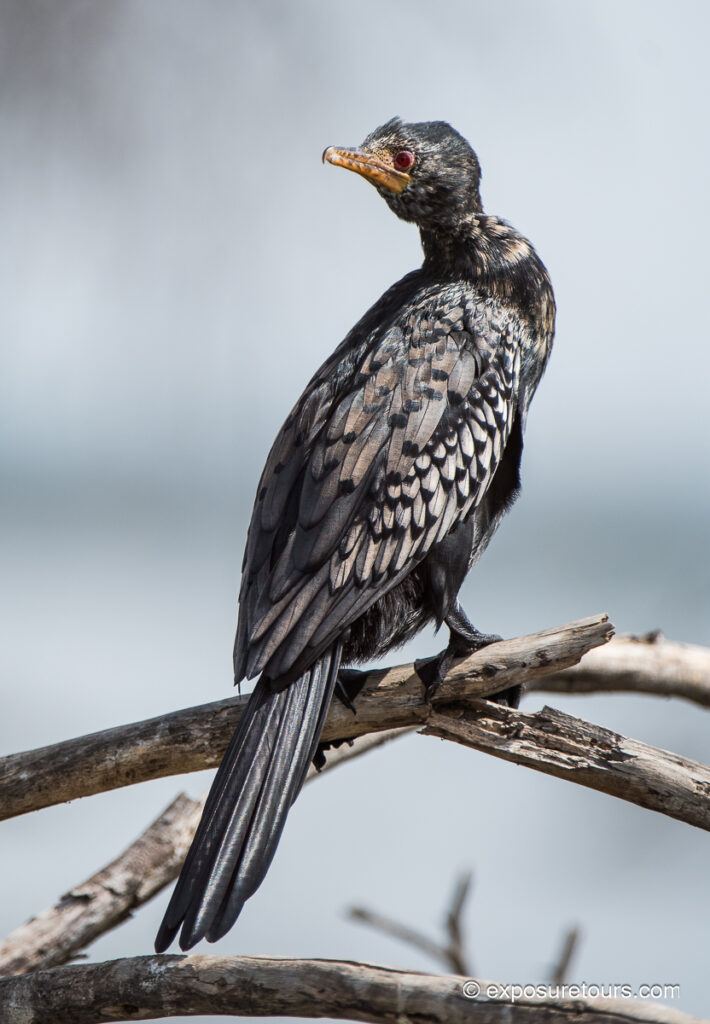
The Reed Cormorant (Microcarbo africanus), also known as the Long-tailed Cormorant, is a slim and agile waterbird widely distributed across freshwater lakes, rivers, wetlands, and reservoirs throughout sub-Saharan Africa. As a result, it is a common sight along many African waterways. It is easily recognized by its slender neck and long tail. In addition, it has dark, glossy plumage that often shows a greenish sheen in good light.
Adults typically measure about 50–55 cm (20–22 in) in length. They usually weigh approximately 600–900 g (1.3–2 lb). The species is an efficient diver. It feeds mainly on small fish captured underwater. Reed Cormorants often nest colonially. These nests are usually built in trees or reeds close to water. The female typically lays 2–5 eggs. Incubation lasts around 23–25 days. Both parents share incubation and chick-rearing duties. Fledging occurs after roughly 6–7 weeks.
Photography Tips:
The Reed Cormorant is a rewarding subject. This is largely due to its elegant shape and frequent activity on and around water. Early morning and late afternoon light are especially effective. Softer light adds subtle highlights to the dark plumage and reduces harsh reflections. Positioning near calm water increases opportunities to capture diving and surfacing behavior. It also allows for images of classic wing-drying poses.
A medium telephoto lens in the 300–400 mm range is generally sufficient. This works well because the species often allows a reasonably close approach. Clean backgrounds, such as still water or distant reeds, help isolate the bird’s form. Capturing moments of underwater emergence or fish handling adds strong storytelling value and makes the Reed Cormorant a valuable addition to any photo safari portfolio.