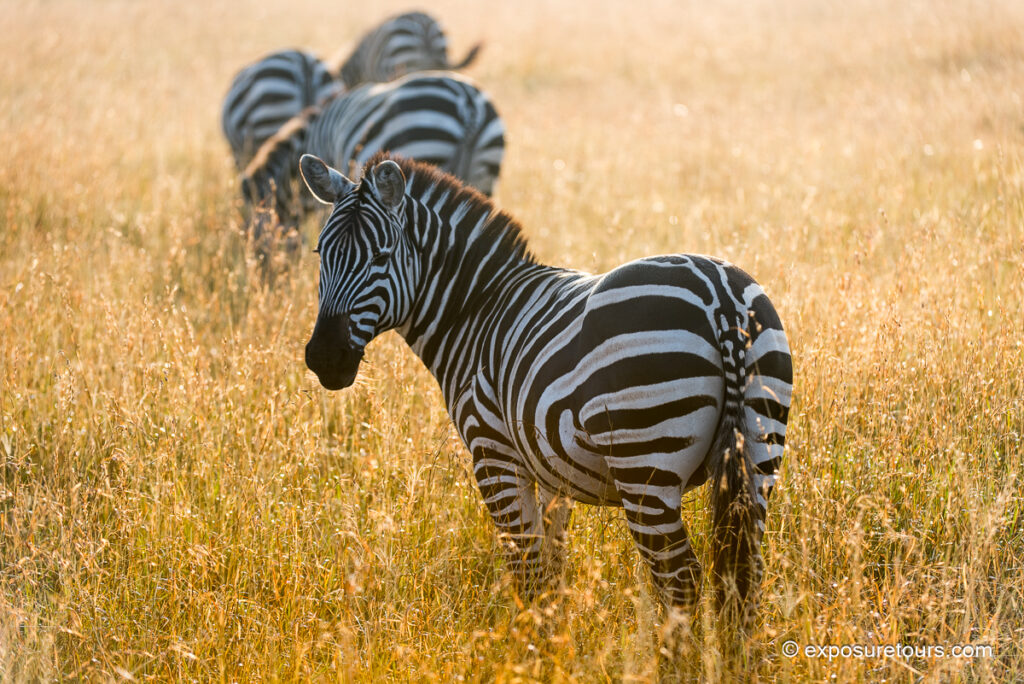
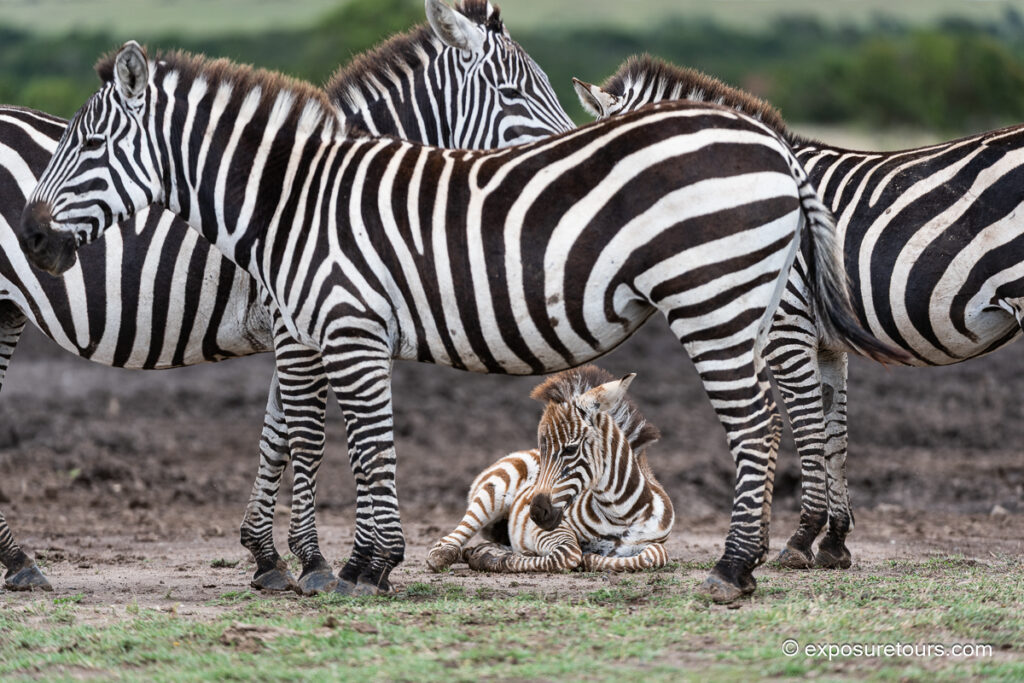
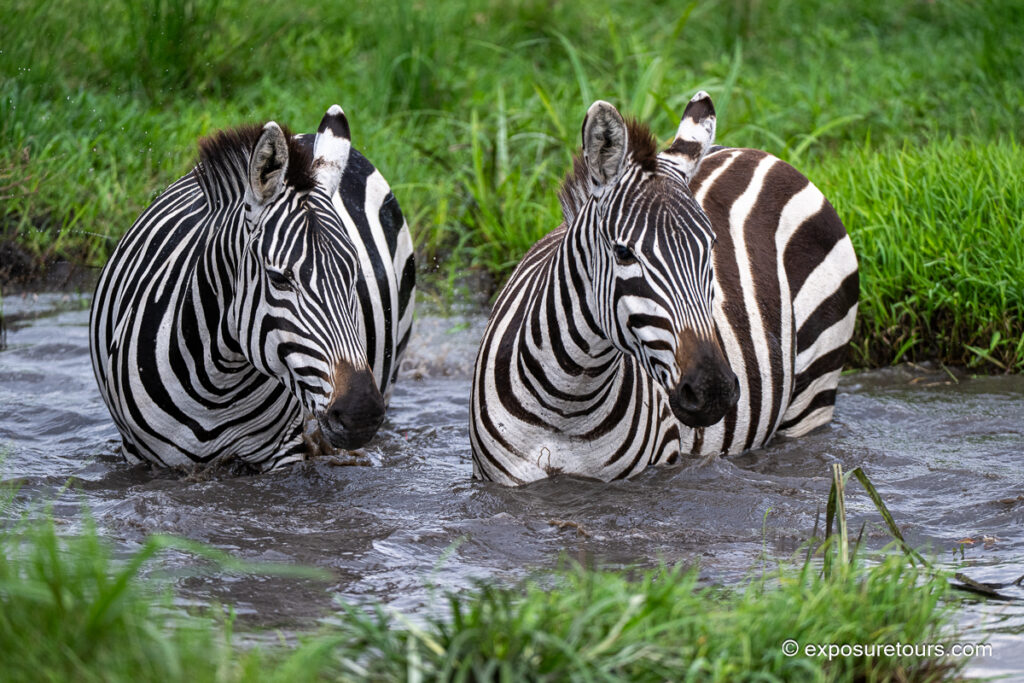
The Plains Zebra (Equus quagga), also known as the Common Zebra, is one of Africa’s most recognizable mammals. It is instantly identified by its bold black-and-white stripes. Adults typically stand about 120–140 cm at the shoulder. They weigh between 175–385 kg. Males and females are similar in size.
Plains Zebras inhabit open savannahs, grasslands, and lightly wooded areas across East and Southern Africa. They graze primarily on grasses. Their unique stripe patterns are thought to aid in individual recognition. The stripes may also confuse predators and help deter insects. This makes them a fascinating subject for both observation and photography.
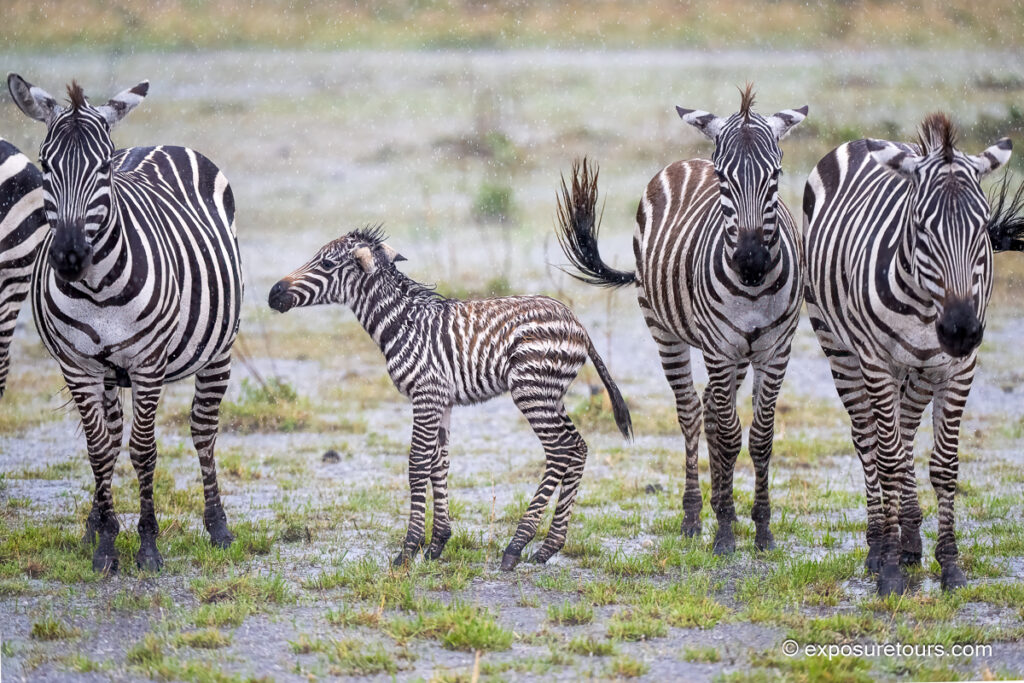
The gestation period of the Plains Zebra is approximately 12 to 13 months. After this period, a single foal is born. Newborn foals can stand and walk within minutes of birth. They quickly bond with their mother and learn her distinctive stripe pattern.
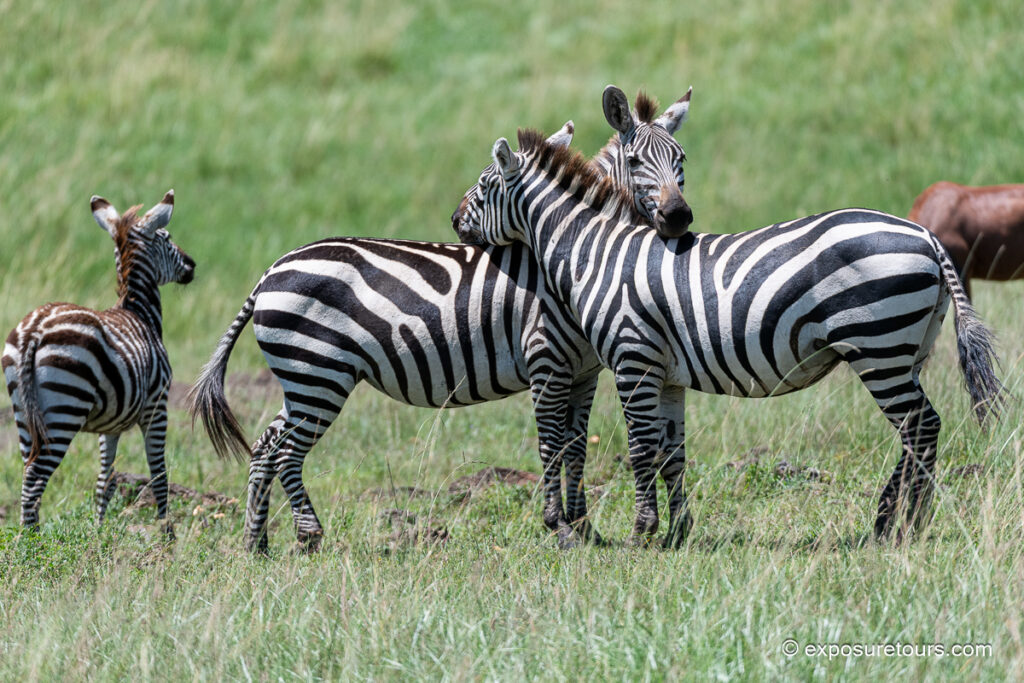
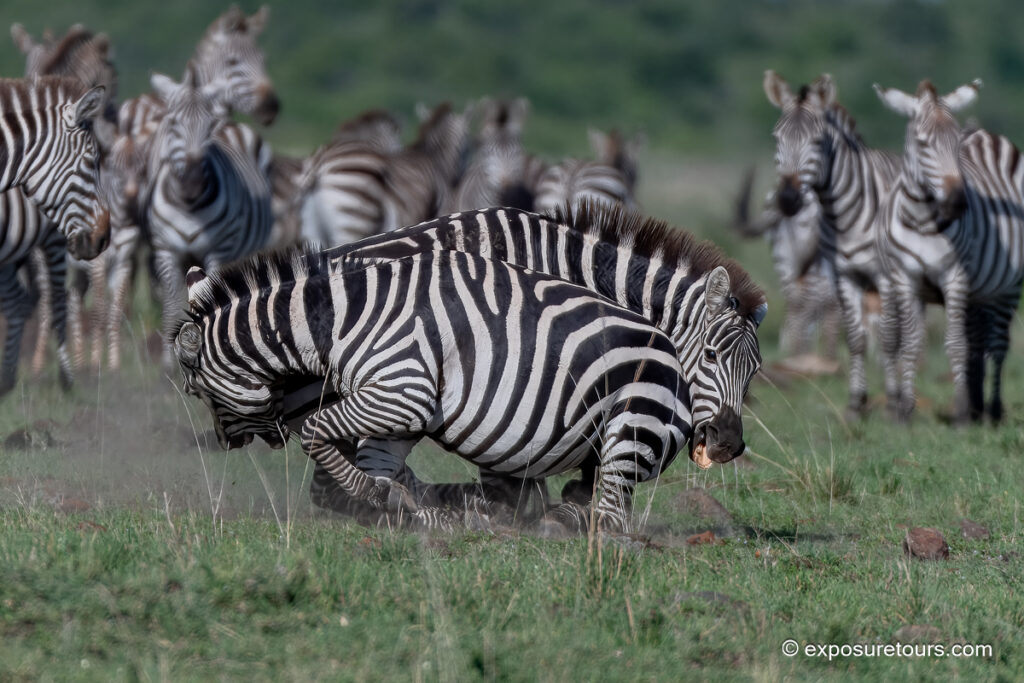
Highly social animals, Plains Zebras form family groups known as harems. These are led by a dominant stallion and consist of several mares and their offspring.
Photo Tips:
The groups often gather into large herds, especially during migrations. This creates dramatic and visually striking scenes that are a highlight of any photo safari and a cornerstone of Africa’s iconic wildlife landscapes. Try and focus on a mix of viewpoint including smaller well composed shots especially with foals.
Close to the road zebra tend to be quite shy, they will watch you and turn away as soon as you settle in to take a shot so be prepared and be fast before they move.