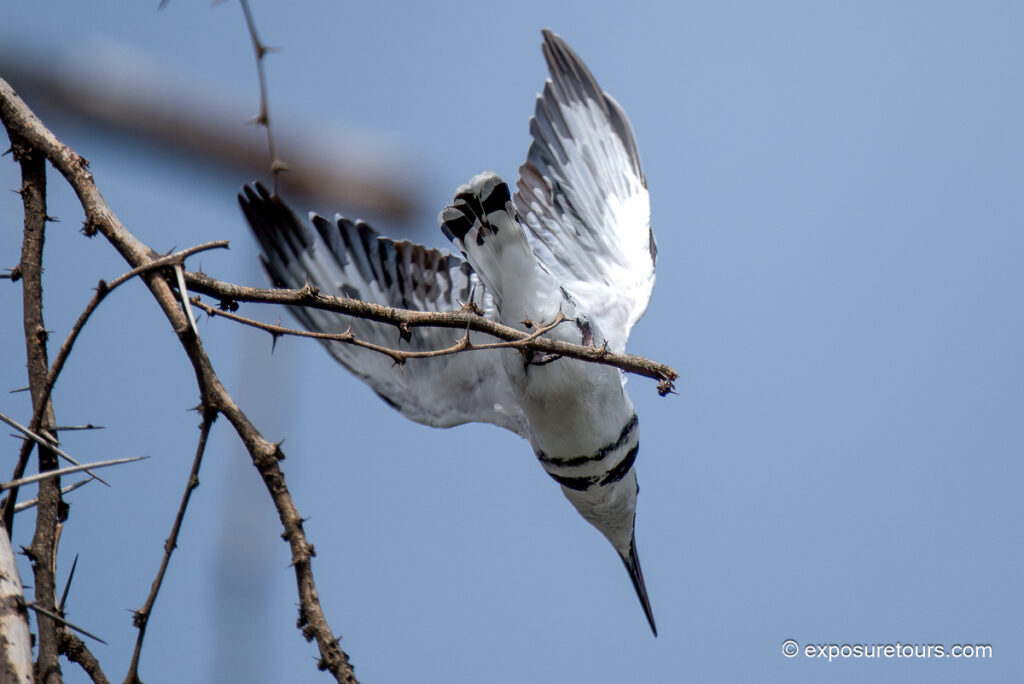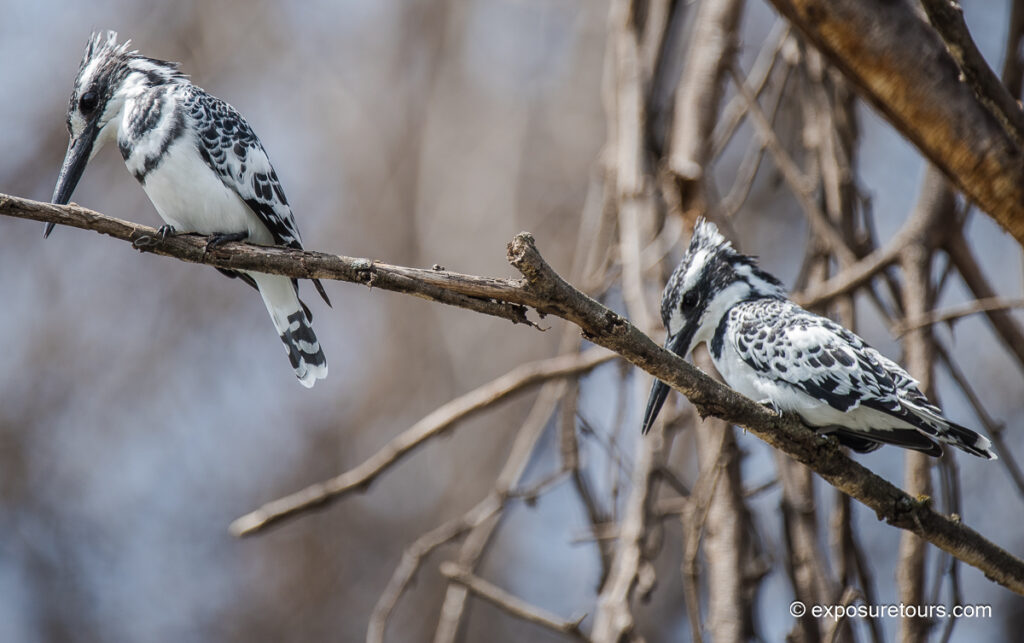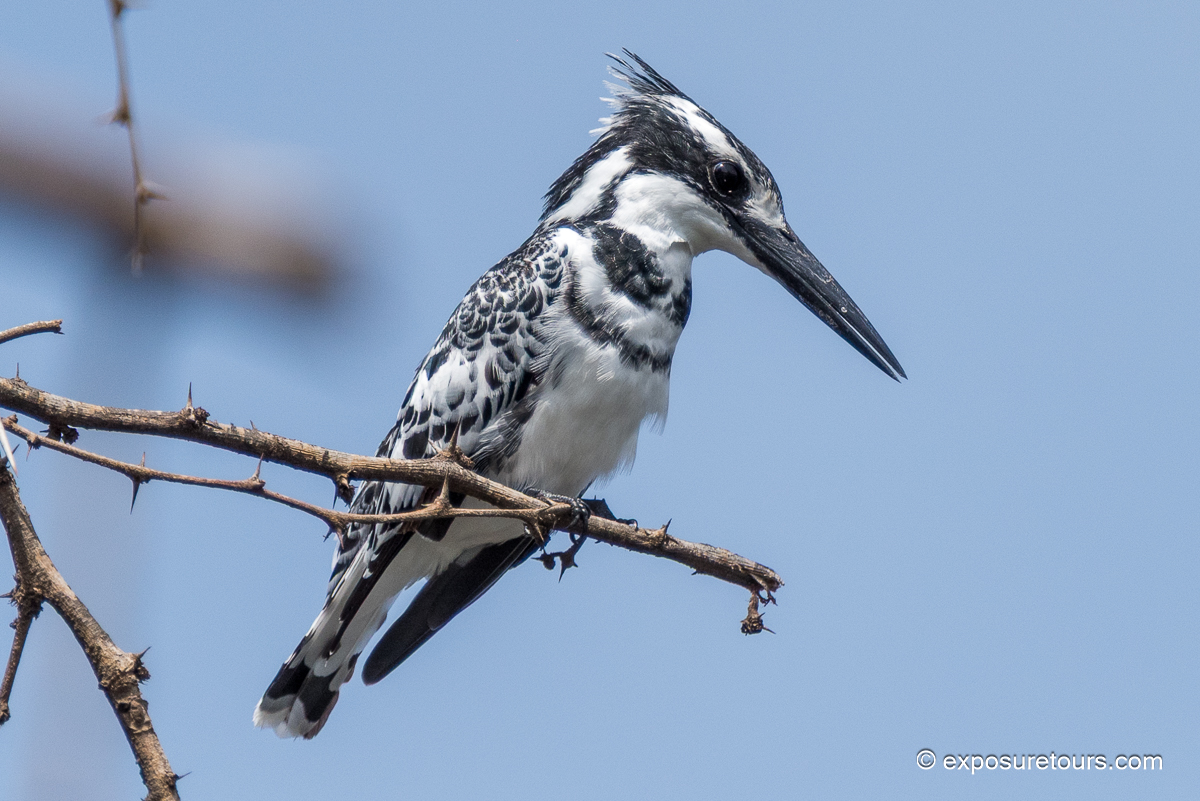
The Pied Kingfisher (Ceryle rudis) is a striking black-and-white waterbird commonly found along rivers, lakes, wetlands, and coastal lagoons across much of sub-Saharan Africa. As a result, it is one of the most familiar kingfishers encountered on safari.
It is instantly recognizable by its bold plumage, shaggy crest, and distinctive hunting style. Adults typically measure about 25 cm (10 in) in length. They usually weigh approximately 60–100 g (2.1–3.5 oz). Males and females appear similar at first glance. However, females generally show a single black breast band, while males display a double band.
Pied Kingfishers are highly specialized fish hunters. In particular, they are famous for their ability to hover briefly above water before diving. The species nests in burrows excavated into sandy banks. The female typically lays 3–6 eggs. Incubation lasts around 18–21 days. Both parents share incubation duties and feed the chicks. Fledging usually occurs after about 24–26 days.
Photography Tips:
The Pied Kingfisher is an exciting and rewarding subject. This is largely due to its energetic behavior and dramatic hunting techniques. Early morning and late afternoon light are ideal. Softer light helps control contrast on the black-and-white plumage and reduces glare from reflective water surfaces. Positioning near calm water increases the chances of capturing hovering behavior.
This is one of the species’ most iconic moments. A fast shutter speed is essential to freeze action during hovering and dives. A telephoto lens in the 300–500 mm range works well for both flight shots and perched portraits. Capturing sequences of hovering, diving, or fish handling adds strong storytelling value and makes the Pied Kingfisher a dynamic highlight in any photo safari portfolio.