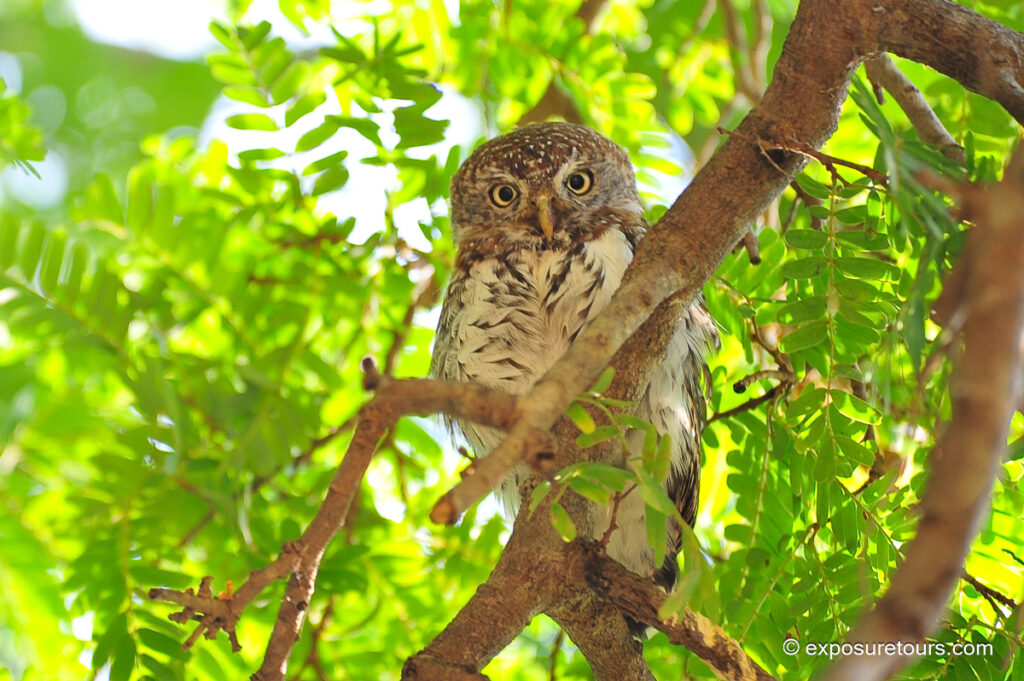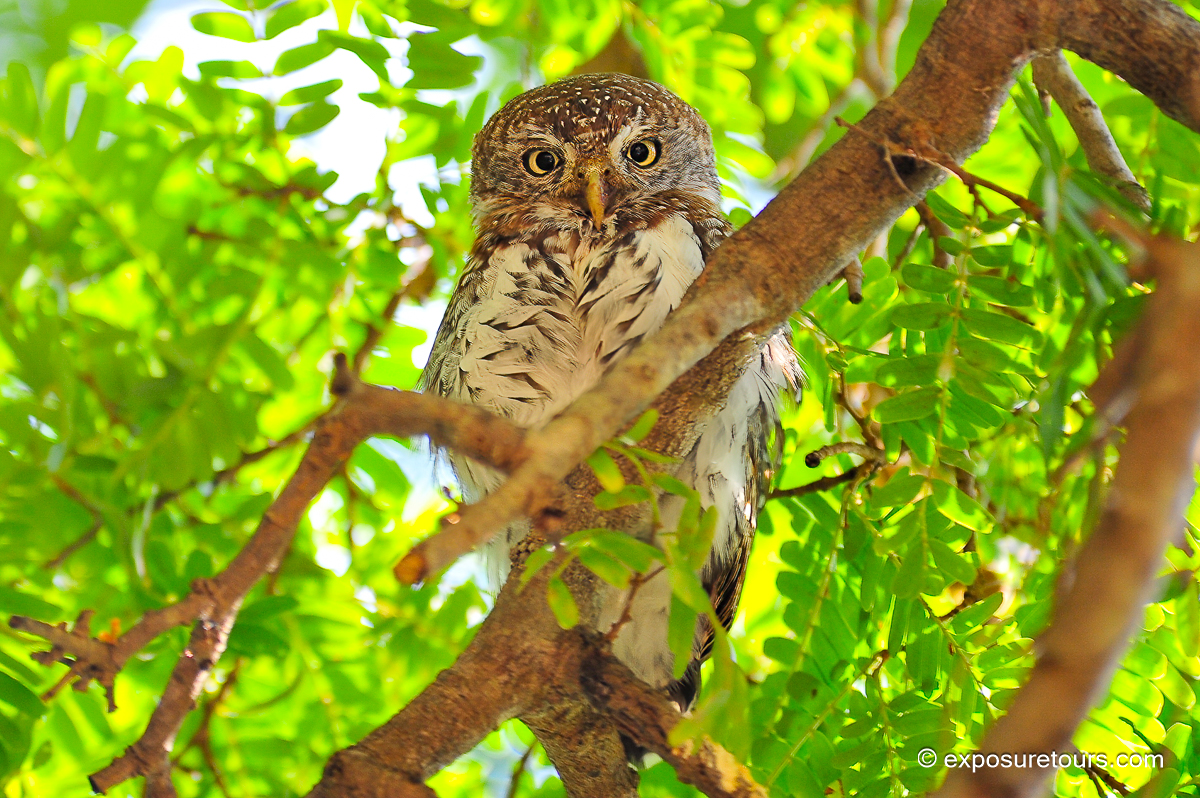
The Pearl-spotted Owlet (Glaucidium perlatum) is a small, striking owl found across sub-Saharan Africa. It is particularly common in savannas, open woodlands, and acacia-dotted landscapes. As a result, it is often a familiar sight for safari-goers.
The species is instantly recognizable by its compact size and rounded head. In addition, it has distinctive “pearl-like” white spots on its brown upperparts. Adults typically measure about 16–18 cm (6–7 in) in length. They usually weigh around 70–120 g (2.5–4.2 oz).
The Pearl-spotted Owlet is primarily nocturnal. However, it can often be observed during the day, especially when calling or perching openly. The female typically lays 2–4 eggs in tree cavities, old nests, or termite mounds. Incubation lasts approximately 28–30 days. Both parents share responsibility for feeding and caring for the chicks. Fledging occurs after roughly 5–6 weeks.
Photography Tips:
The Pearl-spotted Owlet is a rewarding subject. This is largely due to its compact size, expressive face, and striking plumage. Early morning or late afternoon light is particularly effective. Softer light highlights the subtle patterns of its feathers and reduces harsh shadows.
A medium to long telephoto lens in the 300–500 mm range is recommended. This is especially useful when capturing perching or hunting behavior from a distance. Clean, uncluttered backgrounds, such as open sky or blurred foliage, help emphasize the owl’s features. Patience is important. The owlets may remain motionless for long periods. However, they occasionally call, preen, or scan their surroundings. Capturing these moments adds strong storytelling value and makes the Pearl-spotted Owlet a memorable subject for any photo safari portfolio.