The Marabou Stork (Leptoptilos crumenifer) stands out as one of Africa’s most distinctive and often misunderstood birds. People commonly refer to it as the “undertaker bird” because of its hunched posture, bare head, and dark wings. Nevertheless, despite its ungainly appearance, the species shows remarkable adaptability and presence. You will often encounter it around wetlands and savannas, as well as rubbish dumps and urban areas throughout sub-Saharan Africa.
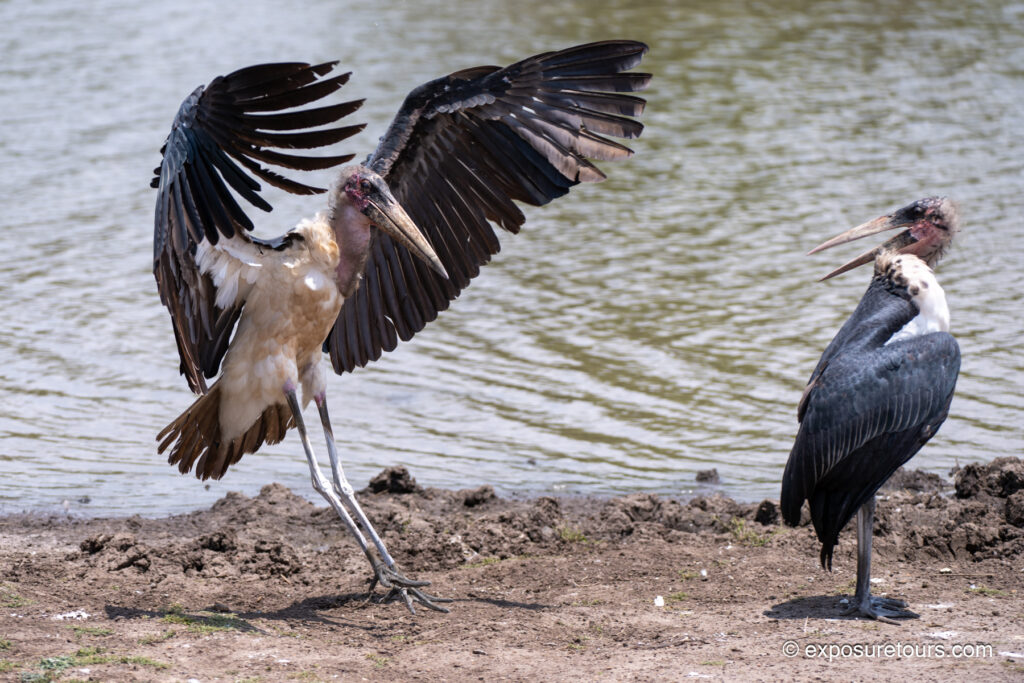
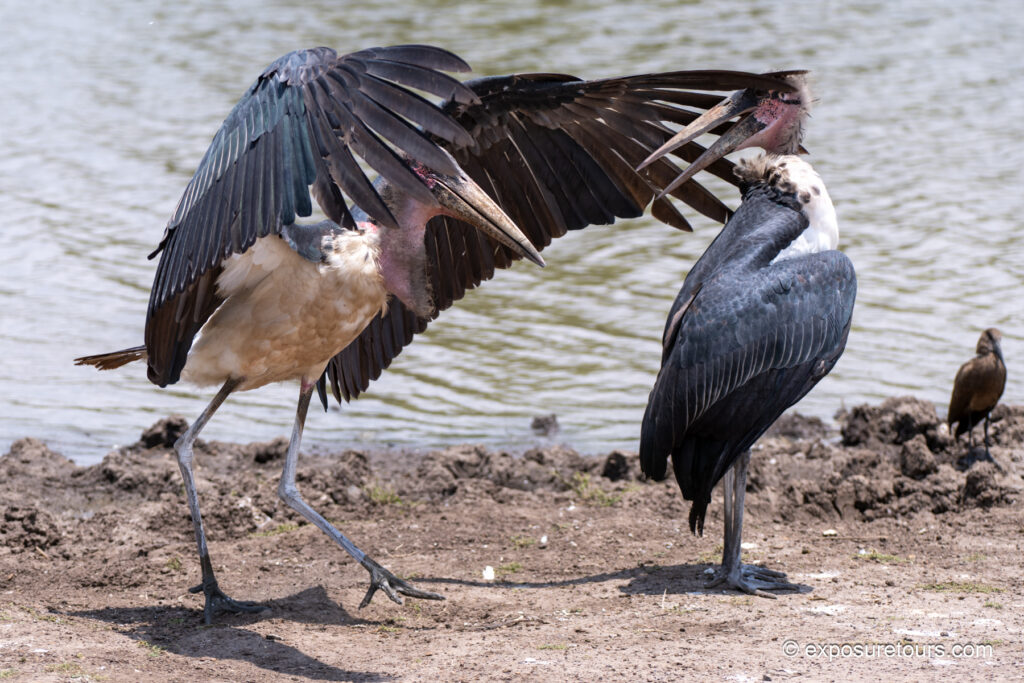
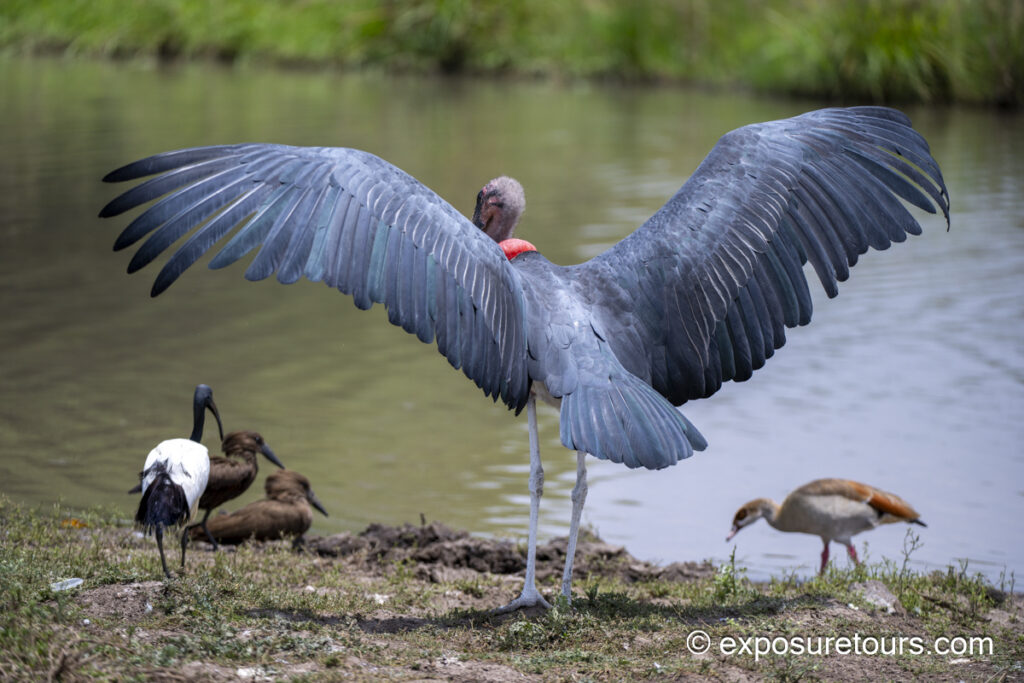
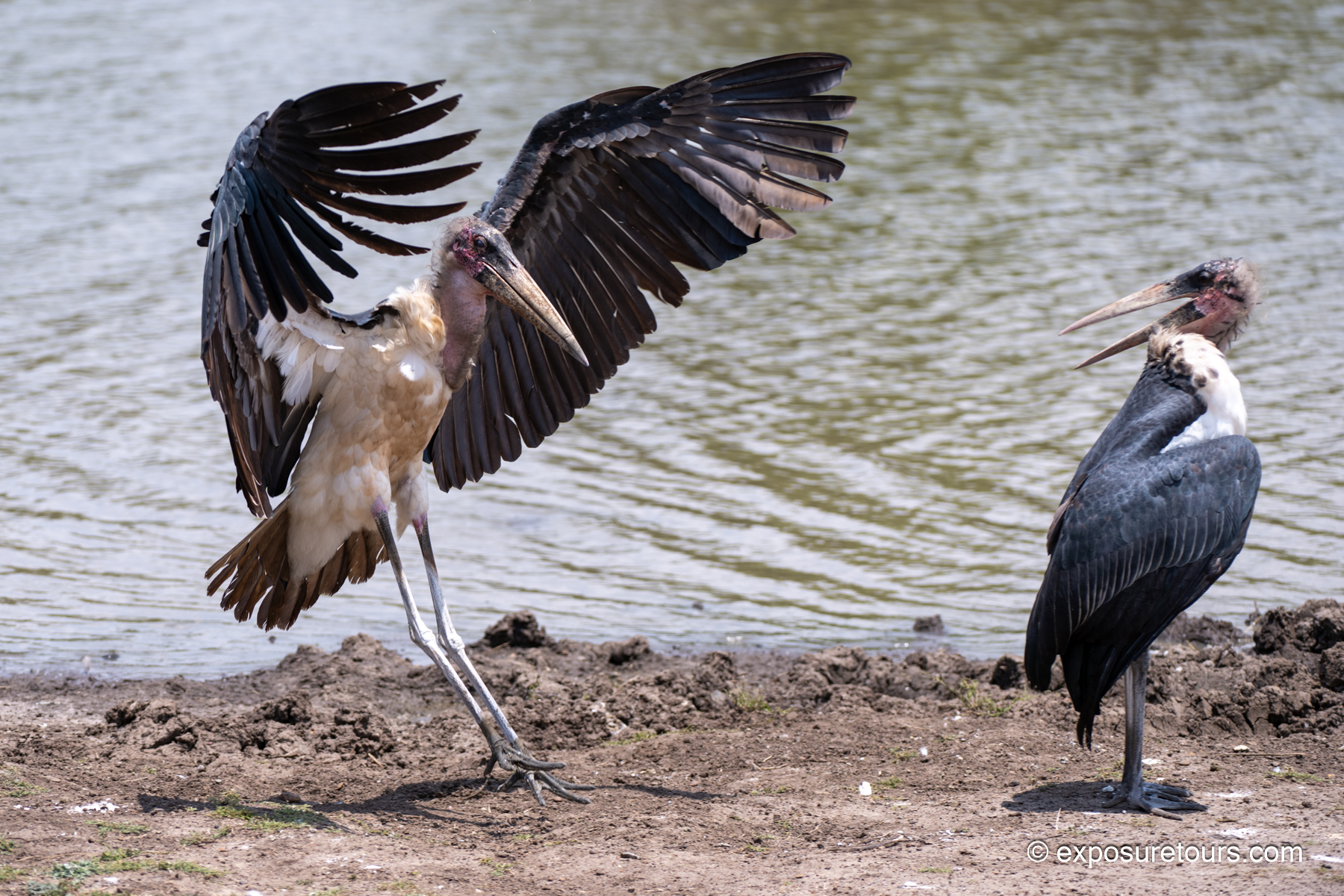
Adults typically reach a height of 120–150 cm (47–59 in). They also display an enormous wingspan of 250–290 cm (98–114 in). Most individuals weigh between 4.5–8 kg (10–17.5 lbs). Distinctive features include the bald pinkish head and neck, a massive bill, and a prominent throat pouch that plays a role in display behavior.
Marabou Storks feed opportunistically and actively support the ecosystem through their role as scavengers. They consume carrion, fish, insects, small mammals, reptiles, and scraps found near human settlements. During the breeding season, they form large nesting colonies. They build their nests high in tall trees, usually close to water. A typical clutch contains 2–3 eggs, and incubation lasts about 30–34 days. Both parents incubate the eggs and feed the chicks. After roughly three to four months, the young birds fledge.
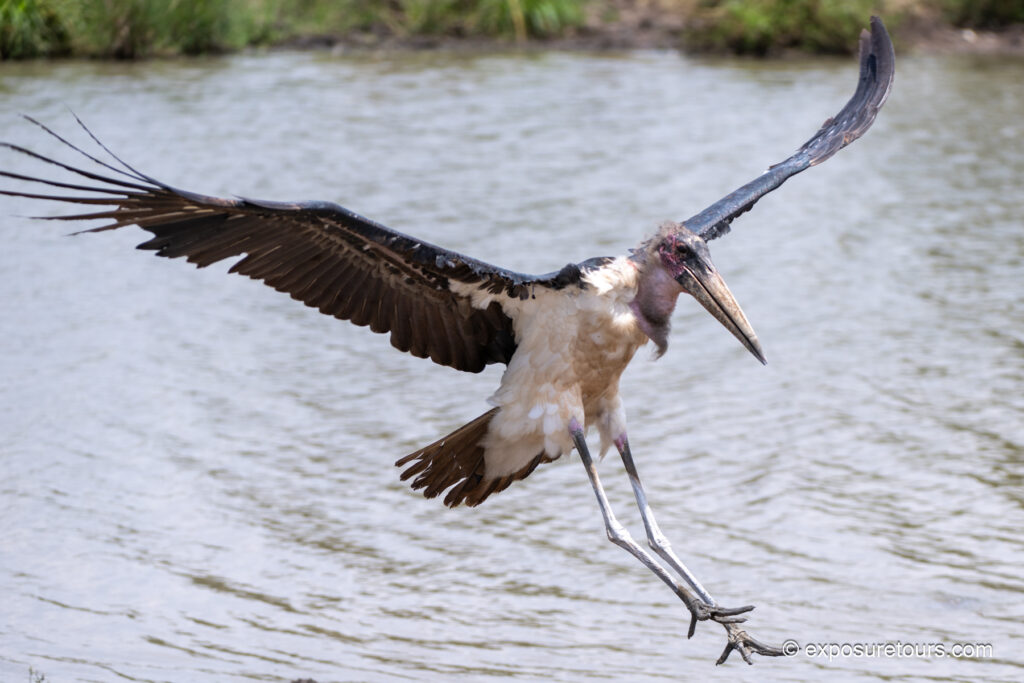
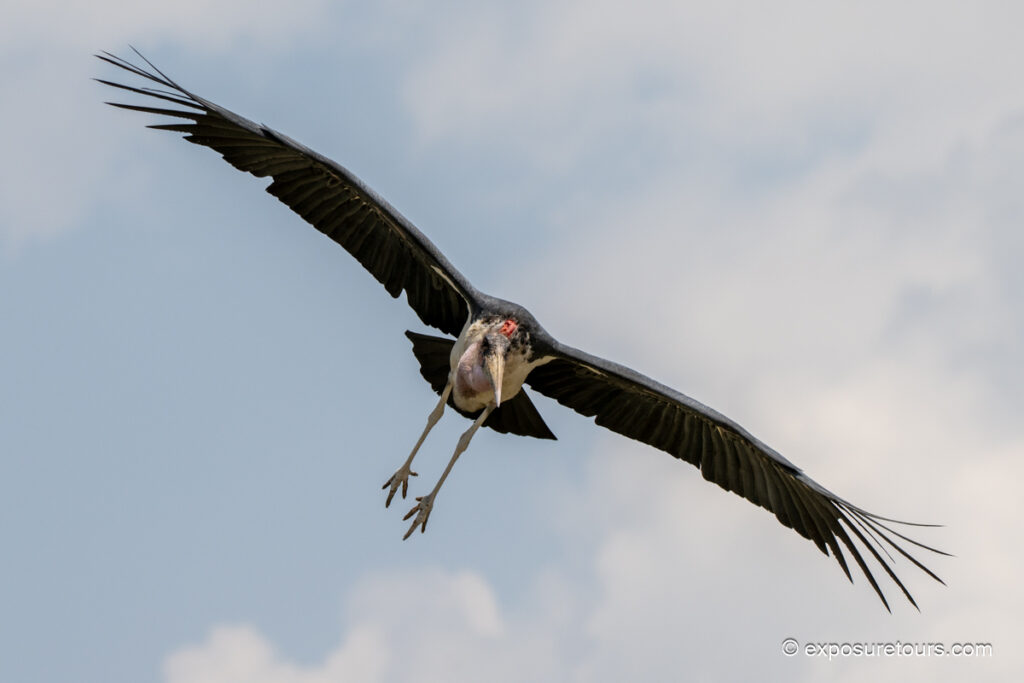
In the air, the Marabou Stork surprises many observers. It glides effortlessly with minimal wingbeats, creating a striking contrast to its awkward, heavy movement on the ground.
Photography Tips:
For photographers, the Marabou Stork rewards those who look beyond conventional beauty. Early morning and late afternoon light softens harsh shadows and enhances the texture of the bird’s feathers and bare skin. A telephoto lens helps isolate individuals within dense colonies, while a wider focal length suits flight shots and interactions at nesting sites.
Flight photography offers especially strong visual impact. The stork’s vast wingspan and slow, powerful glide produce dramatic silhouettes against the sky. Watch for birds as they land or take off, when fully extended wings create the most compelling compositions. With patience and careful framing, photographers can turn this often-overlooked species into a striking highlight of any African wildlife portfolio.