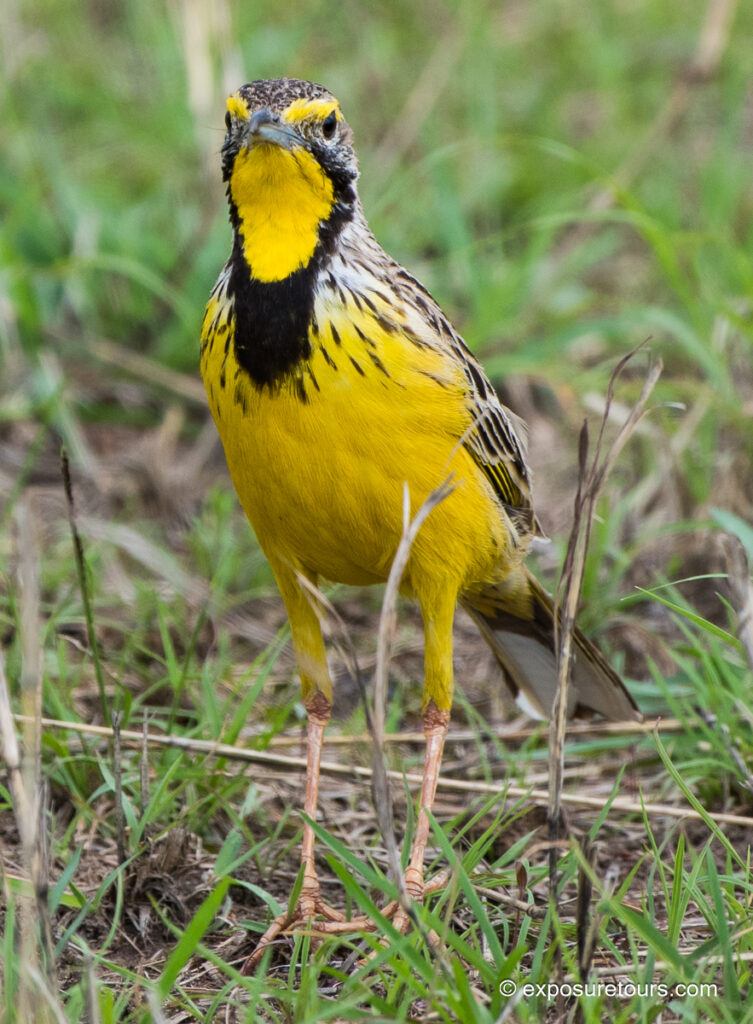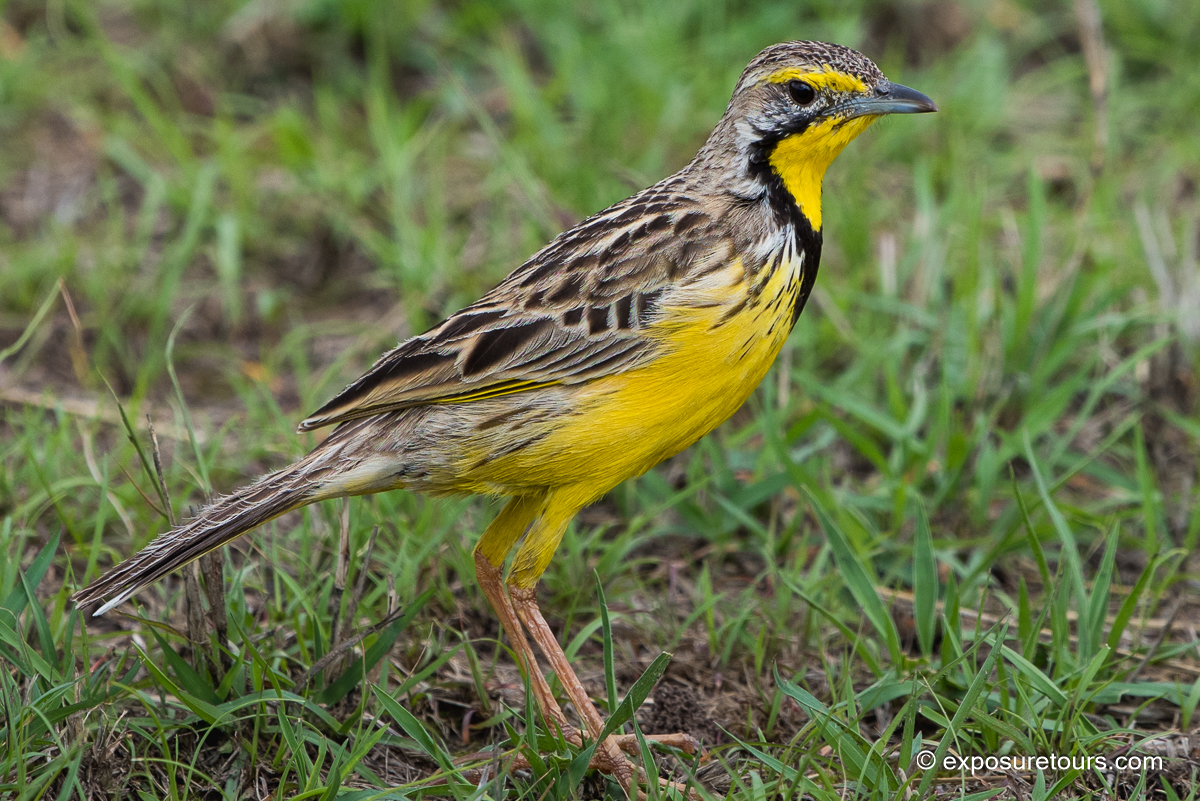
The Yellow-throated Longclaw (Macronyx croceus) is a striking grassland bird of East and southern Africa. It is most commonly found in open savannas, floodplains, and damp grasslands. Adults typically measure 19–21 cm (7.5–8.3 in) in length. They weigh approximately 35–45 grams.
The species is easily recognized by its bright yellow throat and breast. This coloration contrasts sharply with a black facial mask and streaked brown upperparts. In addition, the Yellow-throated Longclaw spends much of its time on the ground. It prefers walking rather than hopping as it searches for insects and other small invertebrates. Like all birds, there is no gestation period. Instead, females lay 2–3 eggs. These are incubated for about 13–15 days in a well-hidden grass nest.
Photography Tips:
The Yellow-throated Longclaw offers excellent opportunities. This is largely due to its bold coloration and relatively approachable behavior. To begin with, using a moderate telephoto lens of 300–400 mm works very well. This is especially effective when photographing birds standing atop grass stems or termite mounds.
Early morning light is particularly rewarding. It helps enhance the rich yellow tones of the throat and breast. In addition, shooting from a low angle helps isolate the subject. This approach also creates a soft, grassy background. Finally, patience is important. Individuals often return to favored perches, allowing time to refine composition and capture clean, well-balanced images.