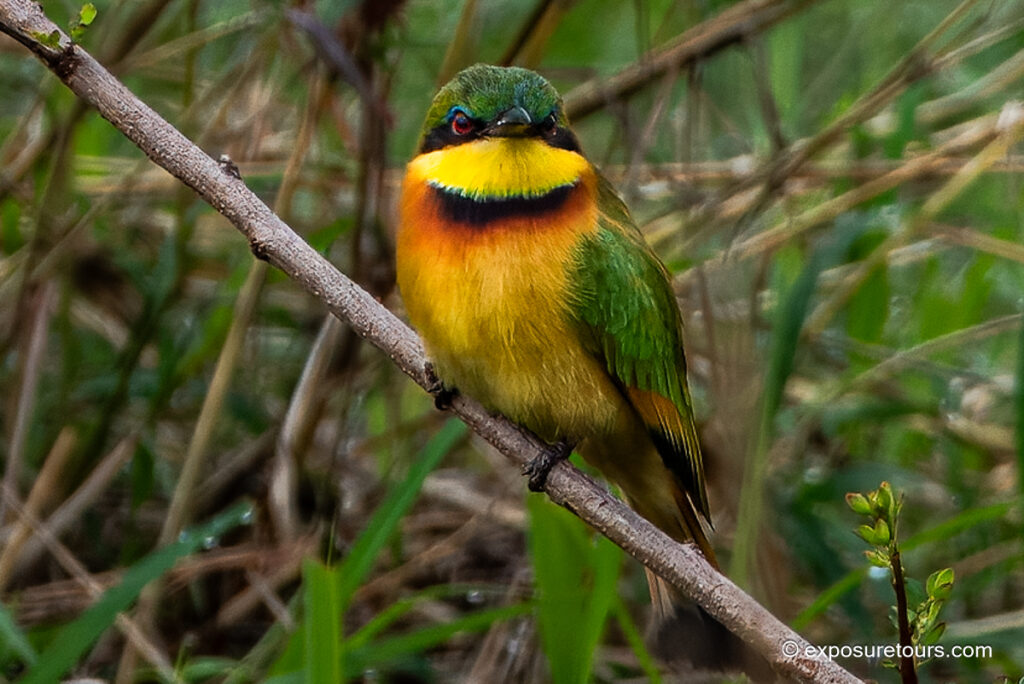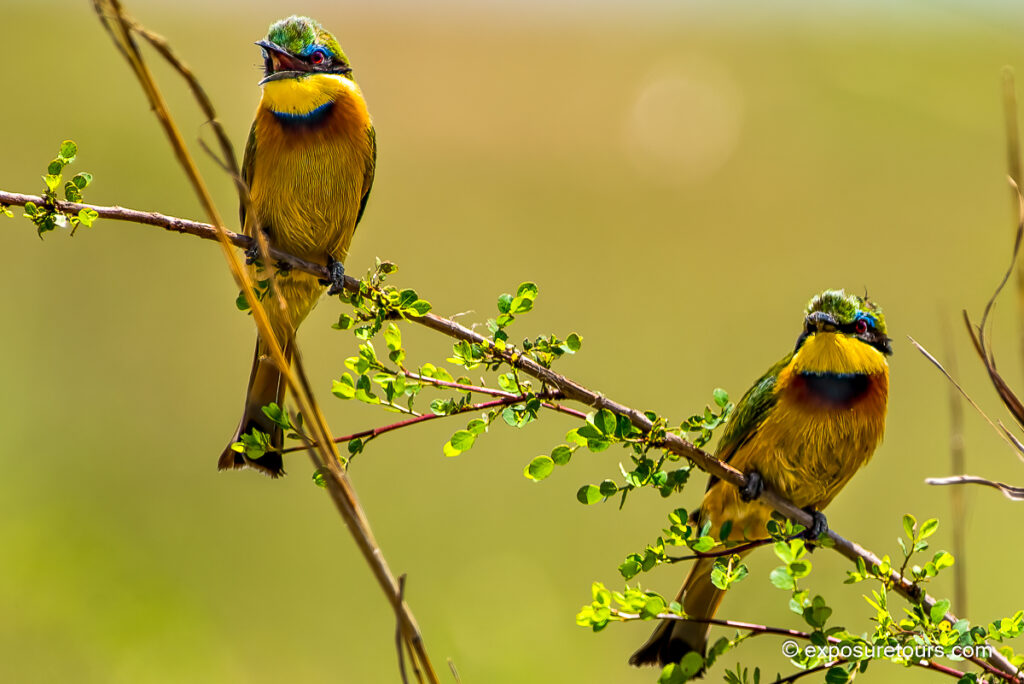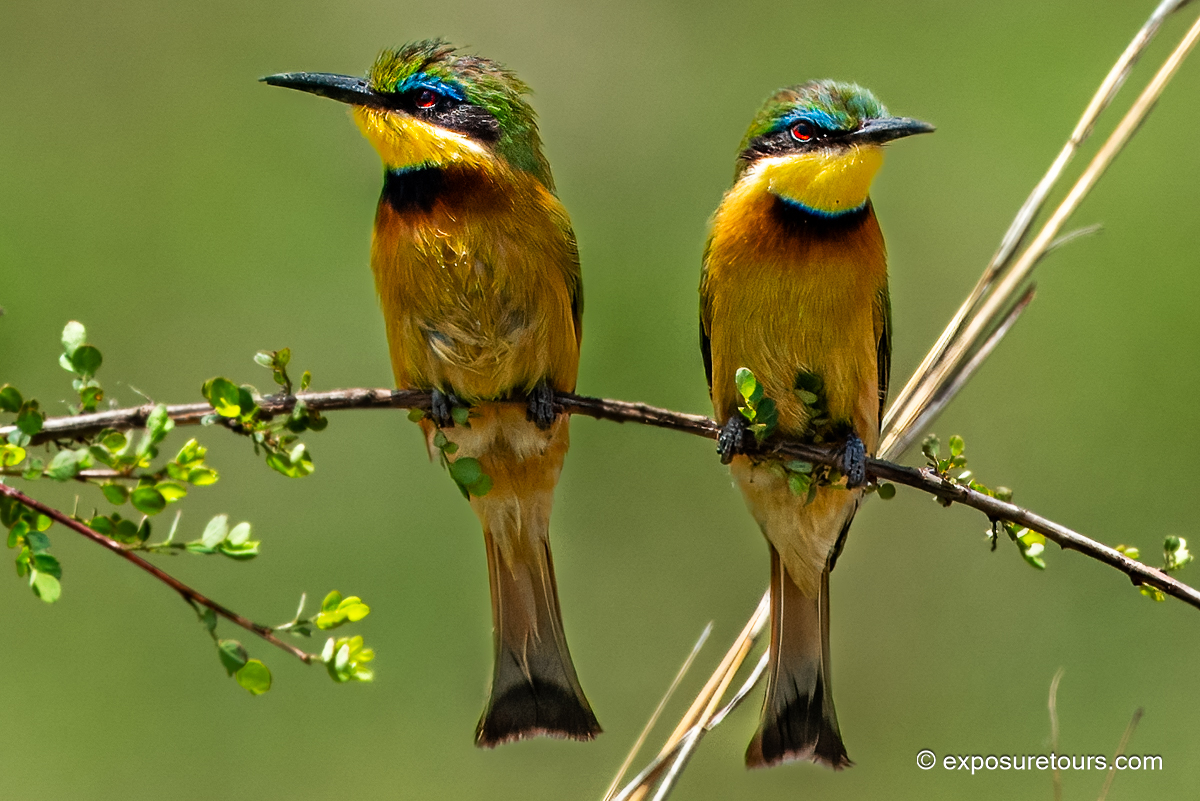
The Little Bee-Eater (Merops pusillus) is a small, brightly colored bird found across sub-Saharan Africa. It prefers savannas, open woodlands, and riverine habitats. Adults typically measure 15–17 cm (6–6.7 in) in length and weigh around 12–17 grams.
They are renowned for their vivid green plumage, golden-yellow throat, and chestnut-colored crown, which makes them one of the most eye-catching bee-eaters in Africa. Additionally, Little Bee-Eaters are highly social and are often seen in small flocks. They nest in burrows dug into sandy banks or flat ground. Like all birds, they do not have a gestation period; instead, females lay 3–6 eggs per clutch, which they incubate for about 14–15 days before hatching.
Photography Tips:
Little Bee-Eaters offer fantastic opportunities thanks to their bright colors and dynamic behavior. To begin with, using a telephoto lens (300mm or longer) is highly recommended. Moreover, shooting in early morning or late afternoon light helps to enhance their vibrant plumage.
Patience is essential, as these birds often perch on exposed branches while scanning for insects, giving you a chance to compose clean, well-framed shots. In addition, fast shutter speeds are crucial to freeze their rapid flight and aerial insect-catching maneuvers. With careful observation and timing, you can capture stunning images of these lively and colorful birds.