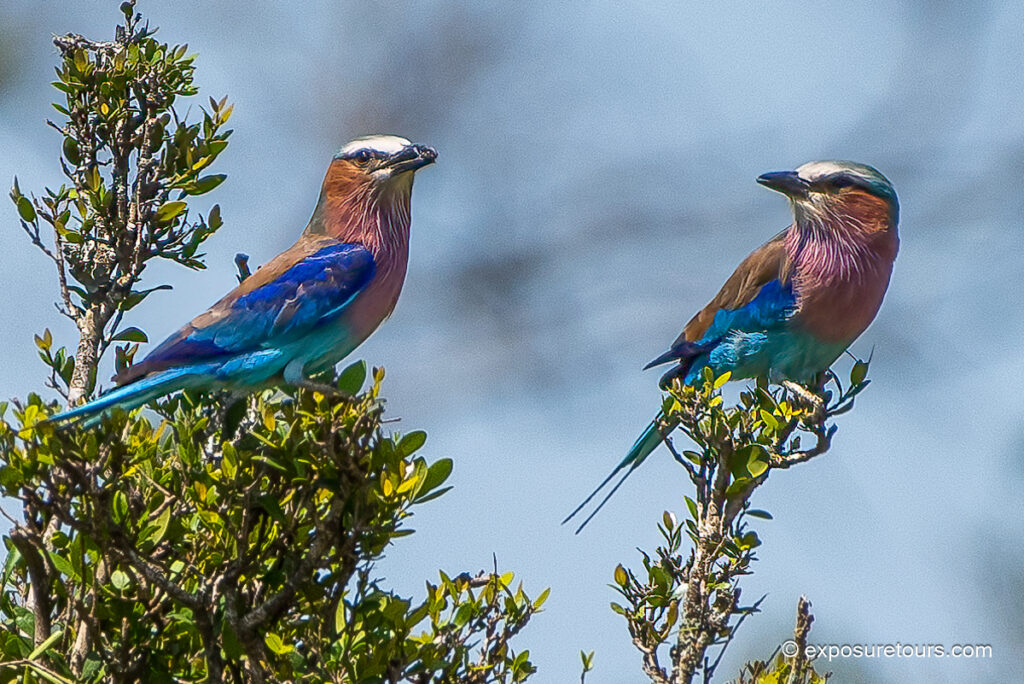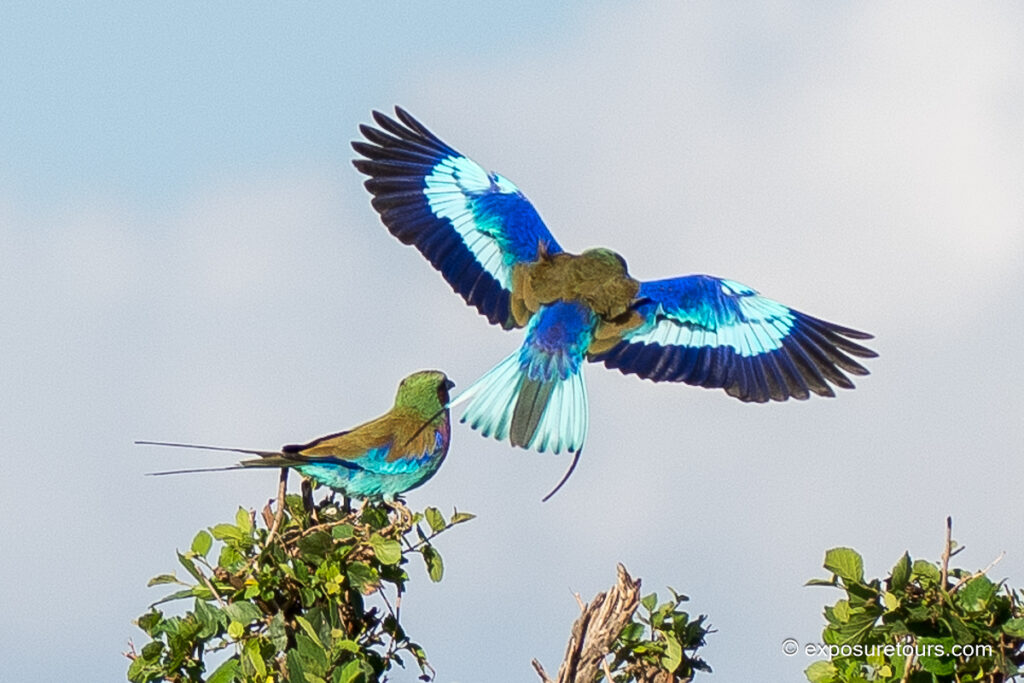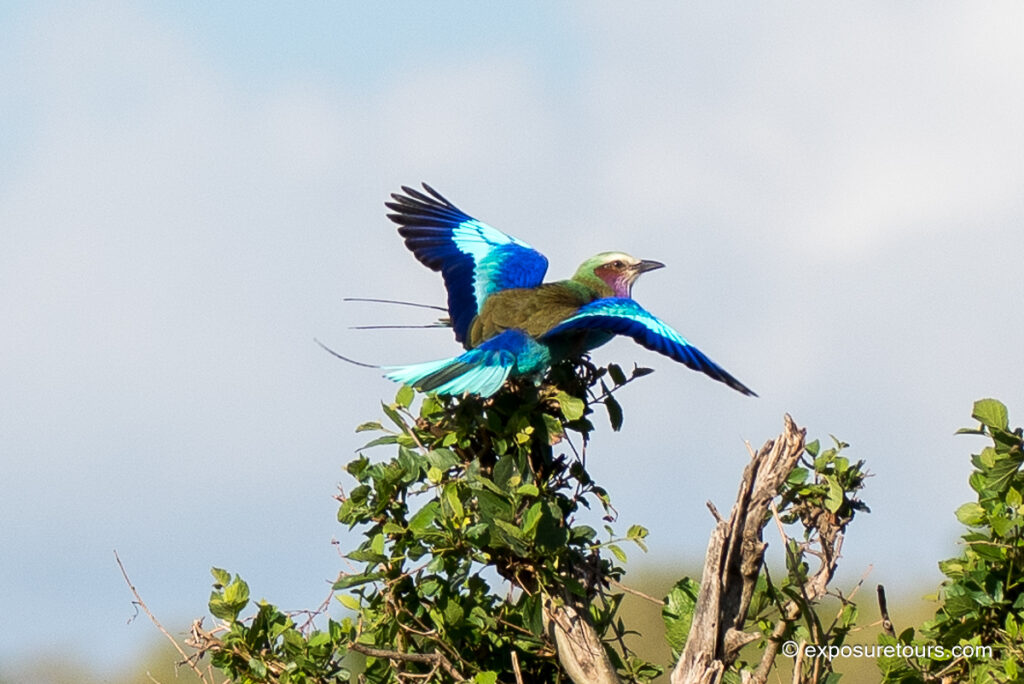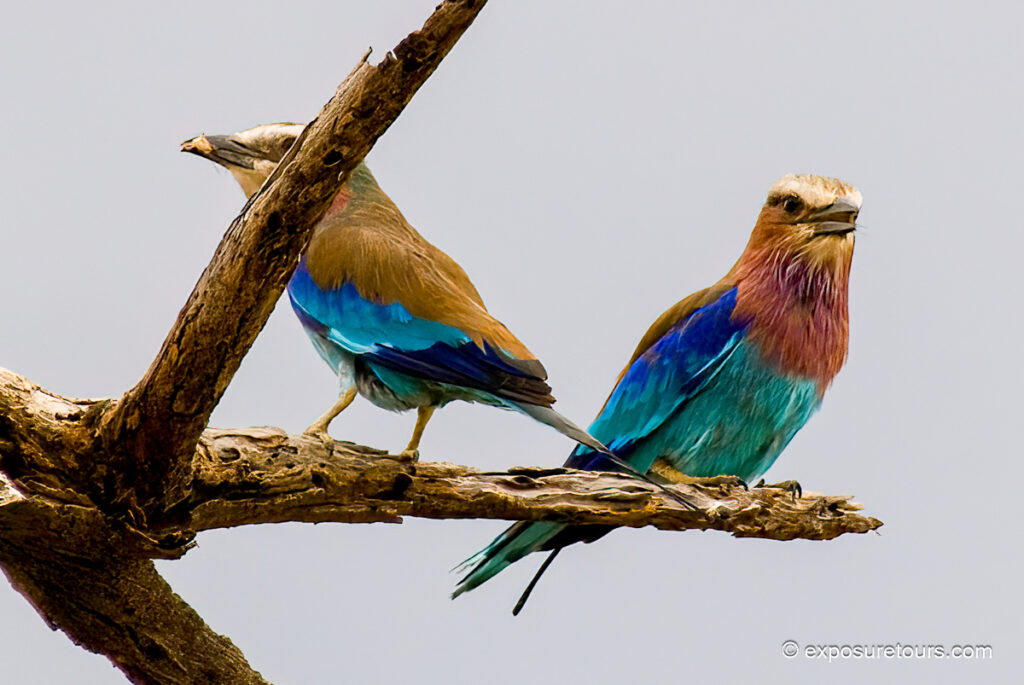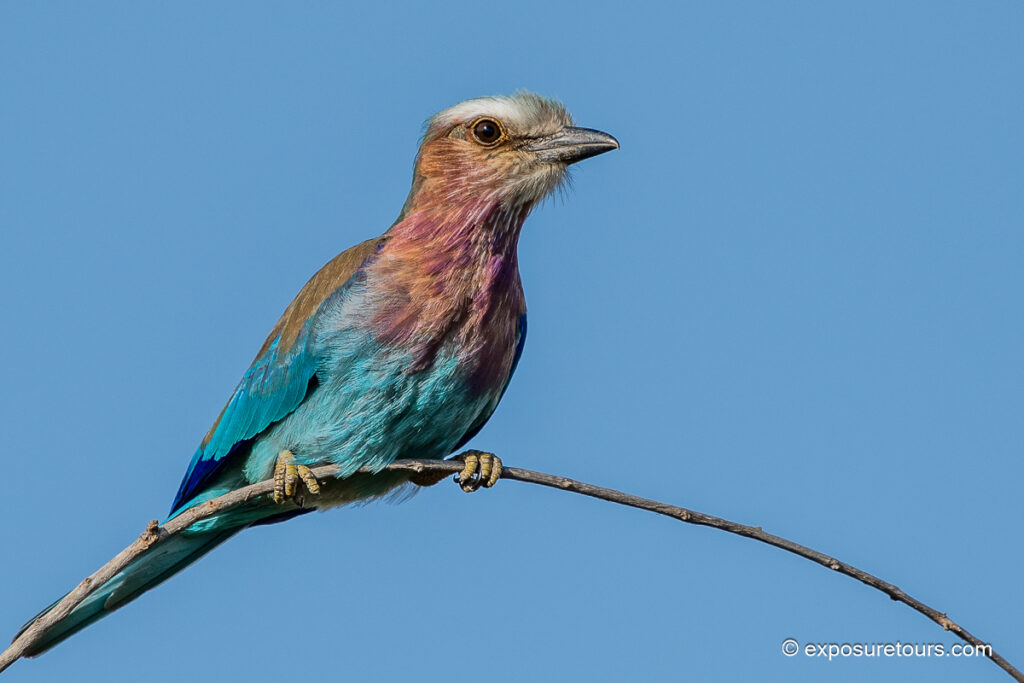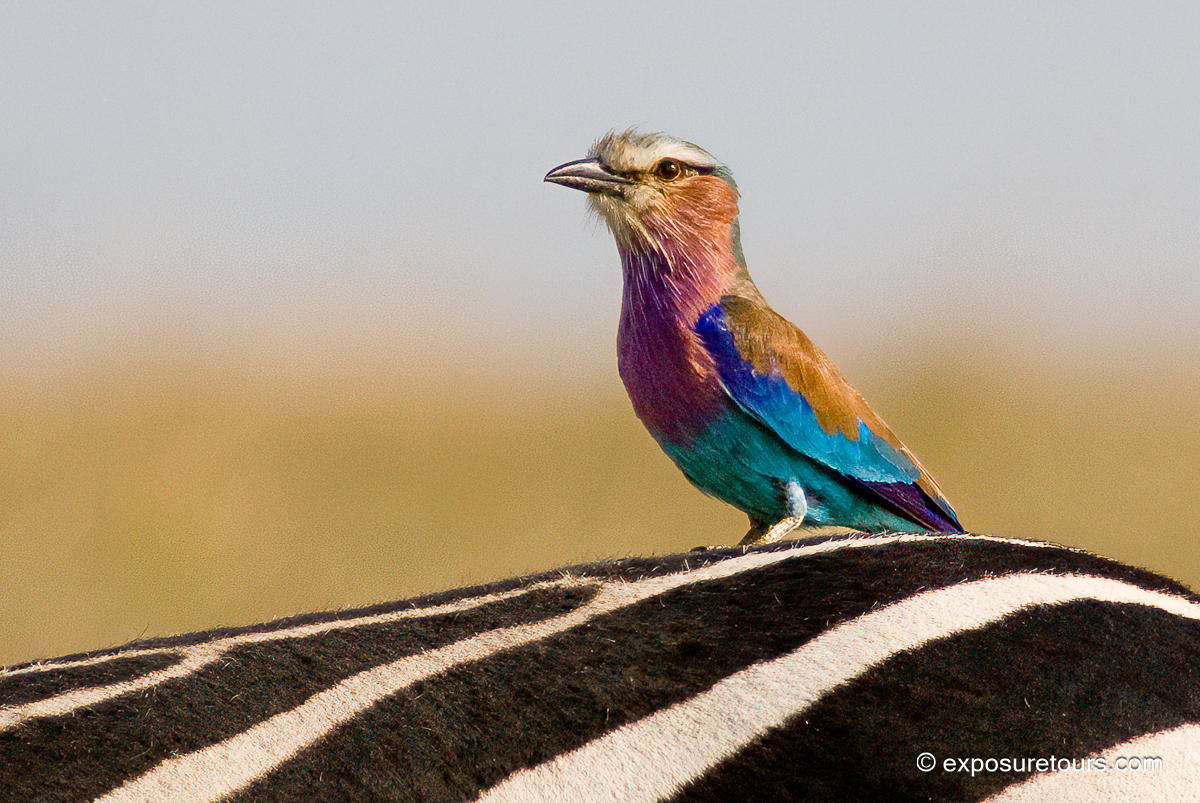
The Lilac-breasted Roller (Coracias caudatus) is one of Africa’s most colorful and instantly recognizable birds. It is commonly found in open savannas, woodlands, and lightly forested regions across eastern and southern Africa. Its vivid plumage includes shades of lilac, turquoise, blue, and chestnut. This striking combination makes it a standout subject in any wildlife setting.
Adults typically measure 36–38 cm (14–15 in) in length, including the long tail streamers. They weigh approximately 90–130 g (3.2–4.6 oz). During the breeding season, pairs nest in natural tree cavities or abandoned woodpecker holes. The female usually lays 2–4 eggs, with an incubation period of about 22–24 days.
Lilac-breasted Rollers are most often seen perched prominently on branches or utility poles. From these vantage points, they scan the ground for insects, small reptiles, and rodents. Their acrobatic courtship flights are particularly eye-catching. These displays often include rolling, diving, and dramatic wing movements. Combined with their tolerance of vehicles, these behaviors make them a favorite species on photographic safaris.
Photography Tips:
For photography, look for Lilac-breasted Rollers perched in open areas with clean, uncluttered backgrounds. Early morning and late afternoon light enhances their iridescent plumage. It also helps reduce harsh shadows. Use a fast shutter speed to capture them in flight during hunting dives or display flights. When possible, position yourself at eye level.
Be patient, as rollers often return to the same perch repeatedly, offering multiple opportunities for well-composed images.