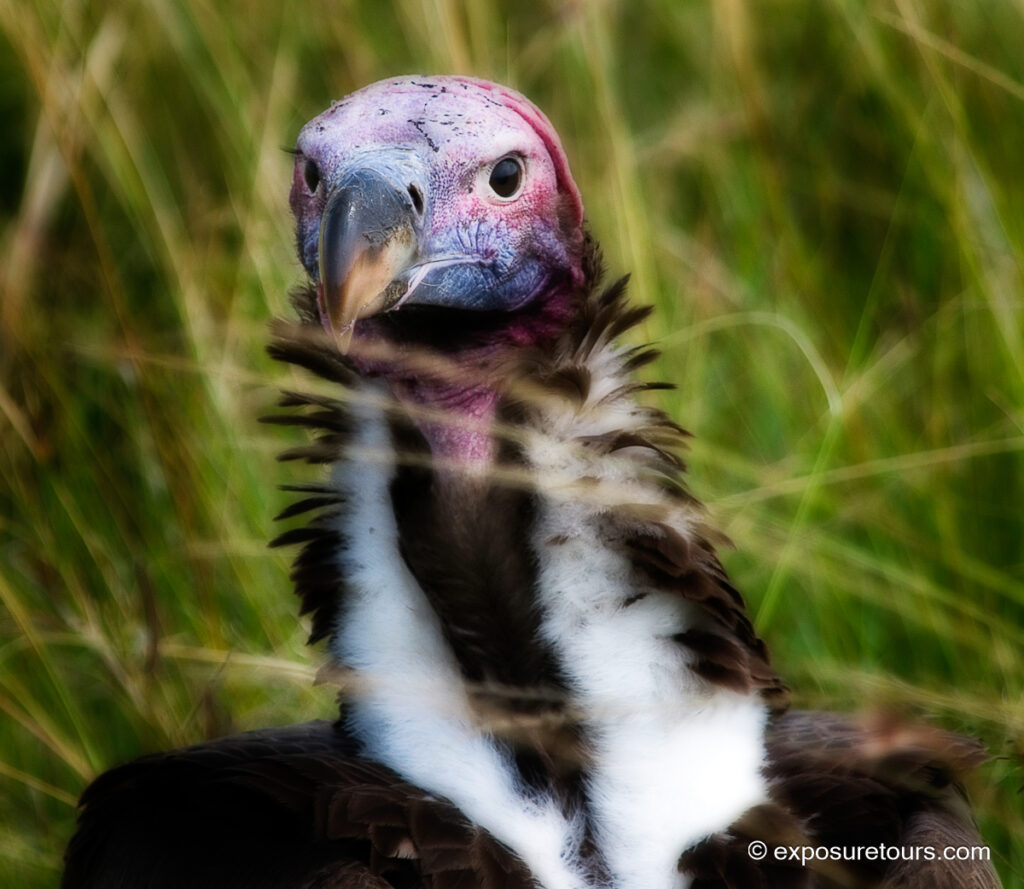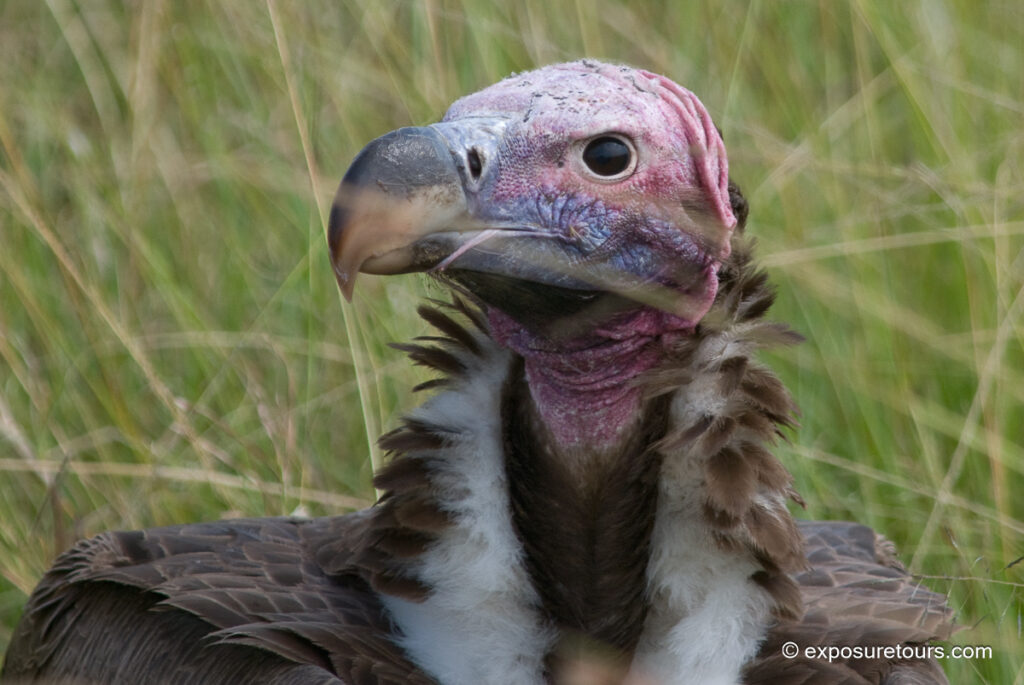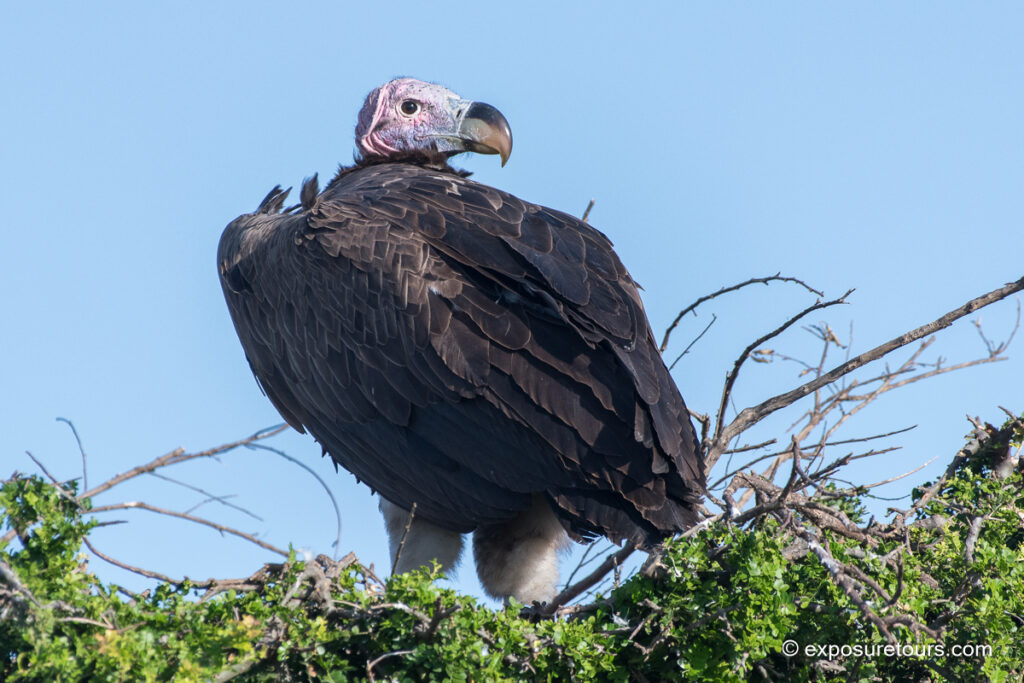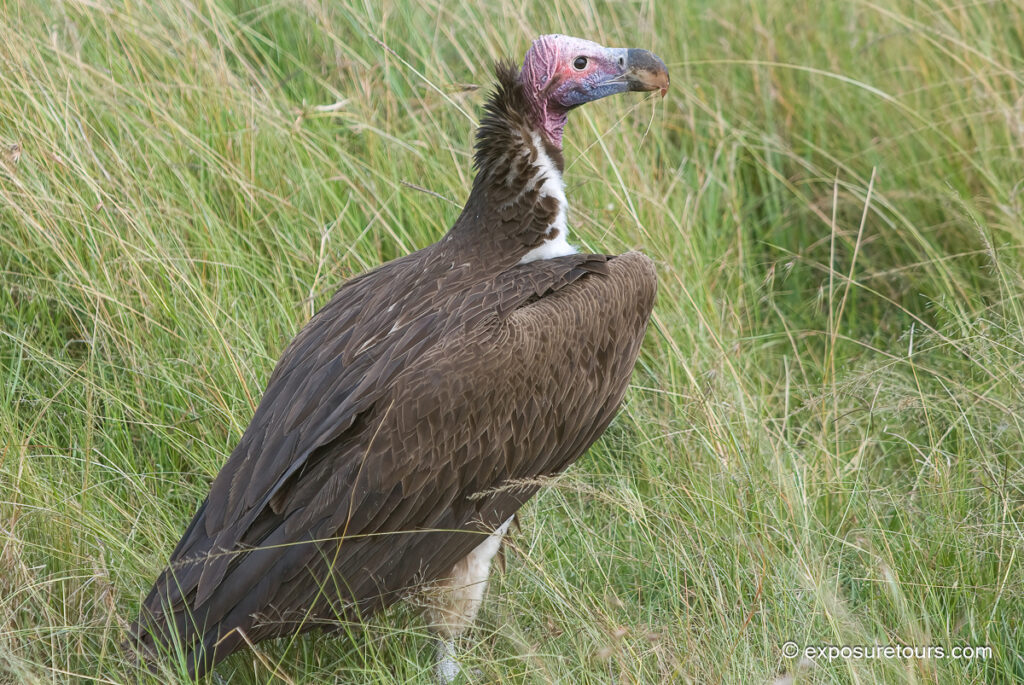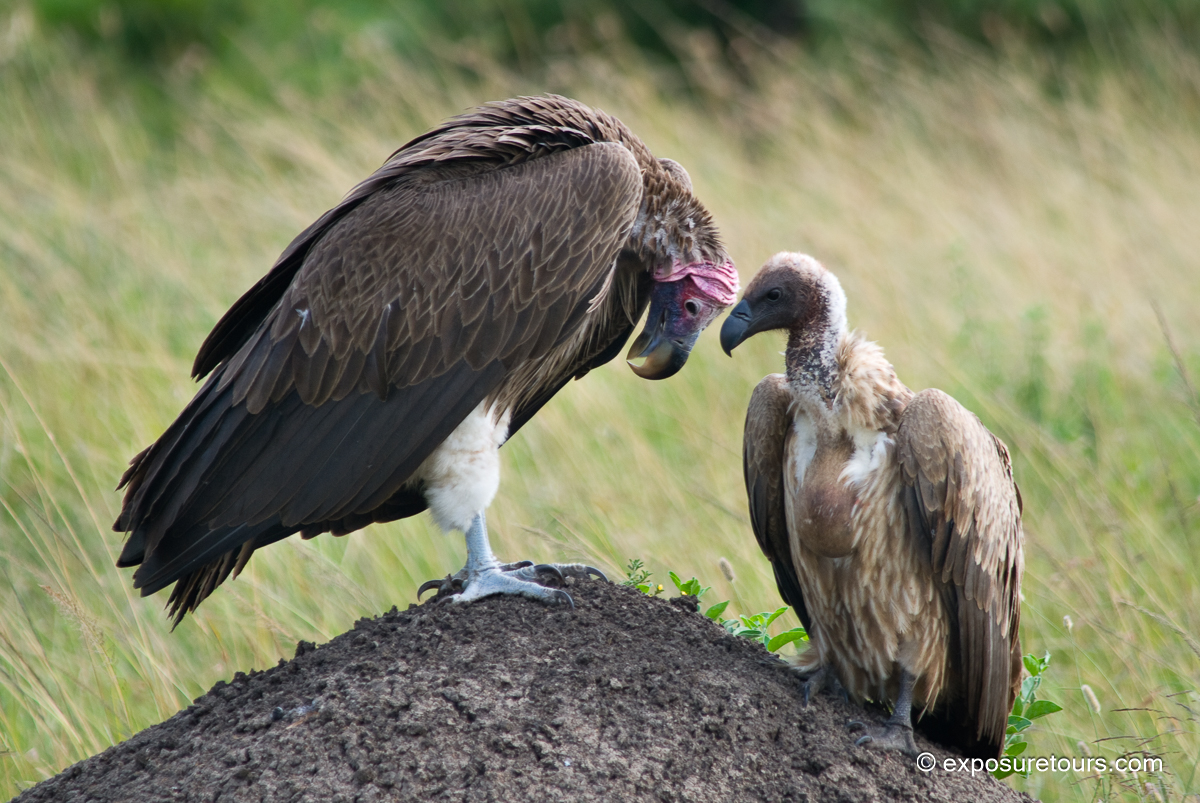
The Lappet-faced Vulture (Torgos tracheliotos) is one of Africa’s largest and most powerful birds of prey. It inhabits arid savannas, deserts, and open plains across much of sub-Saharan Africa. This species is easily identified by its massive hooked bill and the distinctive folds of bare skin, or lappets, along the sides of its head and neck.
Adults typically measure 95–115 cm (37–45 in) in length. Their wingspan can reach an impressive 2.5–2.9 m (8.2–9.5 ft). They usually weigh between 4.5–9.4 kg (10–21 lbs), with females slightly larger than males. Lappet-faced Vultures are dominant scavengers, capable of tearing through tough hides that other vultures cannot. Breeding pairs nest on large trees or occasionally on rocky outcrops. After an incubation period of approximately 54–56 days, a single chick hatches and is cared for by both parents over many months.
Photography Tips:
Lappet-faced Vultures are compelling photographic subjects due to their imposing size and intense facial expressions. They are often seen soaring high on thermals, so capturing them in flight requires fast shutter speeds and careful tracking.
Early morning and late afternoon light adds warmth and depth to their dark plumage and textured skin. A long telephoto lens is ideal for close portraits, especially at carcass sites where dramatic interactions may occur. Maintaining a respectful distance is essential, as patience can reward photographers with powerful images of feeding behavior, wing displays, or takeoff sequences.