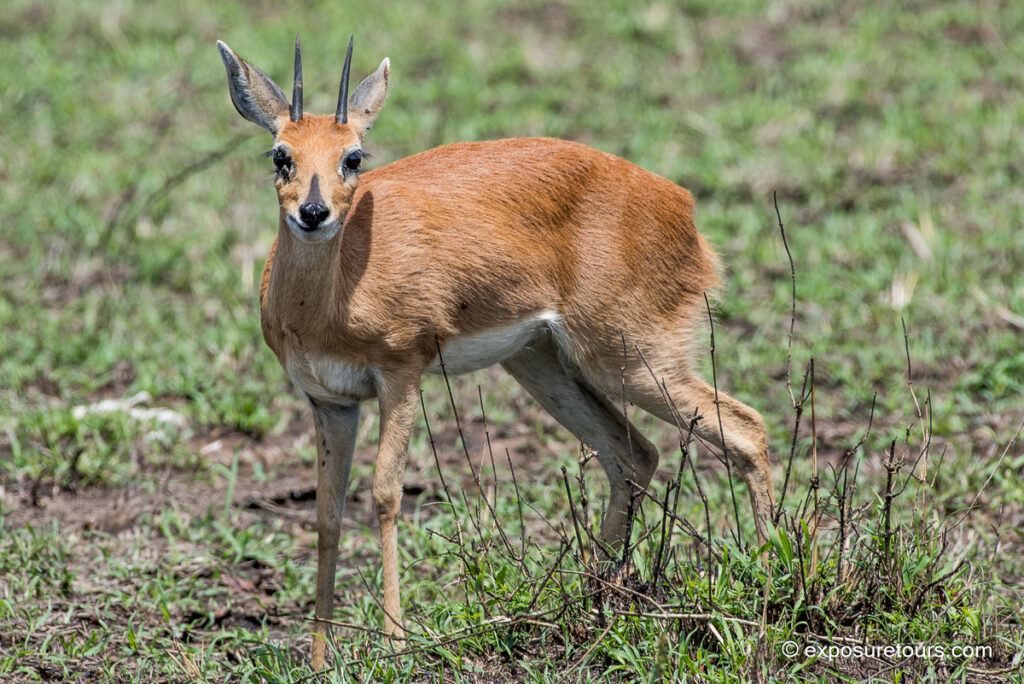
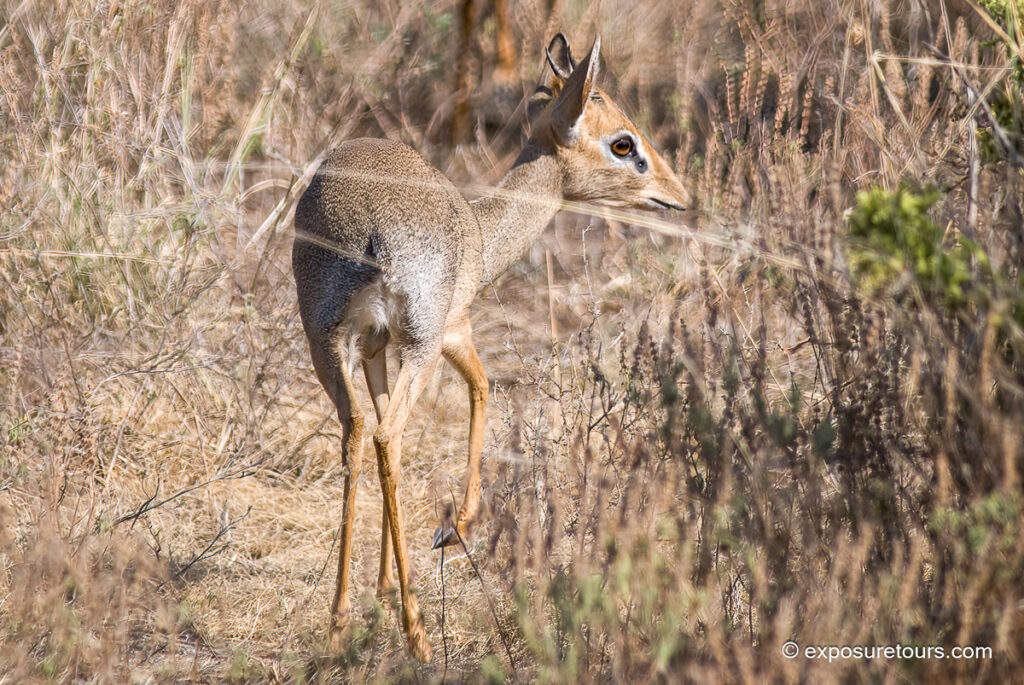
Kirk’s dik-dik (Madoqua kirkii) is one of Africa’s smallest and most charming antelopes. In particular, it is commonly found in dry savannahs, bushland, and thorn scrub across East Africa. Despite its small size, it stands just 35–45 centimeters (14–18 inches) at the shoulder and weighs between 3.5 and 6 kilograms (8–13 pounds). It is easily recognized by its large dark eyes, elongated snout, and delicate build. Together, these features help regulate body temperature and keep the animal alert to predators.
Like many small antelope, this species is a browser. It primarily feeds on leaves, shoots, fruits, and herbs. As a result, it often obtains enough moisture from its food to survive without drinking water. This adaptation is especially valuable in arid environments.
In terms of reproduction, it has a gestation period of about 5.5 to 6 months. Typically, a single calf is born and remains well camouflaged in dense cover during its early weeks. In addition, these antelope are usually monogamous and maintain small, well-defined territories. These territories are defended through scent marking and soft whistling calls. Because of this, their shy behavior, quick movements, and close pair bonds make them a rewarding subject for patient wildlife photographers.
Photo Tips:
For photographers, capturing a dik-dik framed by thorny brush or softly lit savannah vegetation adds a sense of scale and subtle beauty to any African photo safari portfolio.