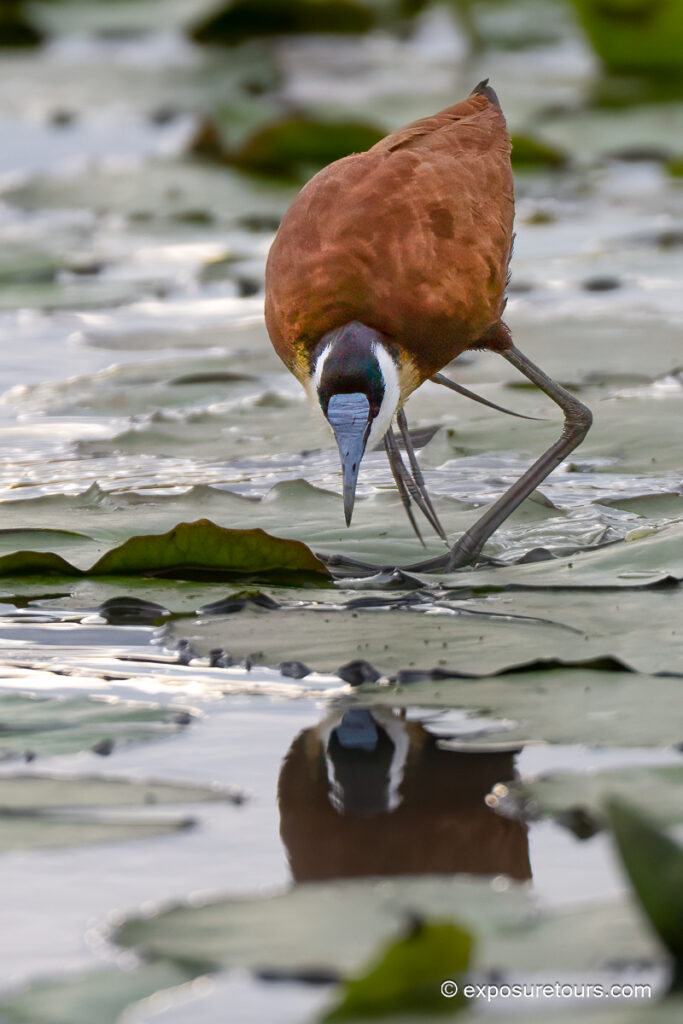
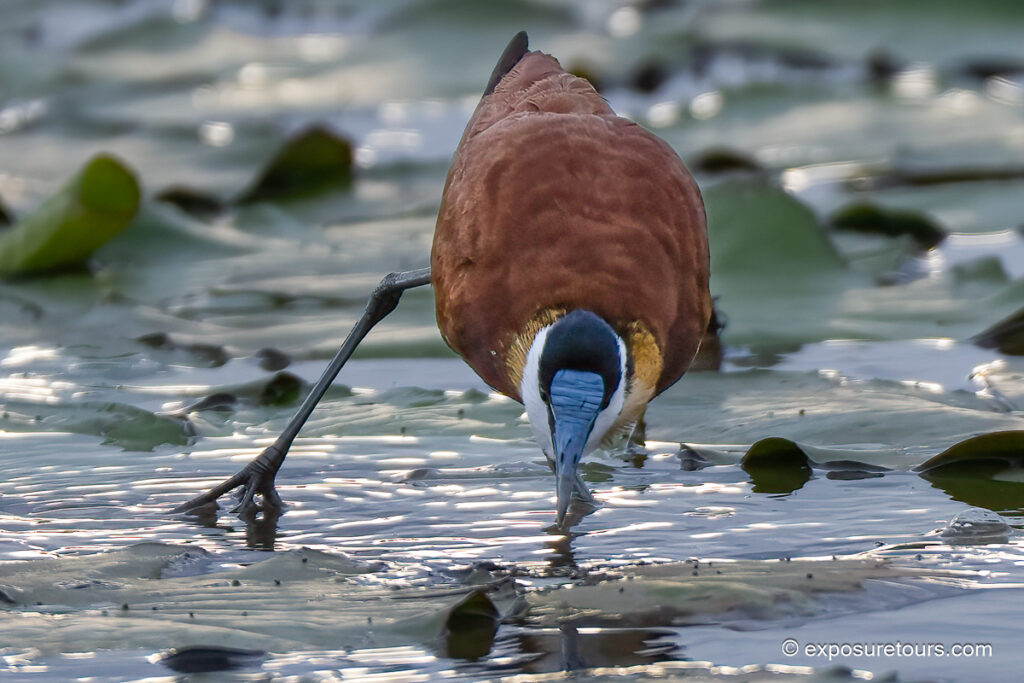
The African Jacana (Actophilornis africanus) is a distinctive and elegant waterbird found across freshwater wetlands, lakes, and slow-moving rivers throughout sub-Saharan Africa.
It is instantly recognizable by its chestnut-brown body, white face, and elongated toes. These unusually long toes allow the bird to walk effortlessly across floating vegetation such as water lilies. Adults typically measure about 28–31 cm (11–12 in) in length. They generally weigh between 115–140 g (4–5 oz). Despite its delicate appearance, the African Jacana exhibits a remarkable breeding system known as polyandry. In this system, a single female mates with multiple males. She lays a clutch of 3–4 eggs, after which the male takes full responsibility for incubation and chick care. The incubation period lasts approximately 22–26 days.
Photography Tips:
The African Jacana offers outstanding visual opportunities. This is especially true when the bird appears to “walk on water” across floating plants. For best results, photographers should work during early morning or late afternoon light. Softer light enhances feather detail and reduces glare from reflective water surfaces.
A low shooting angle helps emphasize the bird’s oversized toes and creates cleaner, more pleasing backgrounds. Additionally, a medium telephoto lens in the 300–400 mm range is ideal for isolating the subject without causing disturbance. Capturing behavioral moments, such as a male carrying chicks beneath his wings or carefully stepping between lily pads, adds strong storytelling value and elevates the African Jacana as a memorable subject in any photo safari portfolio.