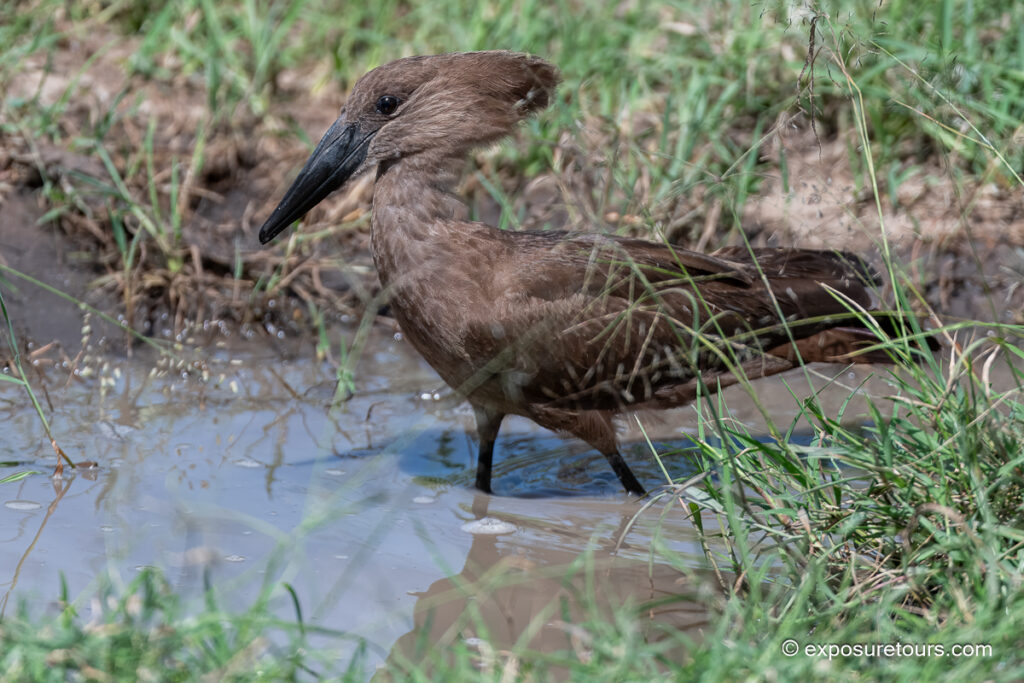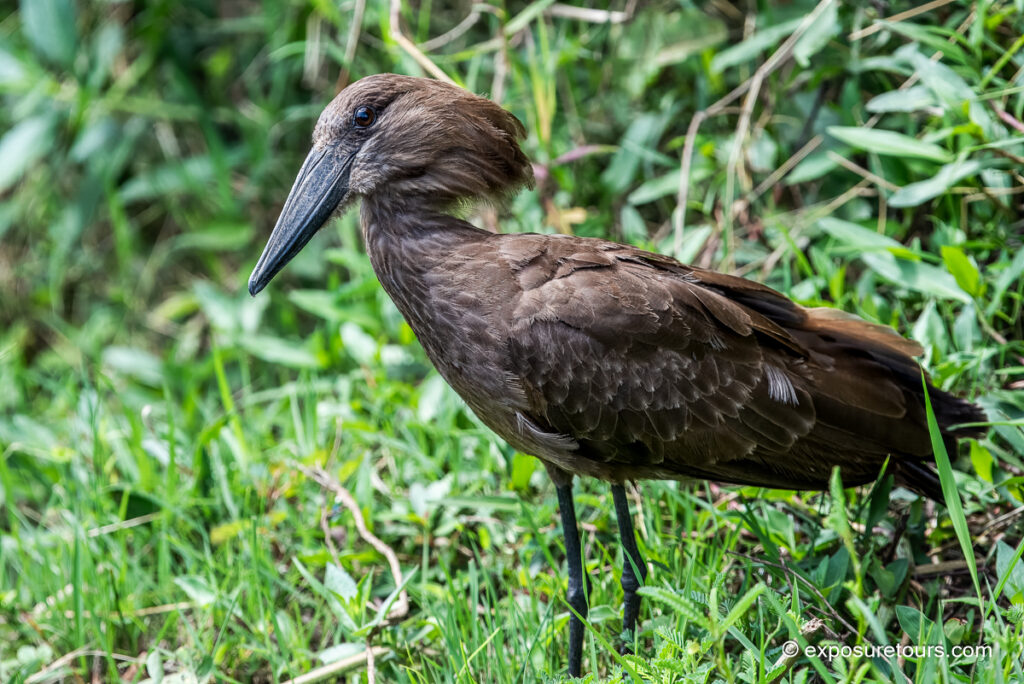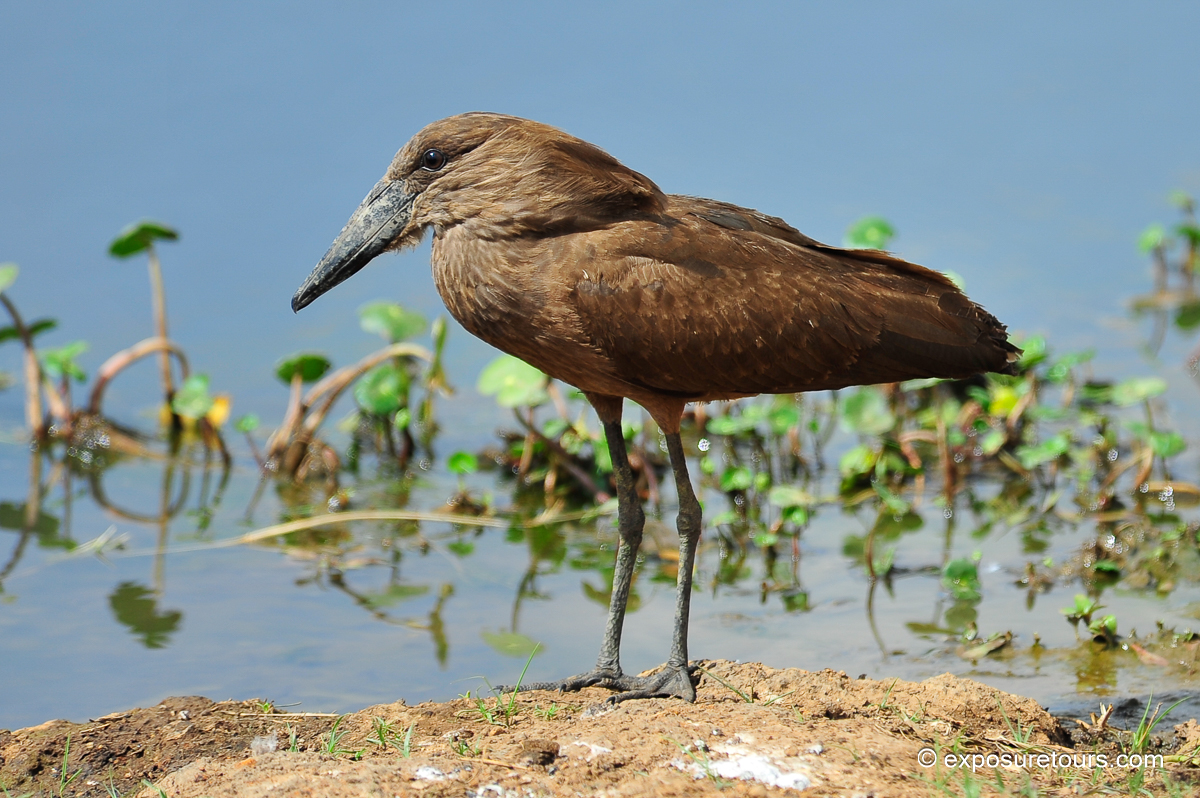
The Hamerkop (Scopus umbretta) is a unique and instantly recognizable waterbird found across wetlands, rivers, lakes, and floodplains throughout sub-Saharan Africa and parts of the Arabian Peninsula. It takes its name from the distinctive hammer-shaped head, formed by a long crest at the back of the skull. Hamerkop is the Afrikaans word for hammerhead. Adults typically measure about 50–56 cm (20–22 in) in length. They usually weigh between 415–470 g (14.5–16.5 oz).
The plumage is uniformly brown, which allows the bird to blend easily into muddy shorelines and reed-lined banks. Hamerkops are especially well known for their extraordinary nesting behavior. Breeding pairs construct enormous domed nests made of sticks. These nests can exceed 1.5 m (5 ft) in width. The female typically lays 3–7 eggs. Both parents share incubation duties. The incubation period lasts approximately 30 days.
Photography Tips:
The Hamerkop is an engaging subject due to its expressive silhouette and distinctive head profile. The bird is often observed stalking slowly through shallow water. It hunts for fish, frogs, and aquatic invertebrates. This behavior provides excellent opportunities for action and feeding shots. Early morning and late afternoon light are ideal. Softer light adds warmth and texture to the brown plumage while reducing glare from reflective water surfaces.
A low shooting angle near the water’s edge helps create cleaner backgrounds and stronger compositions. A medium telephoto lens in the 300–400 mm range works well for close behavioral images without causing disturbance. Capturing nest-building activity or patient hunting behavior adds storytelling depth and makes the Hamerkop a compelling subject for any photo safari portfolio.