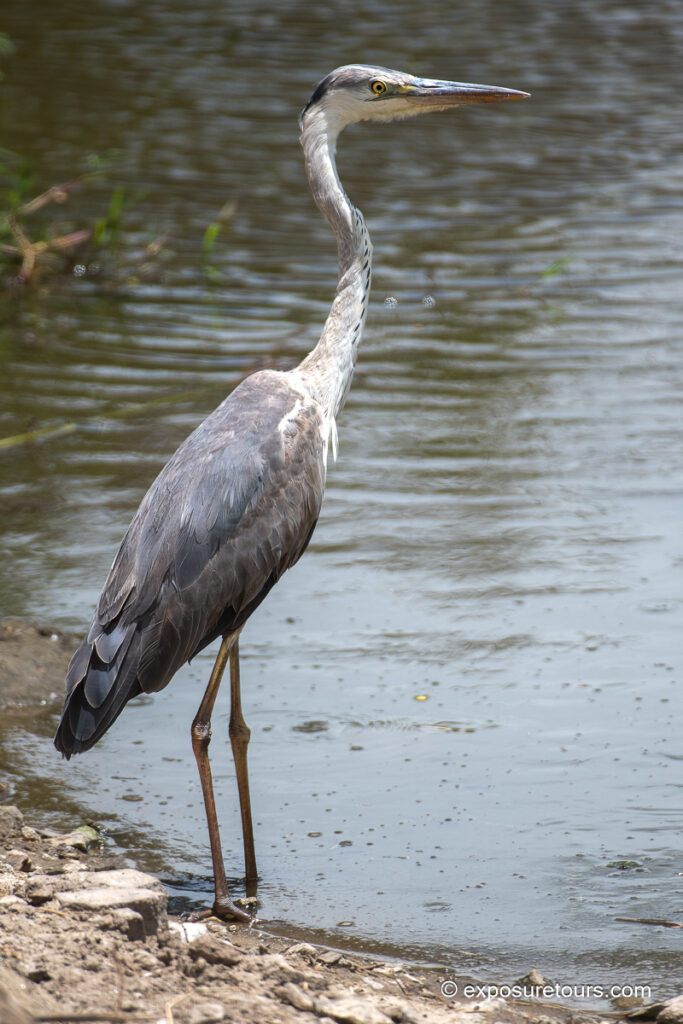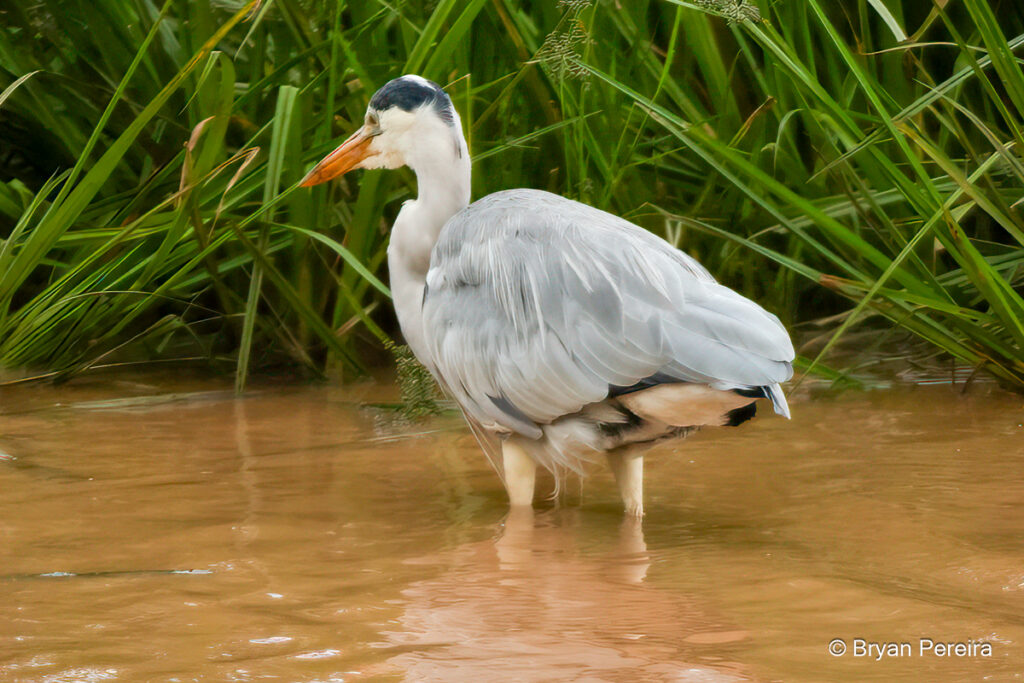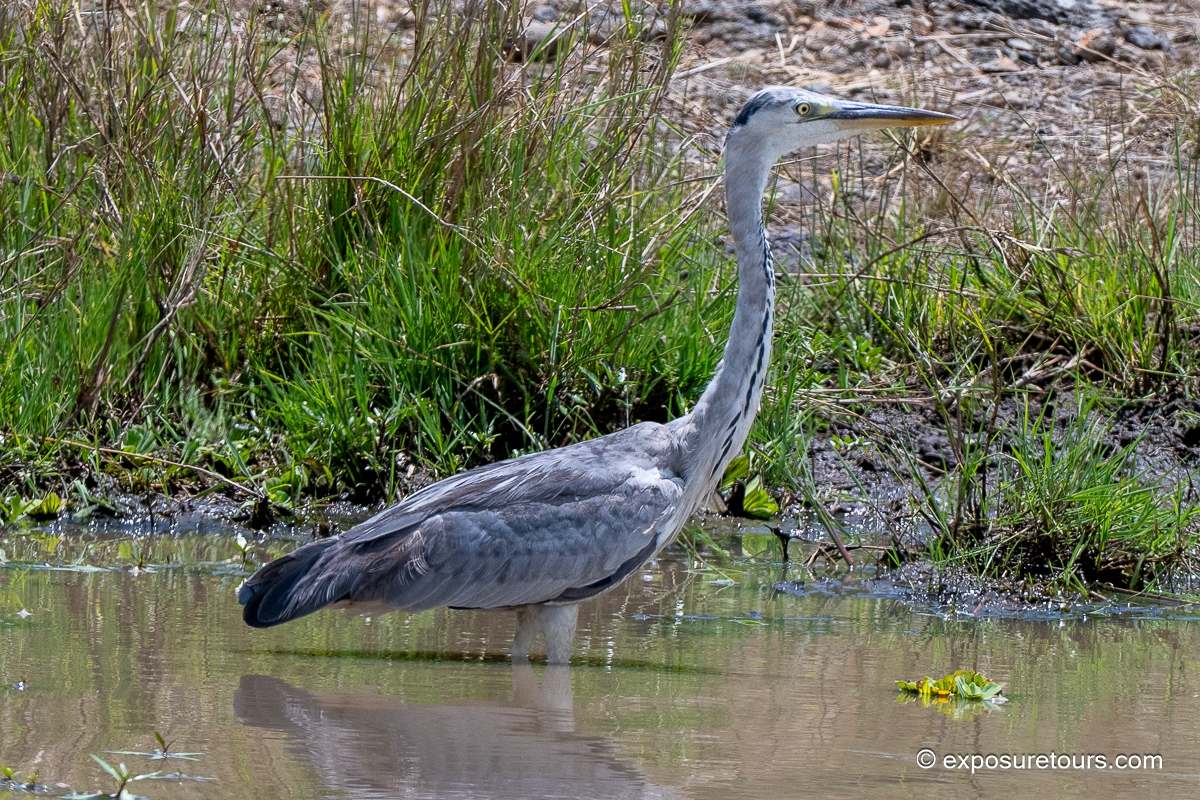
The Grey Heron (Ardea cinerea) is a tall and elegant wading bird found throughout Africa, Europe, and parts of Asia. In sub-Saharan Africa, it is commonly seen in wetlands, rivers, lakes, and coastal areas. Adults typically measure 84–102 cm (33–40 in) in length. They also have a wingspan of 155–195 cm, making them one of the largest herons on the continent.
In addition, they weigh approximately 1–2 kg, with females slightly smaller than males. The species is easily recognized by its long neck and gray body. It also has white underparts and a striking black stripe that extends from the eye to the crest. Like all birds, there is no gestation period. Instead, females lay 3–5 eggs. These eggs are incubated for about 25–30 days. Grey Herons usually nest in trees or reeds. They often form small colonies. Juveniles fledge after several weeks under the care of both parents.
Photography Tips:
The Grey Heron presents excellent opportunities. This is largely due to its striking appearance and patient hunting habits. To begin with, a telephoto lens of 300–500 mm is ideal for capturing perched or stalking birds. Early morning and late afternoon light is particularly effective. It enhances the subtle gray tones and provides warm, natural lighting.
In addition, shooting from a low angle helps isolate the bird against water or sky backgrounds. This creates a dramatic effect. Patience is essential, as Grey Herons often remain motionless for long periods while waiting for prey.
Fast shutter speeds are recommended for capturing flight. Grey Herons can take off suddenly with strong, deliberate wingbeats. With careful observation and timing, photographers can capture both intimate portraits and dynamic action shots of this iconic wader.