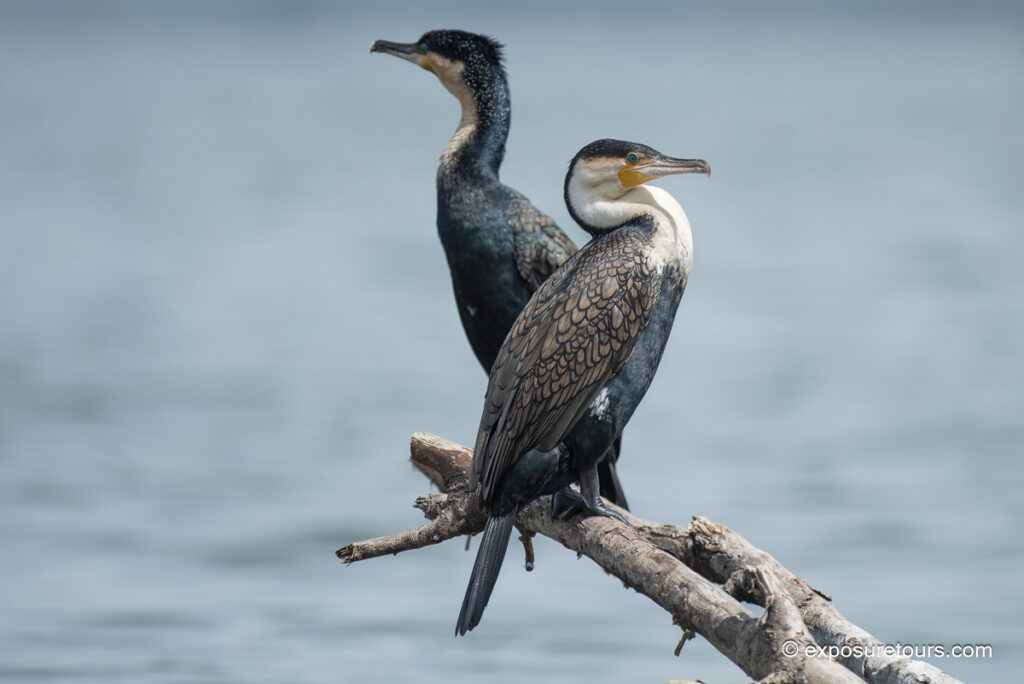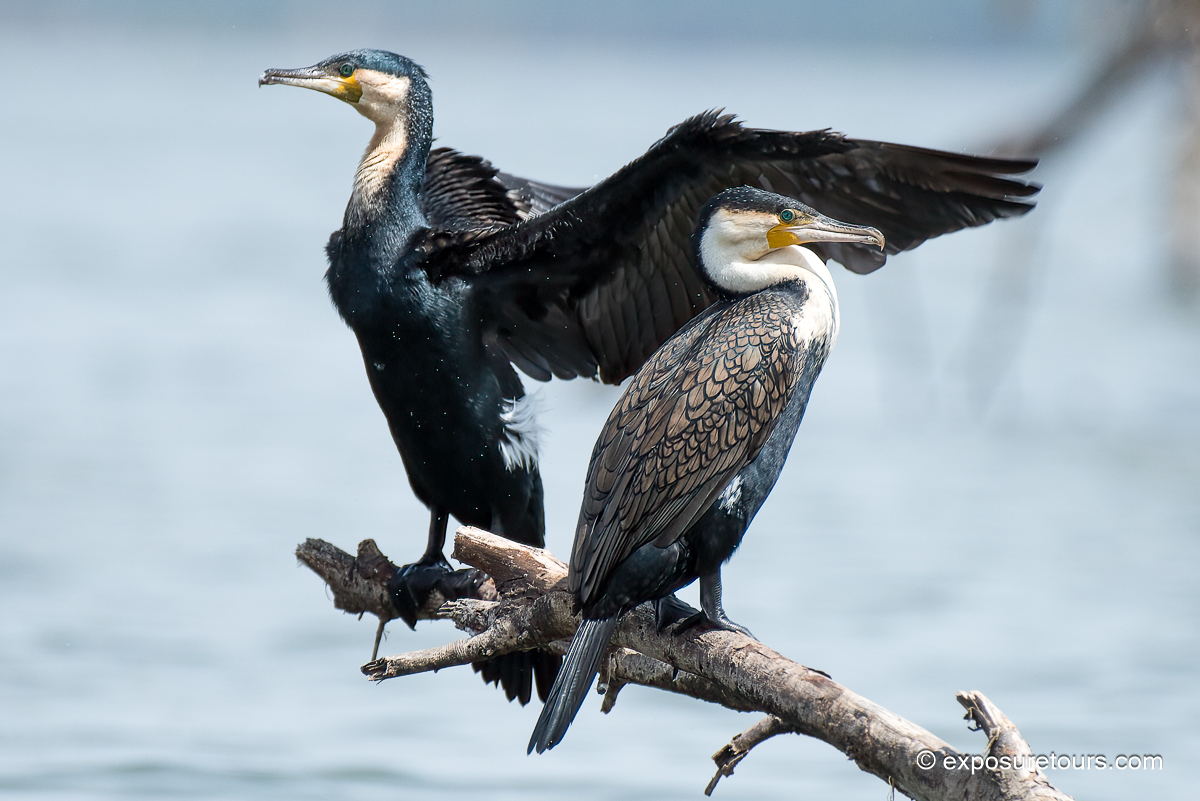
The Great Cormorant (Phalacrocorax carbo) is a large and powerful waterbird with a broad distribution across Africa, Europe, and Asia. In Africa, it is commonly found along large lakes, rivers, reservoirs, and coastal areas. As a result, it is often encountered in both inland and coastal settings.
The species is easily recognized by its bulky body and long neck. In addition, it has a hooked bill and mostly dark plumage. During the breeding season, white throat or facial patches may be visible. Adults typically measure about 80–100 cm (31–39 in) in length. The wingspan ranges from approximately 130–160 cm (51–63 in). Body weight generally falls between 2.6–3.7 kg (5.7–8.2 lb). Great Cormorants are strong swimmers and divers.
They feed primarily on fish caught underwater. The species usually nests colonially. Nests may be built in trees, on cliffs, or on the ground near water. The female typically lays 3–4 eggs. Incubation lasts approximately 28–31 days. Both parents share incubation duties and care for the chicks. Fledging occurs after about 7–8 weeks.
Photography Tips:
The Great Cormorant is a compelling subject. This is largely due to its size, strong silhouette, and dramatic behavior. Early morning and late afternoon light are especially effective. Softer light helps define feather texture and reduces harsh reflections from water surfaces. Positioning near active fishing areas increases the chance of capturing diving sequences. It also allows opportunities to photograph surfacing birds or fish-handling behavior.
A medium to long telephoto lens in the 400–600 mm range is useful. This is particularly helpful for isolating individuals within colonies or along distant shorelines. Clean backgrounds, such as open water or sky, help emphasize the bird’s powerful form. Capturing classic wing-drying poses, flight shots, or interactions within breeding colonies adds strong storytelling depth and makes the Great Cormorant a striking addition to any photo safari portfolio.