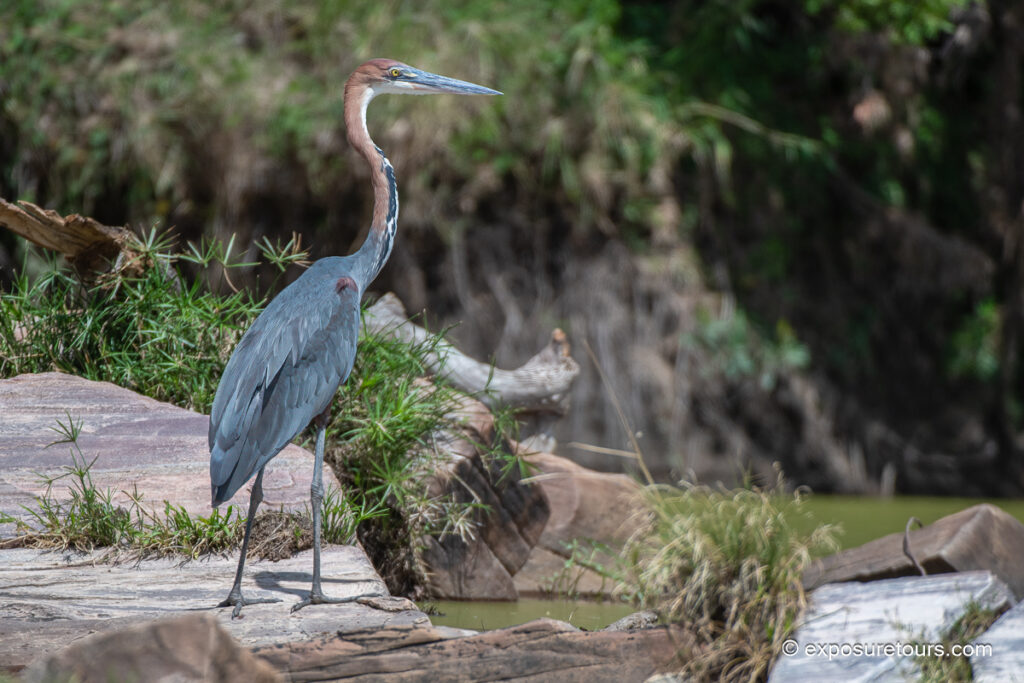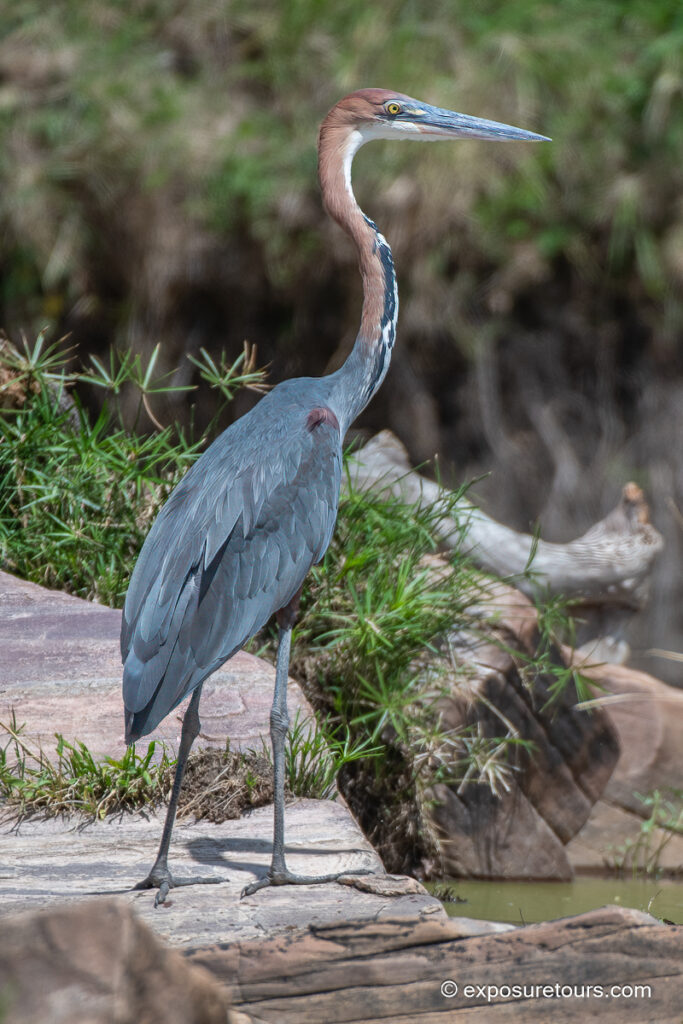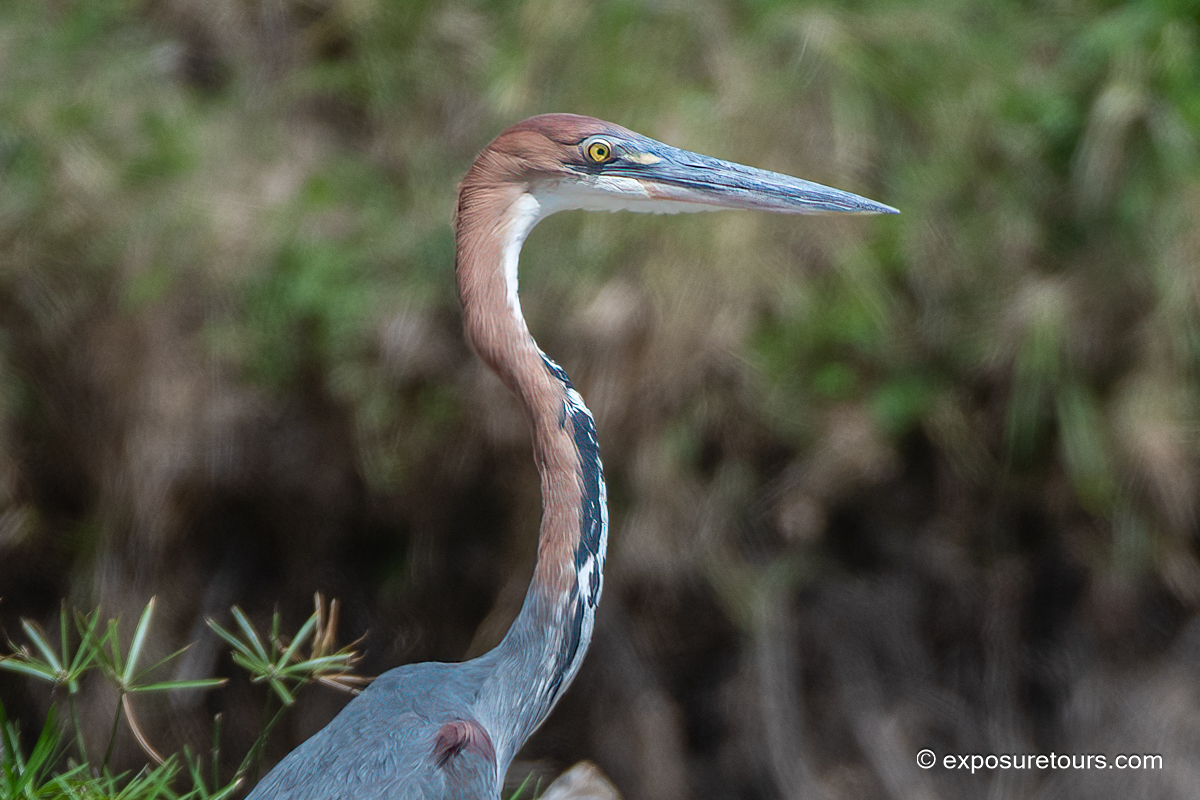
The Goliath Heron (Ardea goliath) is the largest heron in the world and a truly impressive sight in African wetlands, rivers, and lakes. It is easily recognized by its massive size, rusty-brown head and neck, slate-grey body, and long, powerful bill. Adults typically stand about 120–152 cm (47–60 in) tall, with a wingspan of 200–230 cm (79–91 in), and weigh between 4–5 kg (8.8–11 lbs).
Like other herons, it is a solitary hunter, feeding primarily on large fish. However, it will also take amphibians, crustaceans, and small mammals when available. During the breeding season, Goliath Herons nest in colonies, often in trees or reed beds. They usually lay 2–5 eggs per clutch, and the incubation period lasts around 28–30 days. Both parents are actively involved in feeding and protecting the chicks, ensuring their survival and growth.
Photography Tips:
The Goliath Heron is a spectacular subject that rewards careful observation and patience. Early morning or late afternoon light provides soft, golden illumination, which highlights the bird’s impressive size and striking colors. Using a long telephoto lens allows you to capture detailed shots of their hunting behavior, especially when they strike at large fish with precision and power. It is important to observe quietly from a distance, as these birds are highly sensitive to disturbance.
Additionally, capturing the heron in flight or standing gracefully in shallow water can produce dramatic and visually striking images. These shots emphasize their immense wingspan and elegant posture. With careful timing, patience, and attention to light, the Goliath Heron can become a highlight of any wildlife photography collection.