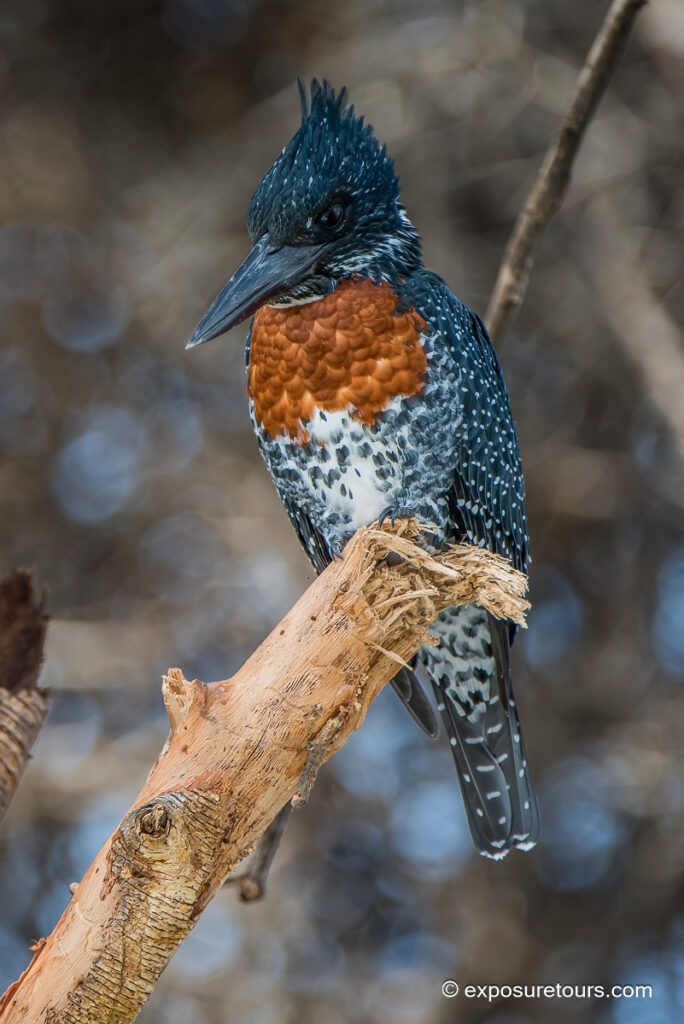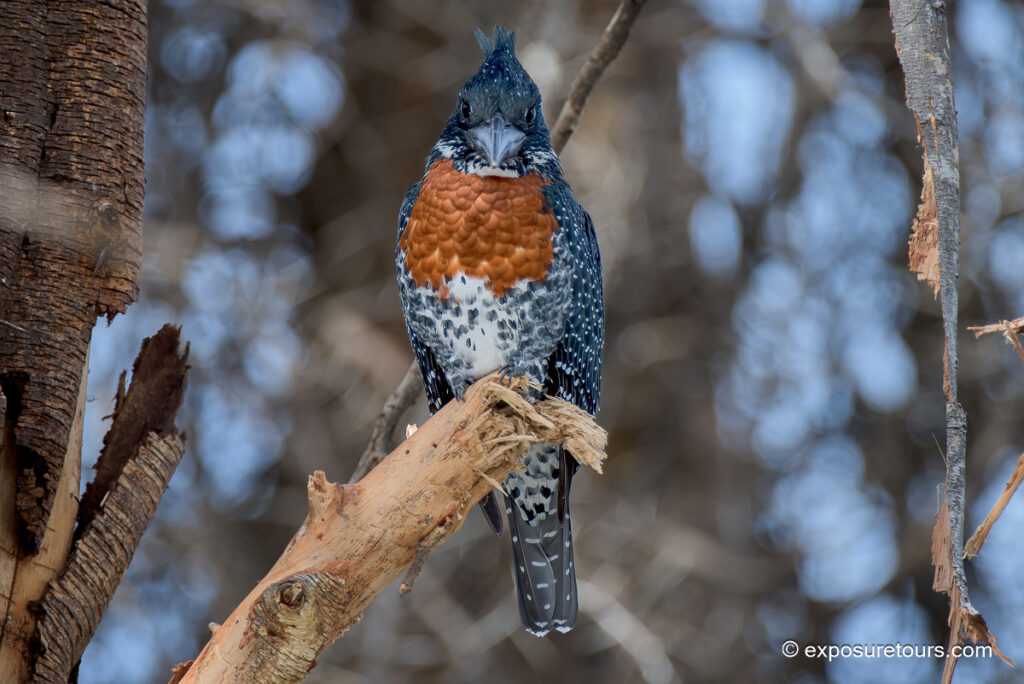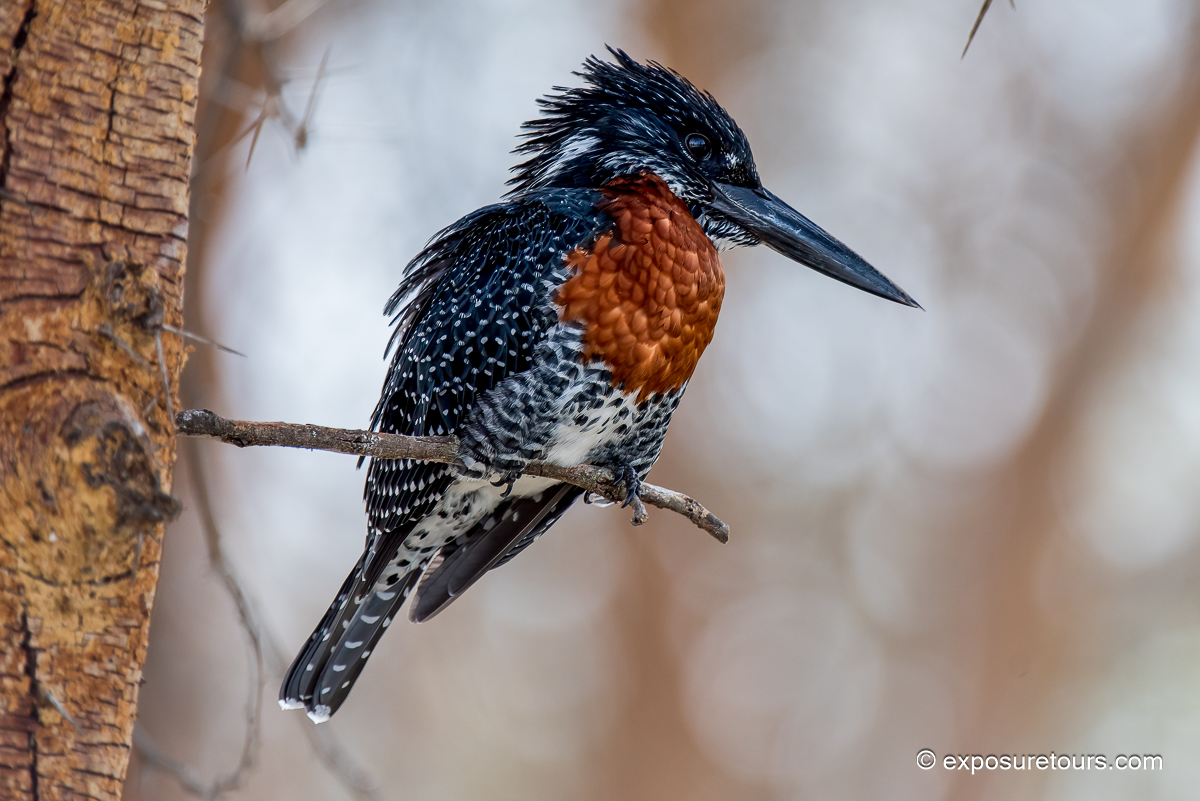
The Giant Kingfisher (Megaceryle maxima) is Africa’s largest kingfisher and a striking presence along rivers, lakes, and wetlands throughout sub-Saharan Africa. It is easily recognized by its bold black-and-white spotted plumage, large crest, and massive, dagger-like bill.
Adults typically measure about 42–46 cm (16.5–18 in) in length. They usually weigh roughly 255–400 g (9–14 oz). This species is highly territorial. As a result, it is usually seen alone or in pairs. The Giant Kingfisher nests in burrows dug into sandy riverbanks. The female generally lays 3–6 eggs. Incubation lasts approximately 24–26 days. Both parents share the responsibility of feeding and caring for the chicks. Fledging usually occurs after about 35 days.
Photography Tips:
The Giant Kingfisher is a rewarding subject. This is largely due to its dramatic size, striking plumage, and dynamic hunting behavior. Early morning and late afternoon light work best. Softer light highlights the contrast between black, white, and rufous feathers.
A medium to long telephoto lens in the 300–500 mm range is ideal. This allows for close-up shots without disturbing the bird. Positioning near water increases the chances of capturing action shots, such as diving or fishing. Clean backgrounds, such as reflective water surfaces or blurred riverbanks, help isolate the bird and enhance its bold features.
Patience is important, as the species often returns to favored perches. Capturing perching, calling, or hunting behavior adds storytelling depth and makes the Giant Kingfisher a standout species in any photo safari portfolio.