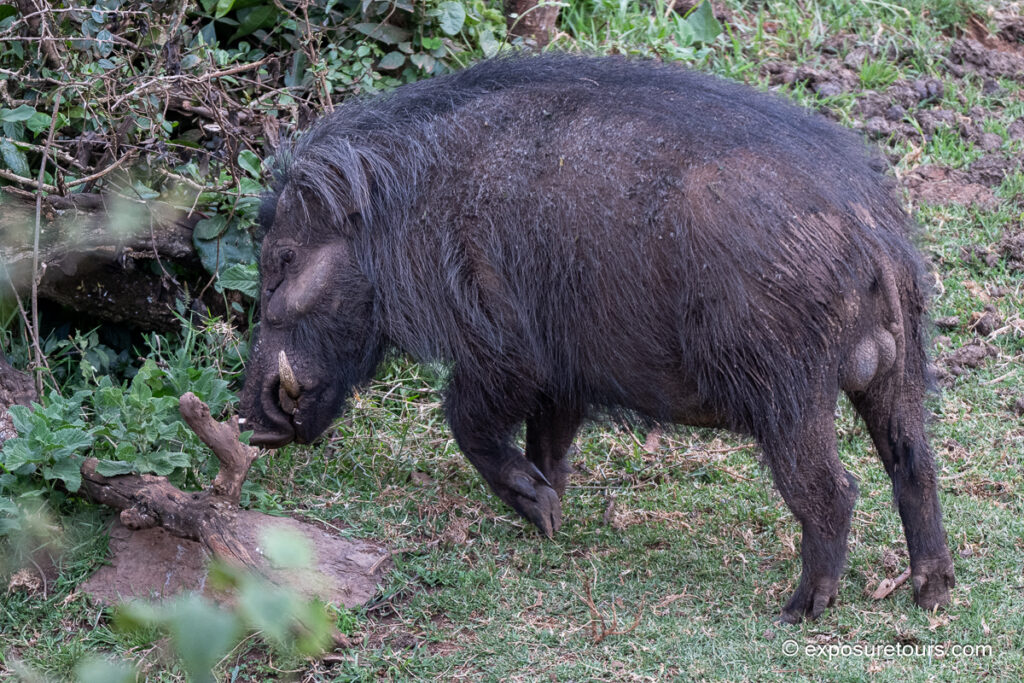
The giant forest hog (Hylochoerus meinertzhageni) is the largest and most imposing member of the pig family and a rarely seen highlight of African forests and woodland ecosystems. Found in central and western Africa, as well as parts of East Africa, this powerful animal favors dense forests, forest edges, and montane habitats where cover is plentiful. Adult males are easily recognized by their massive heads, prominent facial swellings, and coarse dark hair. Despite their size and intimidating appearance, giant forest hogs are generally shy and elusive, making sightings particularly rewarding for safari-goers and wildlife photographers.
Adult giant forest hogs typically measure 1.3–2.1 meters (4.3–6.9 ft) in body length and stand about 1 meter (3.3 ft) at the shoulder, with males weighing between 180–275 kg (400–600 lb) and females slightly smaller. The gestation period averages around 150–170 days, after which a sow gives birth to a litter of 3–6 piglets, usually in a well-hidden nest of vegetation. Highly social, they live in family groups led by a dominant boar and are most active during early morning and late afternoon.
Photo Tips:
For photographers, the giant forest hog offers a compelling subject—its raw power, textured features, and forest setting creating striking and atmospheric images that reflect one of Africa’s most underappreciated mammals.
Try a monochrome conversion to emphasize the textures.