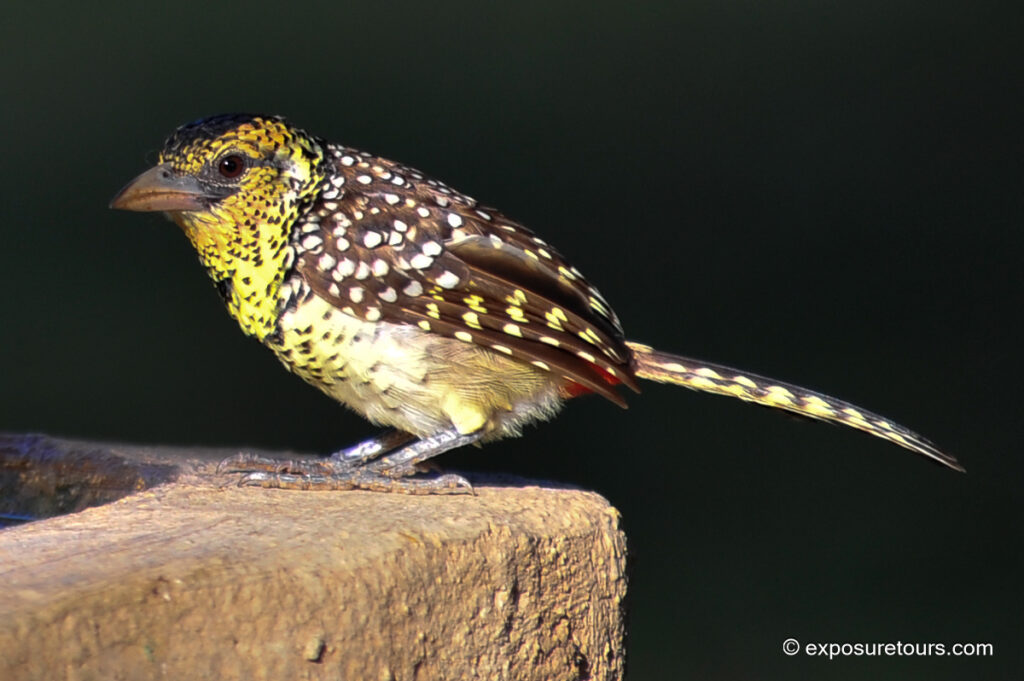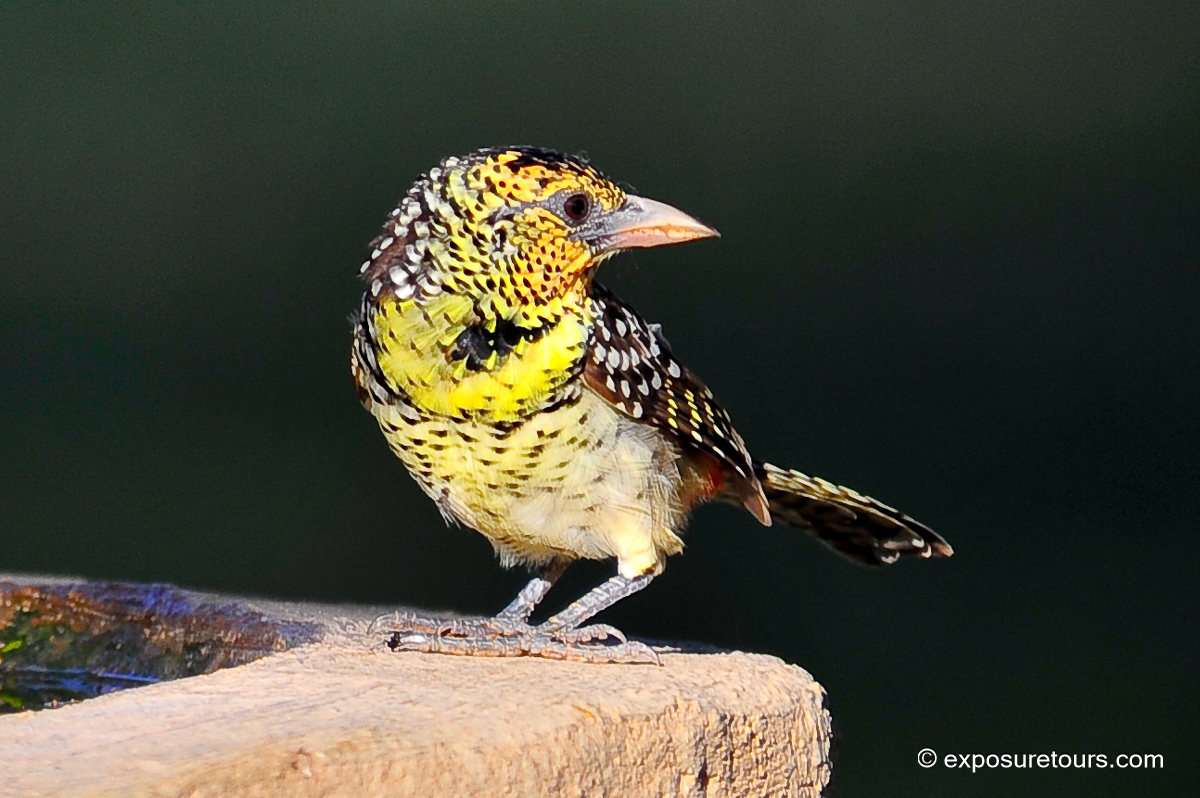
D’Arnaud’s Barbet (Trachyphonus darnaudii) is a small, vibrantly colored bird found in the savannas and open woodlands of East Africa. It occurs particularly in Kenya and Tanzania. As a result, it is a familiar sight on many safaris in the region. The species is instantly recognizable by its bright yellow face, red forehead, and striking black-and-white patterned body.
Adults typically measure about 17–19 cm (6.5–7.5 in) in length. They usually weigh roughly 40–55 g (1.4–2 oz). D’Arnaud’s Barbet is a cavity-nesting species. It often excavates holes in trees or uses natural cavities for breeding. The female usually lays 2–4 eggs. Incubation lasts approximately 13–15 days. Both parents actively participate in feeding and caring for the chicks. Fledging occurs after roughly 30 days. Outside the breeding season, the species is highly social. It is often seen in small groups, calling and foraging together.
Photography Tips:
D’Arnaud’s Barbet is a rewarding subject. This is largely due to its vibrant colors and lively behavior. Early morning light is ideal, as it enhances the intensity of yellow, red, and black plumage. At the same time, it avoids harsh shadows that can obscure details.
A medium telephoto lens in the 300–400 mm range is recommended. This allows photographers to capture close-ups of perched birds or feeding activity without causing disturbance. Clean, uncluttered backgrounds, such as open sky or blurred foliage, further help the bright colors stand out. Patience is important, particularly when photographing the species excavating nests or interacting socially.
Capturing moments of calling, preening, or feeding adds storytelling value. In turn, this makes D’Arnaud’s Barbet a striking and memorable addition to any photo safari portfolio.