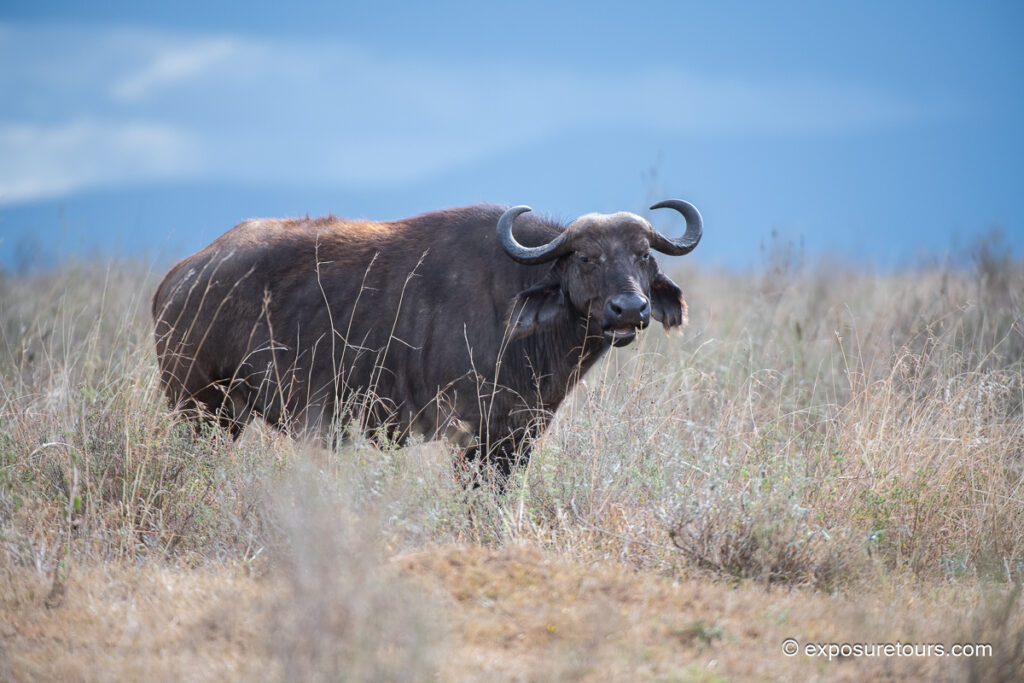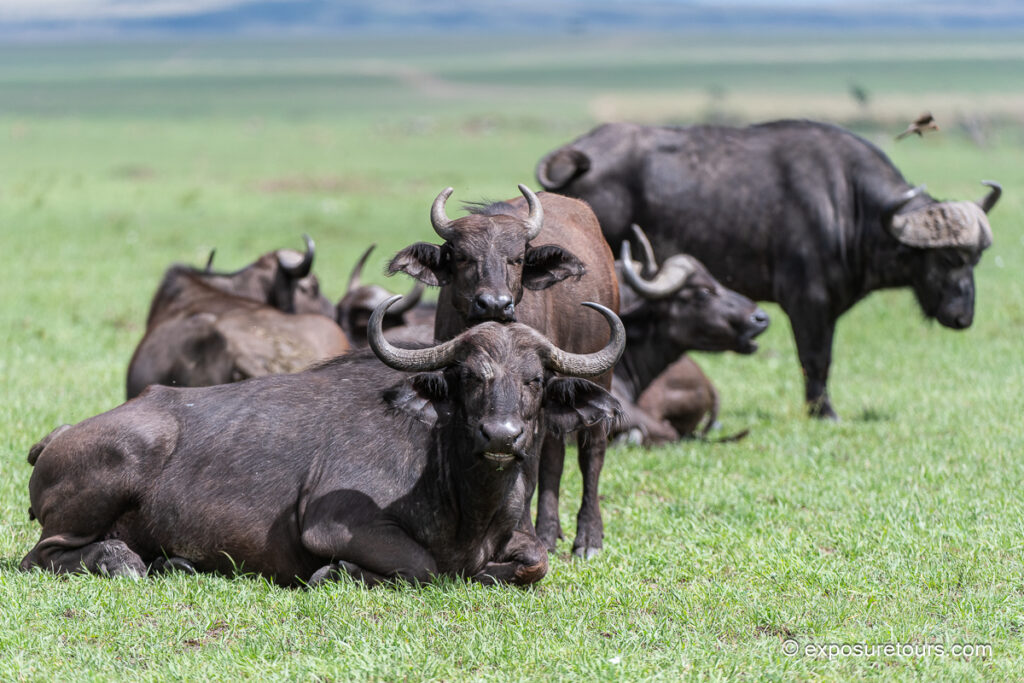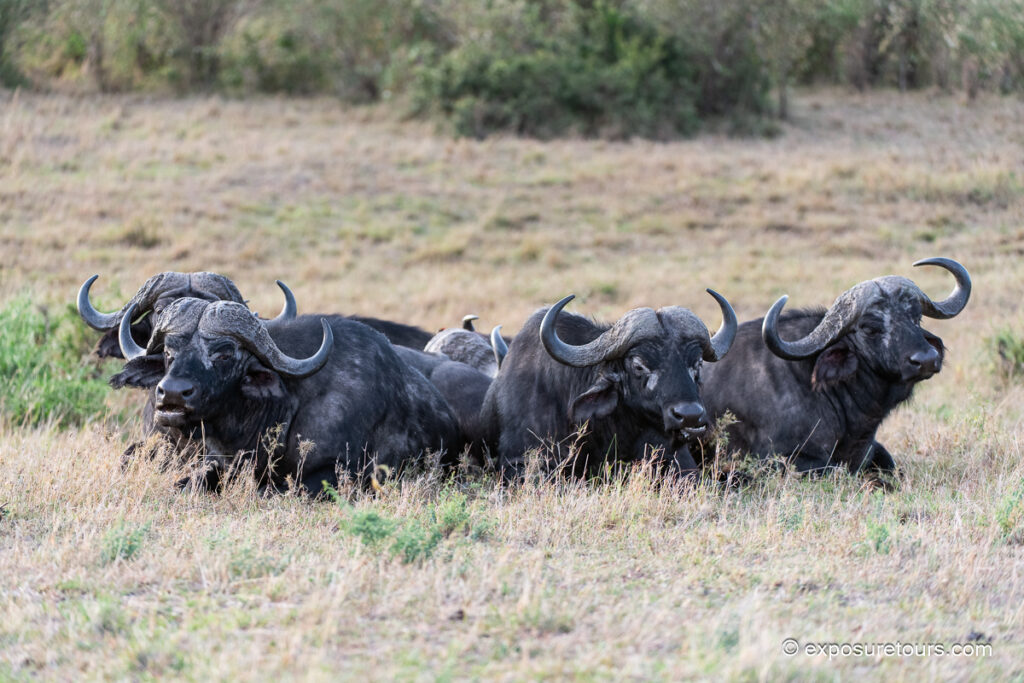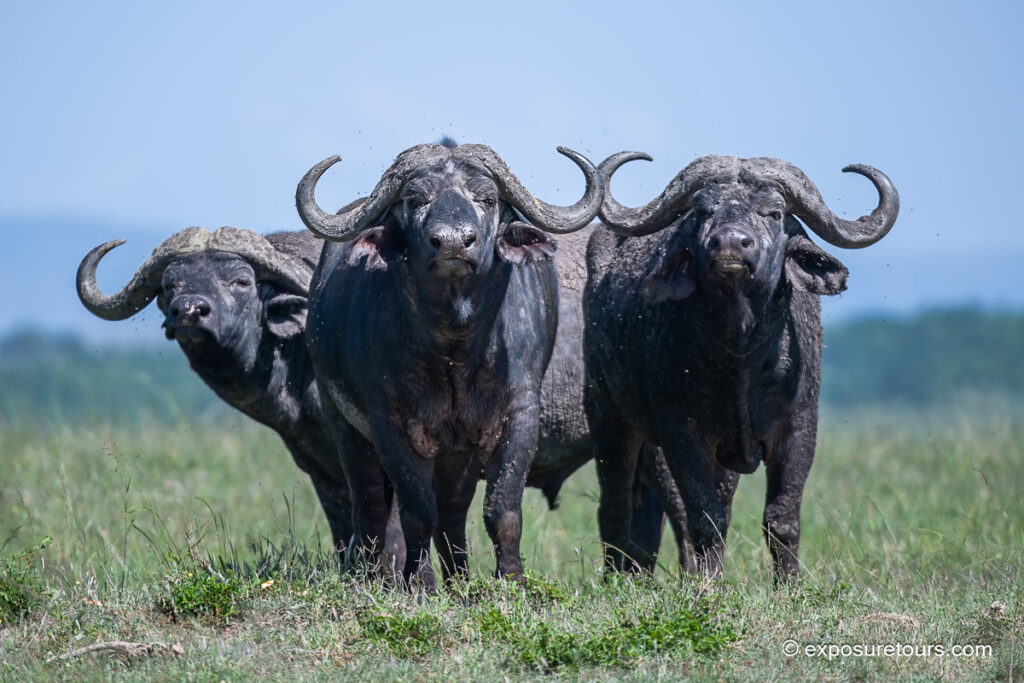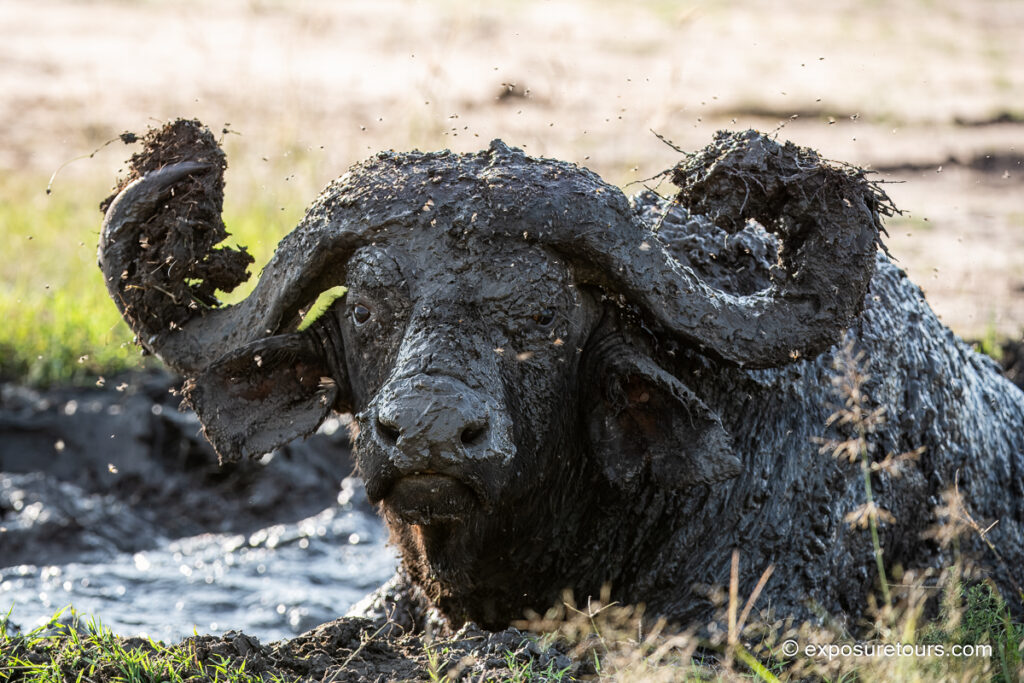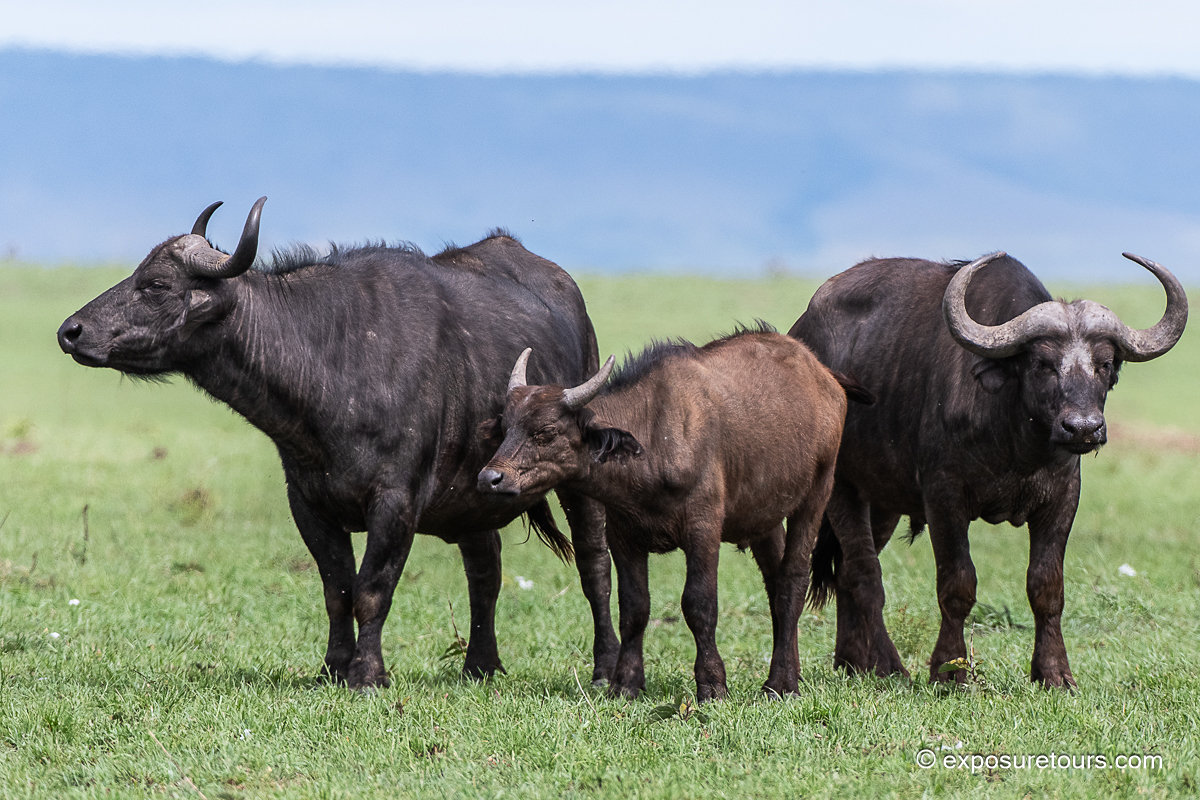
The Cape Buffalo (Syncerus caffer) is one of Africa’s most powerful and iconic large mammals. It inhabits savannas, floodplains, woodlands, and grasslands across sub-Saharan Africa. Notoriously strong and unpredictable, this species is easily recognized by its massive build and dark, coarse coat. Mature bulls also display heavy, curved horns that often form a solid boss across the forehead.
Adults typically stand about 1.4–1.7 m (4.6–5.6 ft) at the shoulder. Body length ranges from 2.4–3.4 m (8–11 ft). They weigh between 400–900 kg (880–2,000 lbs), with males noticeably larger than females. Cape Buffalo are highly social animals. They live in large herds that provide protection against predators.
Breeding occurs year-round, although peaks often coincide with the rainy season when food is abundant. Females usually give birth to a single calf. The gestation period lasts approximately 330–340 days. Calves remain close to their mothers and are fiercely defended by the herd.
Cape Buffalo spend much of their day grazing. They must drink regularly, which draws them to rivers and waterholes. These gathering points often produce dramatic wildlife interactions. Their intense stare, mud-caked hides, and powerful horn shapes make them one of the most compelling members of Africa’s Big Five.
Photography Tips:
For photography, aim for early morning or late afternoon light. This lighting brings out texture in the buffalo’s dark hide. It also highlights dust, mud, and visible breath in cooler conditions. Try isolating individuals, especially old bulls with worn horns, for dramatic portraits. Alternatively, use wider compositions to show the scale and density of large herds. Shooting at eye level enhances their imposing presence.
Backlighting can add atmosphere through dust and rim light. Always maintain a safe distance, as Cape Buffalo are unpredictable and deserve both caution and respect.