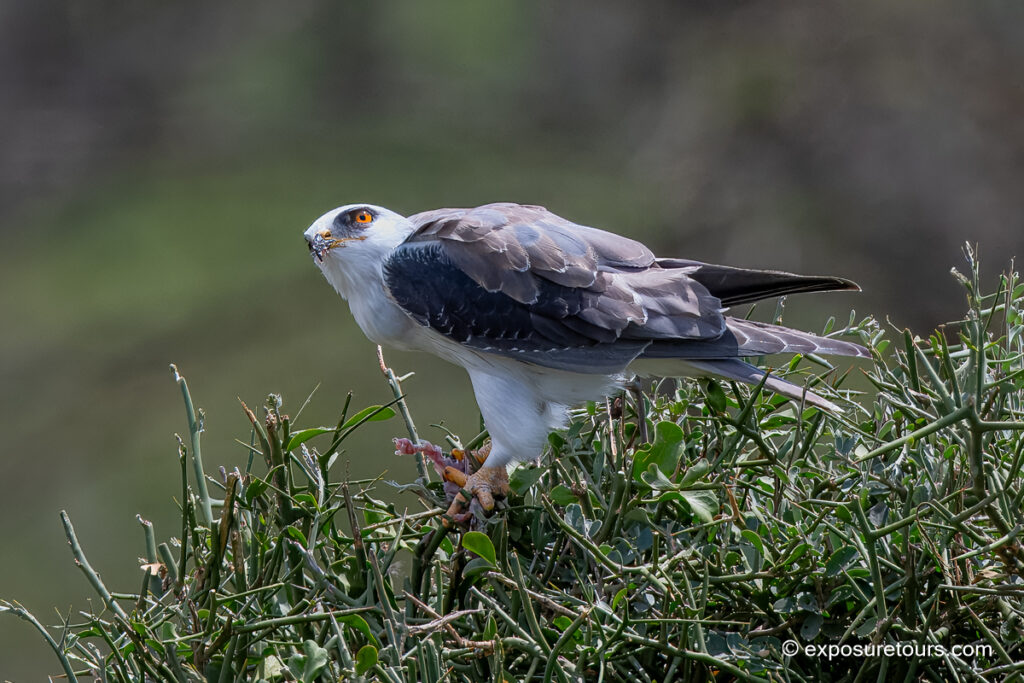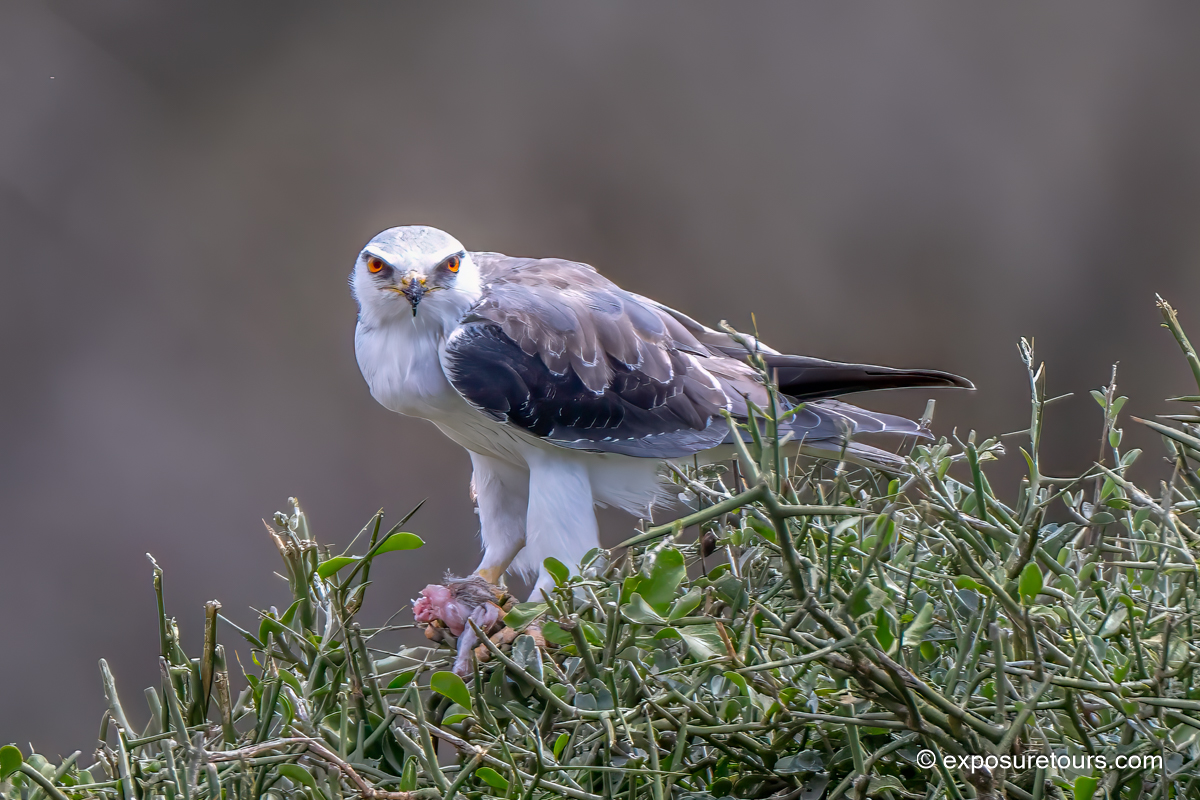
The Black-winged Kite (Elanus caeruleus), also known as the Black-winged Shouldered Kite, is a small and striking raptor that ranges widely across Africa, southern Europe, and parts of Asia. It thrives in open grasslands, savannas, and agricultural areas, where it actively hunts over wide, open terrain. Adults measure 31–38 cm (12–15 in) in length and spread a wingspan of 71–87 cm. They typically weigh between 200–300 grams.
This species stands out with pale gray upperparts, clean white underparts, bold black shoulder patches, and vivid red eyes. Black-winged Kites famously hover in place while scanning the ground, then swiftly drop onto prey. They feed mainly on small rodents and insects. Like all birds, they do not have a gestation period. Instead, females lay 3–5 eggs, which hatch after an incubation period of about 30–32 days. They build nests in trees, and both parents actively raise and protect the young.
Photo Tips
The Black-winged Kite provides exceptional photographic opportunities, largely because of its dramatic hovering behavior and relatively approachable nature. Use a telephoto lens of 300–500 mm to capture sharp, detailed images, particularly when the bird perches or hunts. Shoot in early morning or late afternoon light to bring out the subtle gray and white tones of the plumage and achieve soft, balanced illumination. Use fast shutter speeds to freeze the kite’s hovering flight and sudden hunting dives.
As with all wildlife photography, aim for a catchlight in the eye, as the kite’s vivid red eye adds powerful impact to an image. Position yourself in open habitats with clear sightlines to improve your chances of success. With patience and careful observation, you can capture striking portraits and dynamic action shots of this elegant and agile raptor. Additionally, the species often hunts small rodents in urban areas, providing further opportunities for observation and photography.