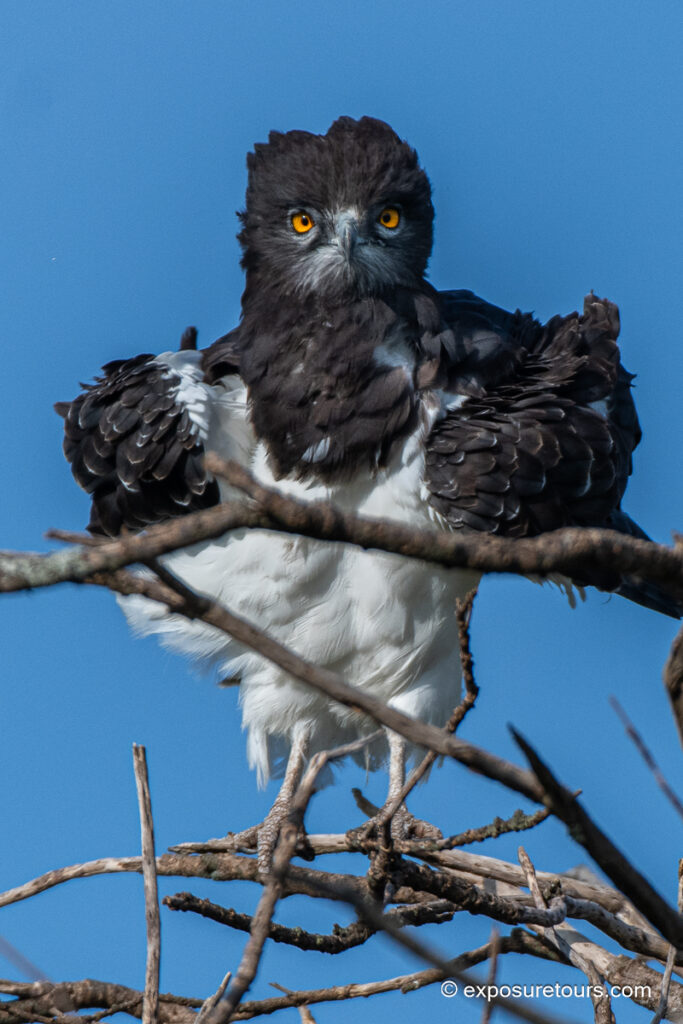
The Black-chested Snake Eagle (Circaetus pectoralis) is a powerful and distinctive raptor of sub-Saharan Africa.
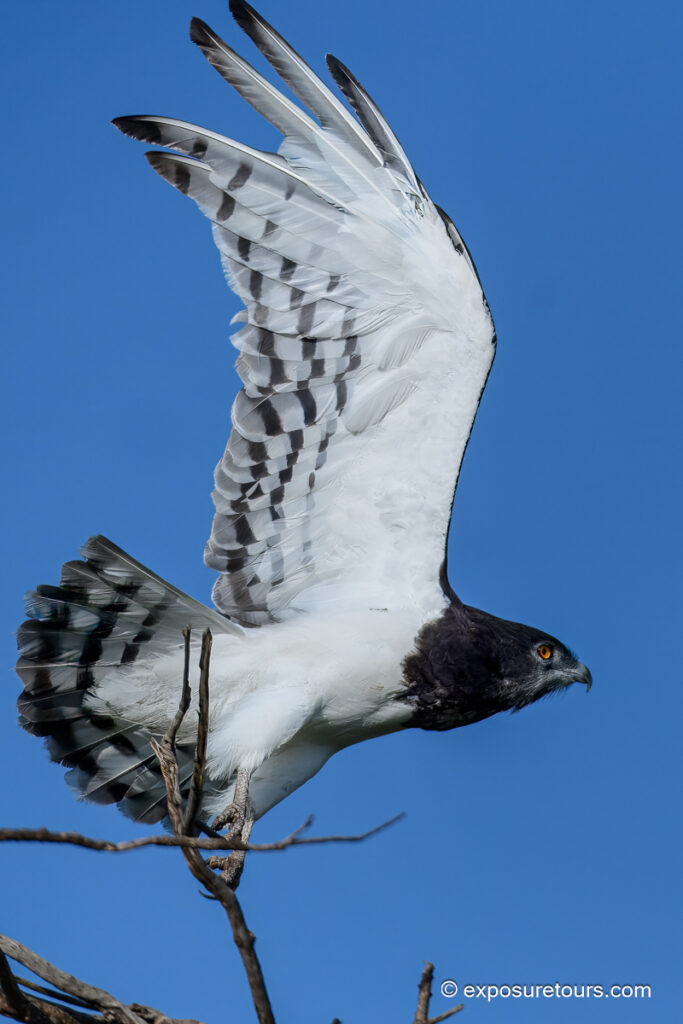
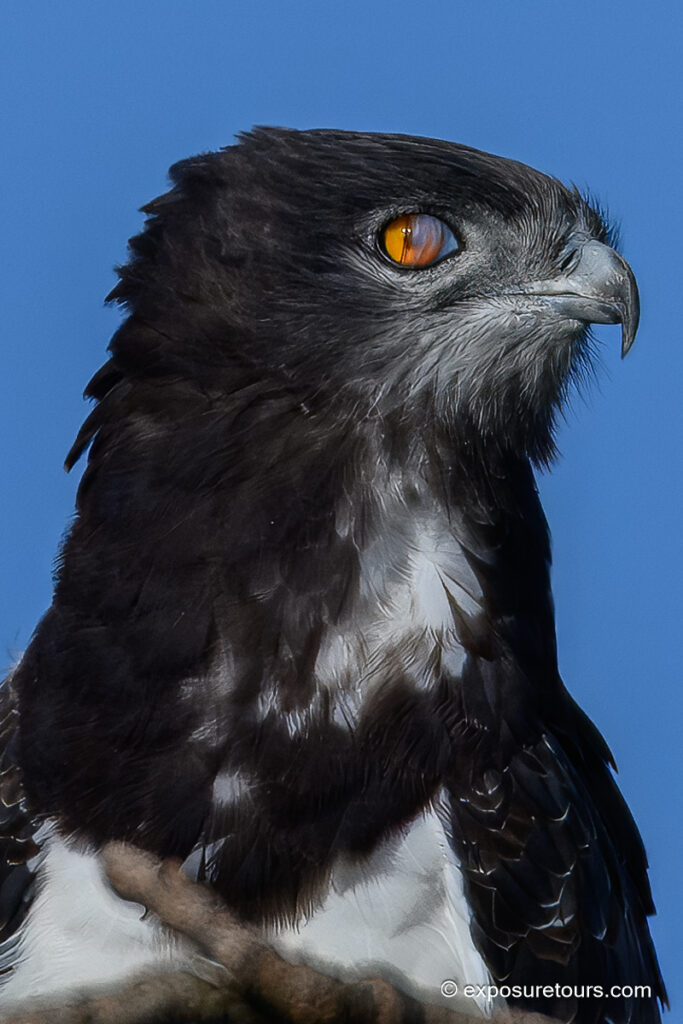
It is most commonly encountered in savannas, open woodlands, and lightly bushed grasslands where reptiles are abundant. It is immediately recognizable by its striking black chest and upperparts. These contrast strongly with a white belly and underwings marked by fine barring. Adults typically measure 55–65 cm (22–26 in) in length. In addition, they have an impressive wingspan of approximately 160–180 cm (63–71 in). Body weight generally ranges from 1.3 to 2.3 kg (2.9–5.1 lb), with females usually larger than males.
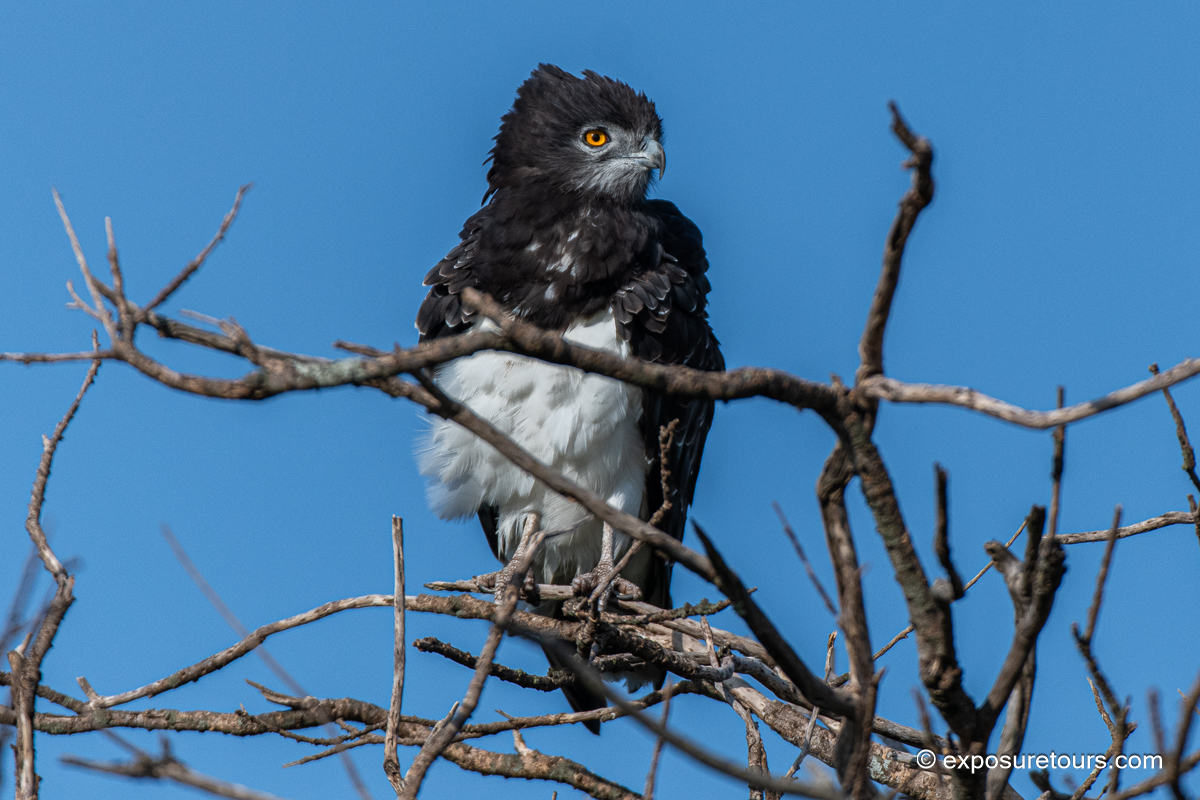
As the name suggests, this eagle specializes in hunting snakes, including venomous species. However, it will also take lizards and small mammals when available. Hunting is often done from a high perch. Alternatively, the bird may soar slowly while scanning the ground below.
Breeding usually occurs during the dry season, although timing varies by region. Typically, the female lays a single egg. Incubation lasts around 48–52 days and is carried out mainly by the female, while the male provides food. After hatching, the chick remains in the nest for a prolonged period. Fledging usually occurs after approximately 90–100 days. As a result, the species has a slow reproductive rate, which is typical of large raptors. Black-chested Snake Eagles are generally solitary and strongly territorial. They also tend to return to the same nesting sites year after year.
Photography Tips:
Look for this species perched prominently at the top of acacia trees or dead snags, especially in the early morning when it warms itself in the sun. A long focal length of 400–600 mm is ideal to capture fine feather detail without disturbing the bird.
Flight shots are best attempted when the eagle launches from a perch or during slow, circling patrols. Finally, try to position yourself with the sun behind you to emphasize the contrast between the dark chest and pale underparts, and watch for moments when the bird tilts its head downward, a classic pose that reflects its specialized hunting behavior.