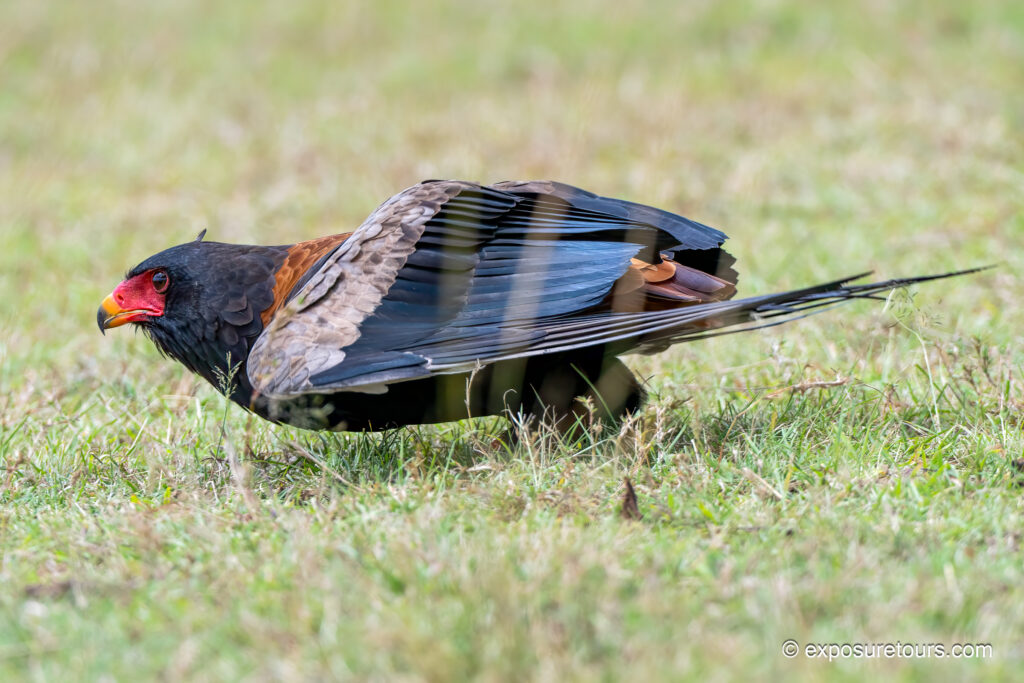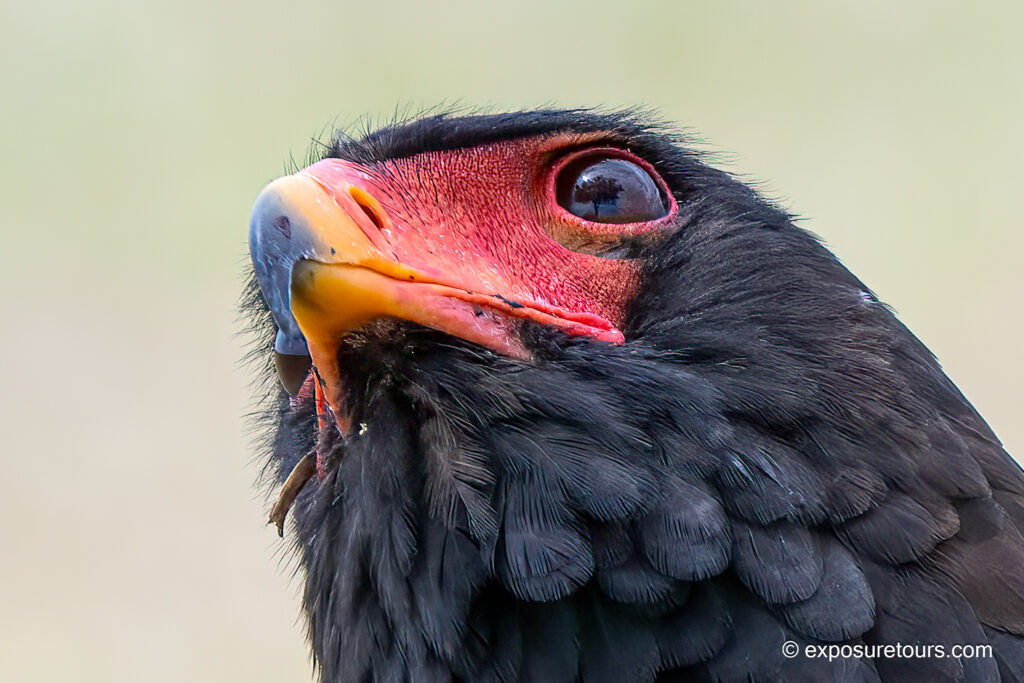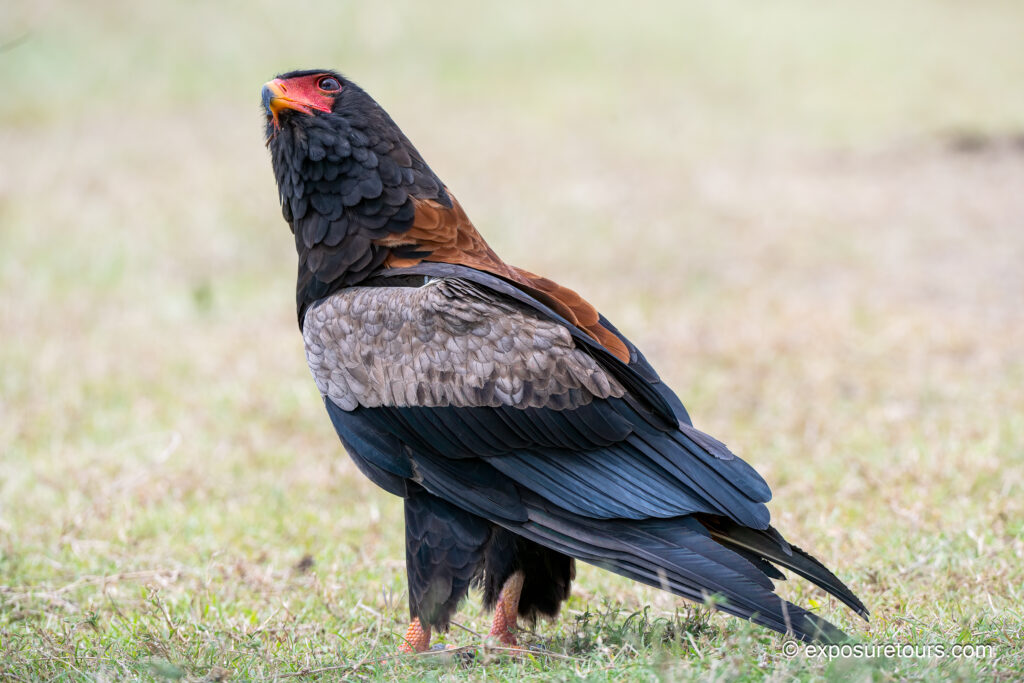
The Bateleur (Terathopius ecaudatus) ranks among Africa’s most striking and instantly recognizable raptors. Its name comes from the French word bateleur, meaning “tightrope walker,” which directly refers to the bird’s distinctive rocking flight. Unlike many birds of prey, the Bateleur displays bold, high-contrast colors. As a result, adults show a bright red face and legs, black wings, a chestnut back, and crisp white underparts. Consequently, you will most often notice this species soaring confidently over savannas, open woodlands, and grasslands across sub-Saharan Africa.
In terms of size, the Bateleur measures about 55–70 cm (22–28 in) in length. Additionally, it carries a wingspan of roughly 175–190 cm (69–75 in). Most adults weigh between 2–2.6 kg (4.4–5.7 lbs). Perhaps its most unusual feature, however, is the extremely short tail. This gives the bird a compact, almost tailless appearance in flight and, in turn, enhances its acrobatic style.
Bateleurs hunt actively and also scavenge, which makes them versatile and efficient predators. Their diet includes small mammals, birds, reptiles, insects, and carrion. Over time, pairs form long-term bonds and usually occupy large territories. During the breeding season, they build a large stick nest high in a tree. Typically, the female lays a single egg. Incubation lasts around 52–59 days, with both adults contributing to care, although the female performs most of the incubation. Even after fledging, the chick remains dependent on the parents for several months.
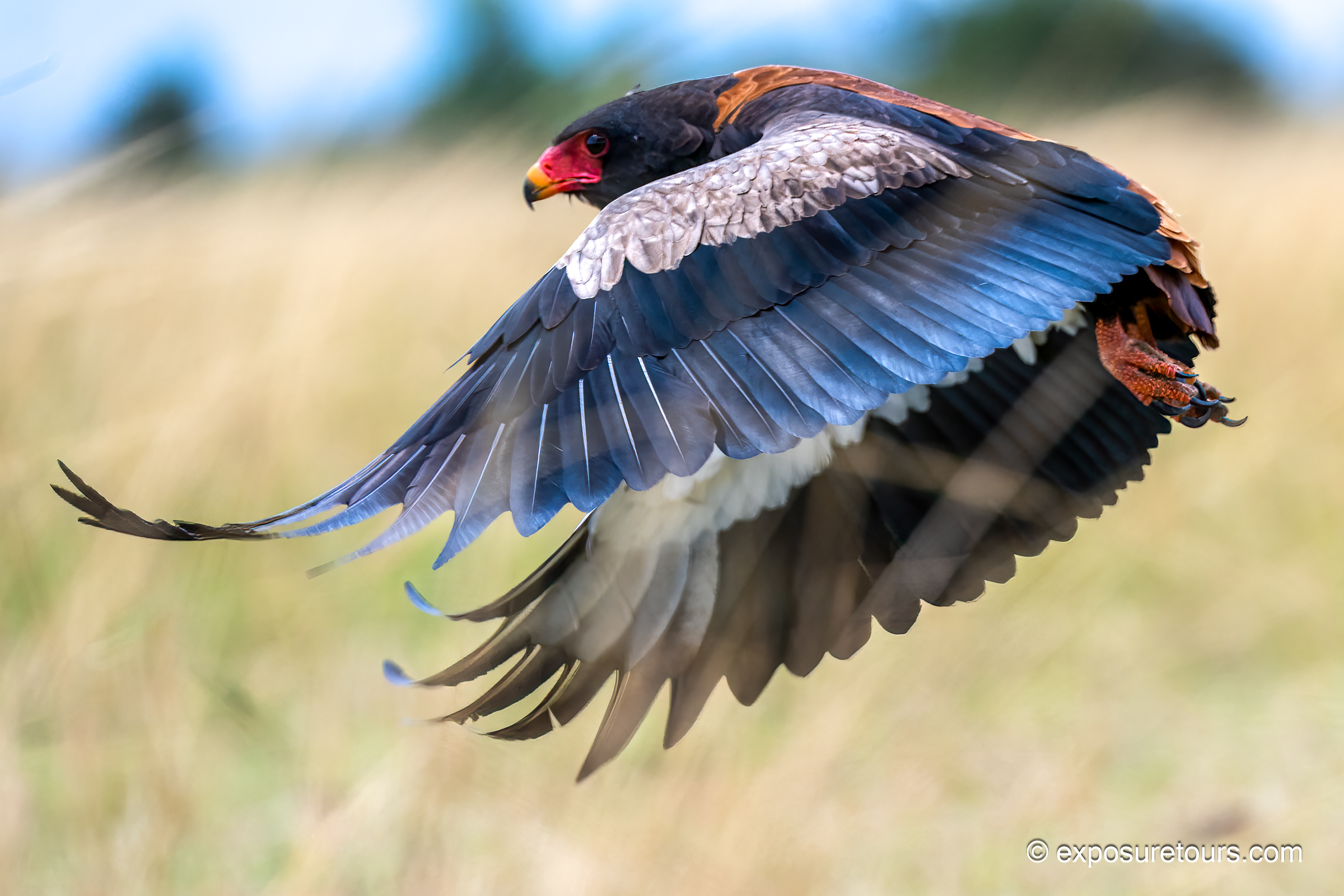
In flight, the Bateleur truly comes into its own. It flies low and slow, rocking from side to side with deep, deliberate wingbeats. Combined with its bold coloration, this distinctive flight style makes it one of the easiest raptors to identify at a distance.
Photography Tips:
For photographers, the Bateleur offers exceptional opportunities, particularly when photographed in flight. Mid-morning to late-afternoon light works especially well to illuminate the bird’s vivid colors. At the same time, a fast shutter speed helps freeze the rocking wingbeats, while continuous autofocus improves your chances of keeping the bird sharp against busy backgrounds.
Ultimately, flight shots remain the most compelling images of this species. Position yourself with the sun behind you and watch for birds patrolling along roads or open plains. When the Bateleur banks or tilts, it reveals its dramatic color patterns and short tail to full effect. With patience and anticipation, this iconic raptor can become a standout subject in any African wildlife photography collection.