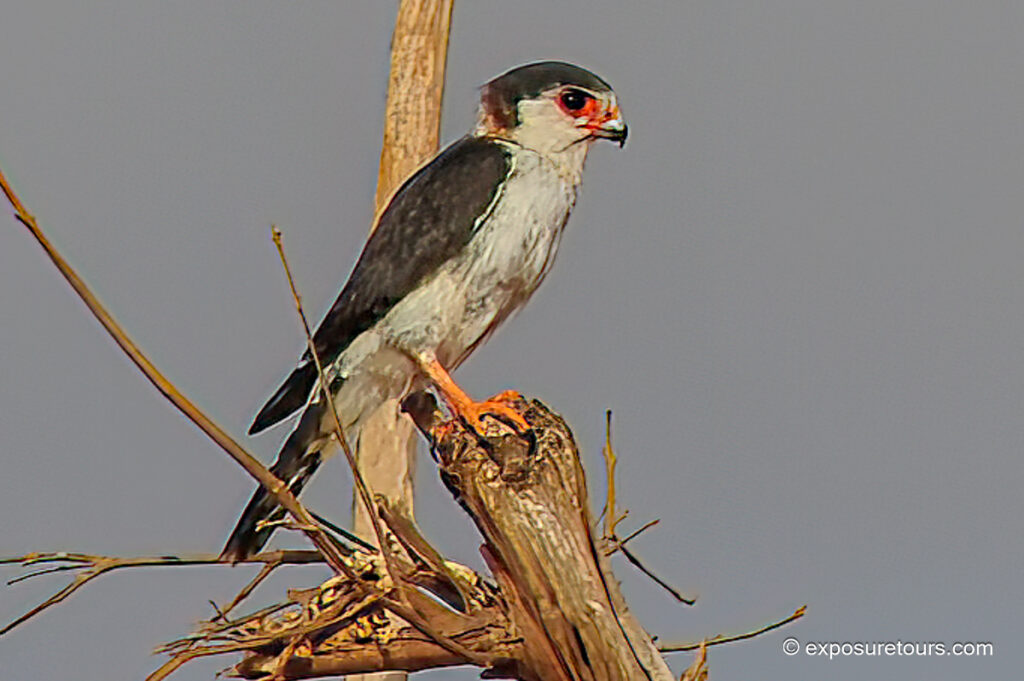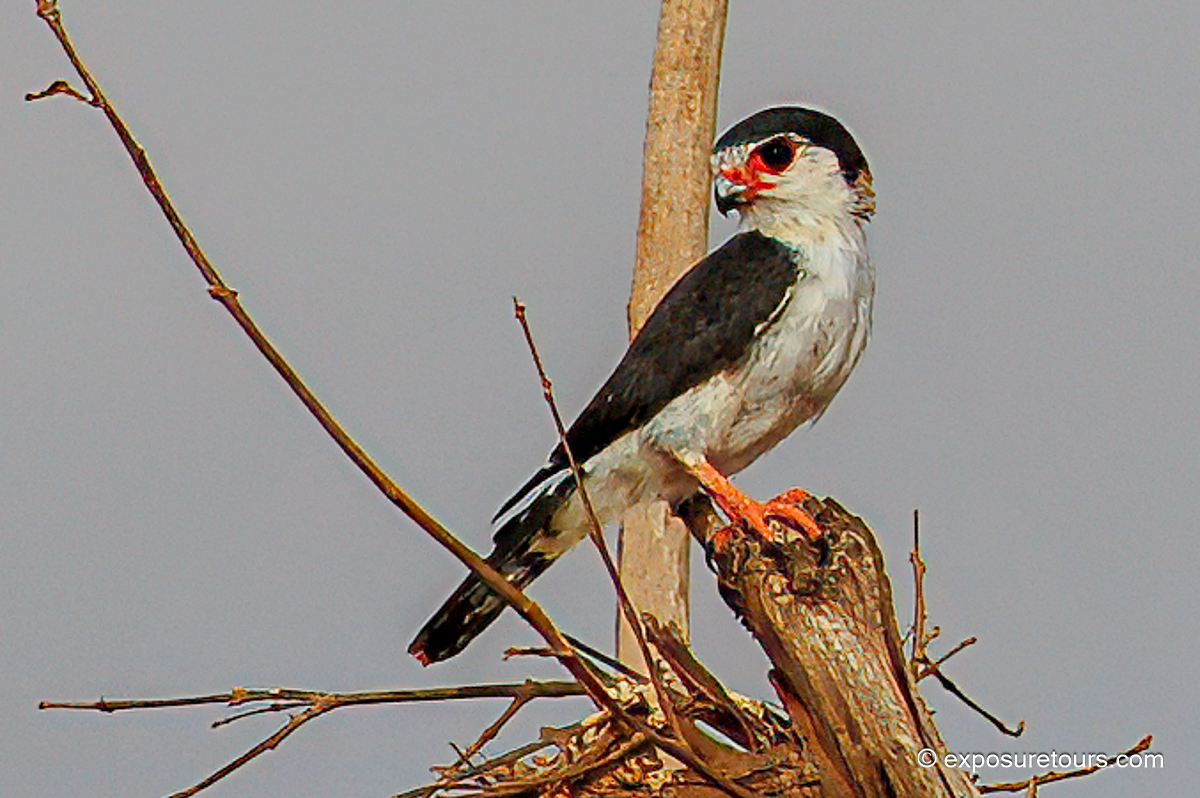
The African Pygmy Falcon (Polihierax semitorquatus) is Africa’s smallest bird of prey and a charismatic resident of dry savannas and open woodland. It is especially common in southern and eastern Africa. In particular, the species is closely associated with acacia landscapes. As a result, it is frequently seen using abandoned weaver nests for shelter and breeding.
Adults are compact and upright in posture. On average, they measure about 19–20 cm (7.5–8 in) in length. In addition, body weight generally ranges from 50–65 g (1.8–2.3 oz). Males typically have pale gray upperparts and white underparts. By contrast, females show richer chestnut coloration on the back and wings.
The species is monogamous and strongly territorial. During the breeding season, the female usually lays 2–4 eggs. Incubation lasts approximately 30–33 days. Throughout this period, both adults participate in raising the chicks.
Photography Tips:
The African Pygmy Falcon is a rewarding subject. This is largely due to its small size, bold behavior, and tolerance of close approach. In general, early morning light works particularly well. Softer light enhances fine plumage detail and helps avoid harsh shadows.
A medium telephoto lens in the 300–400 mm range is often sufficient. This is especially true when birds are perched at the entrance of a weaver nest. Furthermore, open savanna habitats often provide clean, uncluttered backgrounds. This, in turn, makes it easier to isolate the subject. Patience is important, as individuals frequently return to favored perches.
Finally, capturing alert postures, feeding behavior, or interactions with weavers adds strong storytelling value and makes the African Pygmy Falcon a memorable subject for any photo safari portfolio.