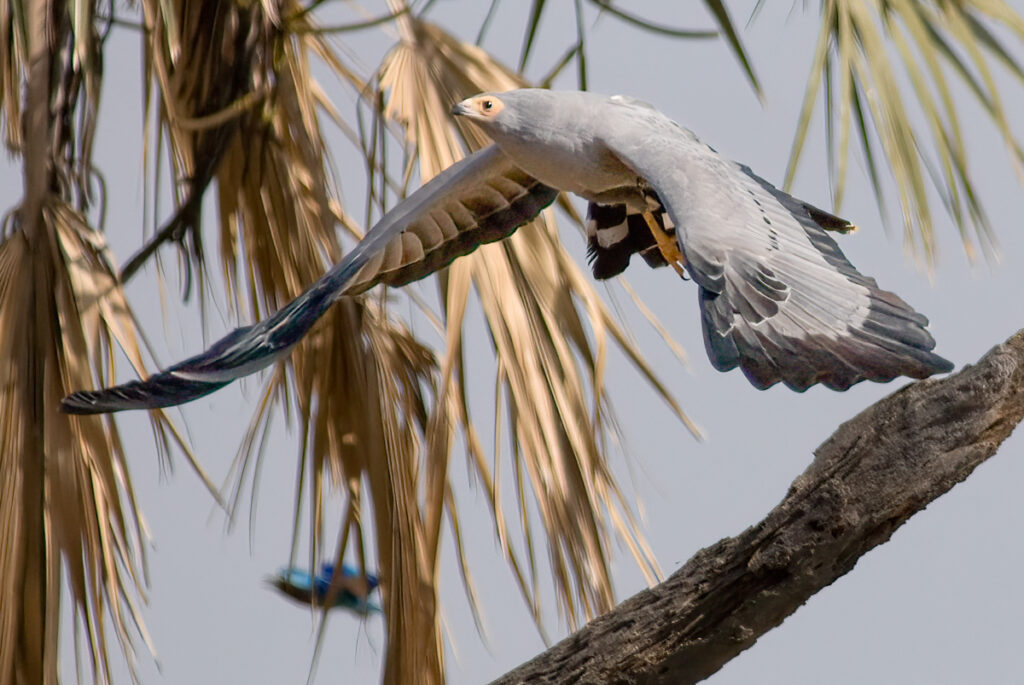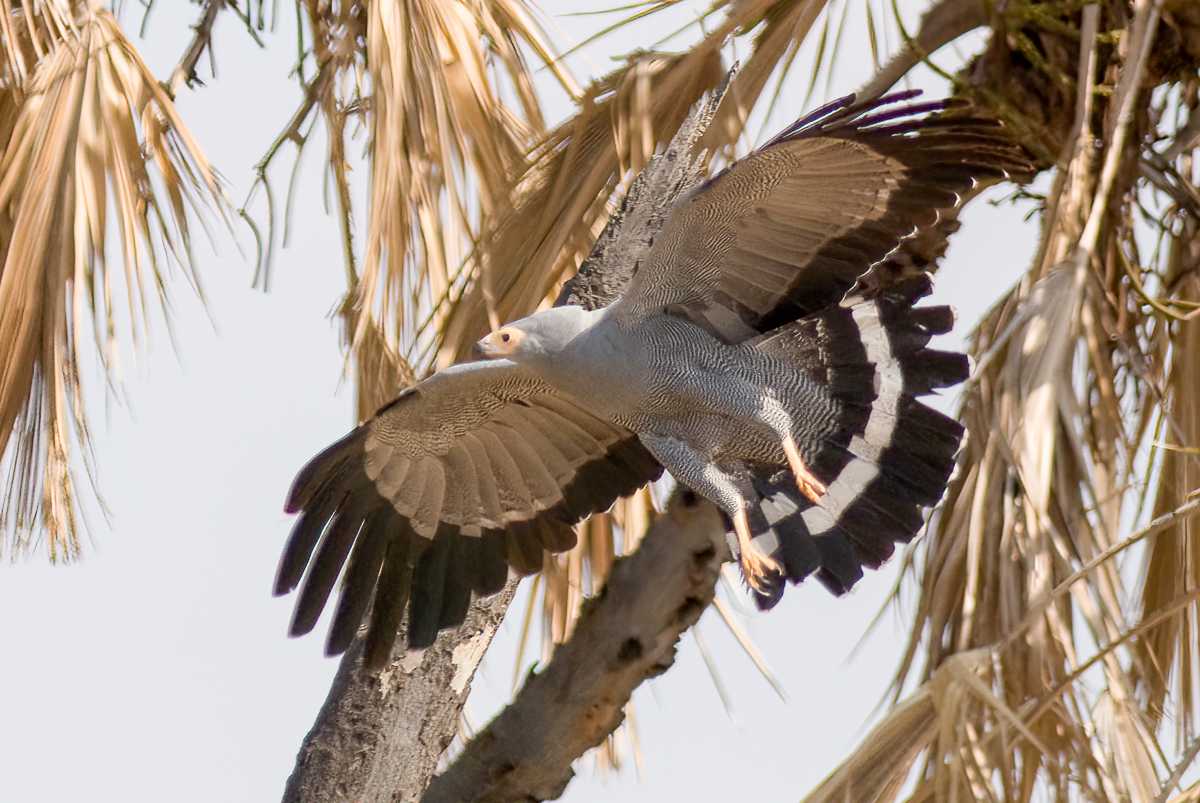
The African Harrier-Hawk (Polyboroides typus) is a versatile and opportunistic bird of prey found across sub-Saharan Africa, inhabiting forests, savannas, and urban areas. It is easily recognized by its gray body, black flight feathers, and striking yellow facial skin around the eyes.
Adults typically measure 55–60 cm (22–24 in) in length, with a wingspan of 130–145 cm (51–57 in), and weigh between 900–1,100 grams. Known for its unique double-jointed legs, they can reach into tree cavities and crevices to extract prey. Including birds, reptiles, insects, and small mammals. The species builds a large stick nest in trees, where the female usually lays 2–4 eggs. The incubation period lasts approximately 35 days, with both parents sharing responsibilities in feeding and protecting the chicks.
For photographers, the African Harrier-Hawk presents exciting opportunities to capture a highly agile raptor in action. A telephoto lens of 300–600mm is ideal for close-ups of hunting or perching behavior. Patience and observation can reward you with shots of the bird using its flexible legs to extract prey.
Early morning or late afternoon light provides the best illumination for highlighting the striking plumage and intense gaze. Positioning yourself near fruiting trees or areas with high bird activity can increase your chances of photographing this fascinating and adaptive predator.